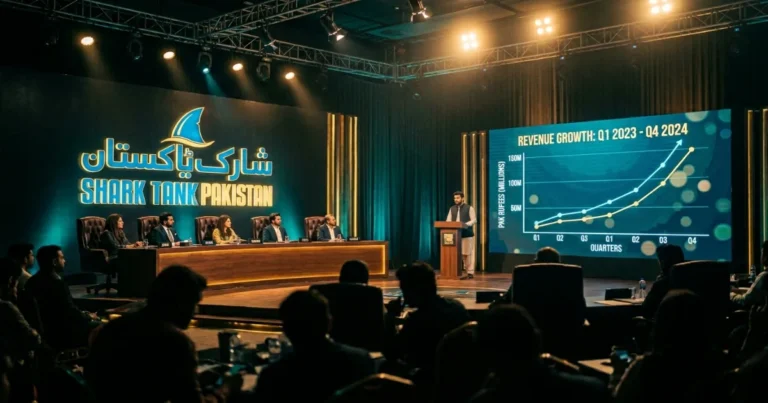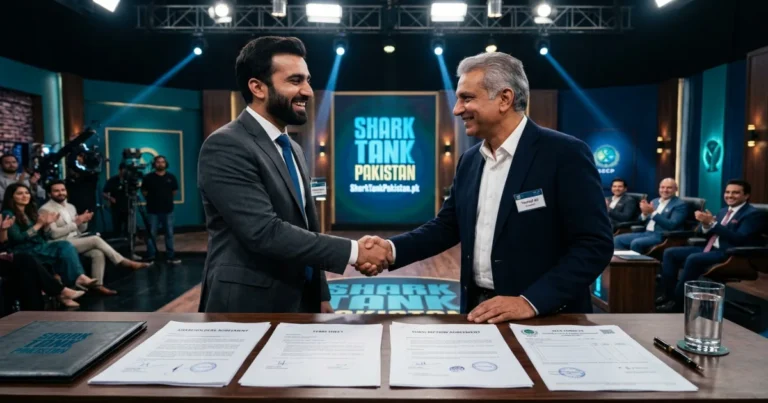
⚡ The Short Answer: Shark Tank India and Shark Tank Pakistan share the same global format but operate in fundamentally different startup ecosystems. India’s sharks lean toward high-volume, brand-scalable deals with a more theatrical judging style honed over multiple seasons. Pakistan’s panel, rooted in a younger but rapidly maturing ecosystem, tends to dig deeper into unit economics, operational viability, and founder grit — often with a more grounded, mentorship-forward tone. For Pakistani founders, watching both shows isn’t entertainment alone; it’s a masterclass in how investors think across two markets at different stages of maturity.
Shark Tank India vs Shark Tank Pakistan: Judging Style, Deals & Impact
If you’ve ever watched Shark Tank India and then tuned into Shark Tank Pakistan — or vice versa — you’ve probably felt the difference before you could name it. Same dramatic lighting. Same iconic pitch-and-pressure format. Yet the rhythm of the questions, the weight of the pauses, and the type of deals that close (or collapse) feel distinctly different. This isn’t accidental. It’s the product of two countries with intertwined histories but radically different startup trajectories, regulatory environments, and investor cultures.
In this article, we’re doing what few analyses actually do: going beyond the surface-level format comparison and examining Shark Tank India vs Pakistan through the lens of judging philosophy, deal mechanics, and long-term ecosystem impact. Whether you’re a Pakistani founder preparing your pitch, an aspiring Shark Tank Pakistan applicant, or simply a fan trying to understand why the two shows feel so different, this guide will give you the clarity you need — and actionable takeaways you can use.
Let’s get into it.
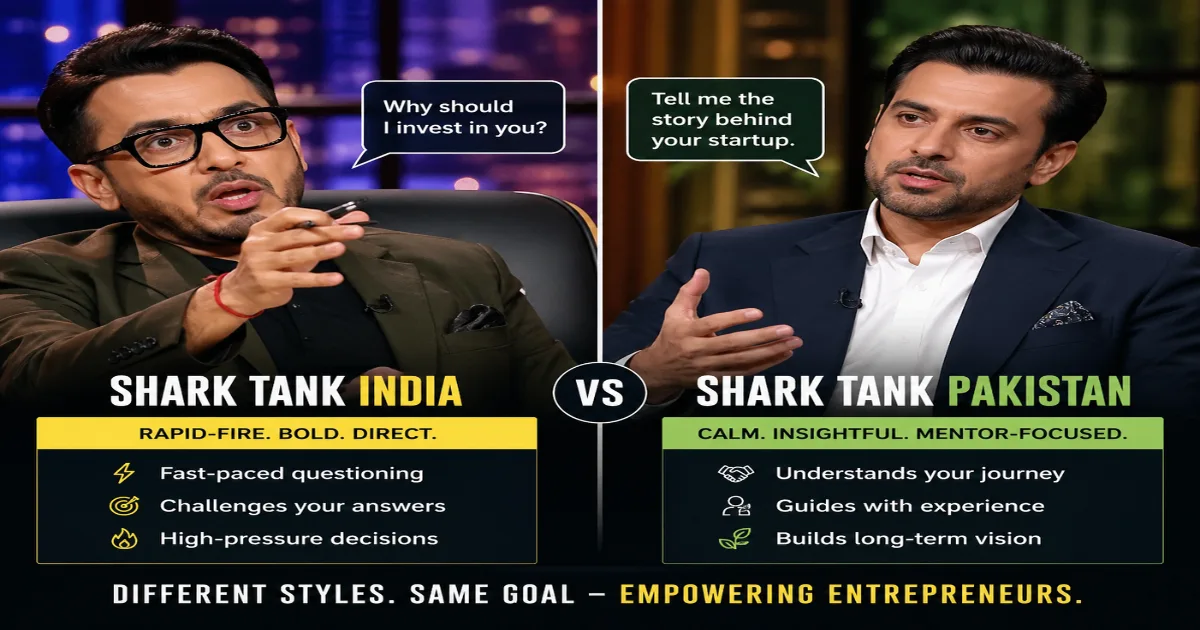
The Cultural DNA: How Each Show Mirrors Its Market
Before you can understand why the sharks judge differently, you need to understand the economic soil each show grows from.
India: A Decade-Long Startup Boom Under Television Lights
Shark Tank India launched into a market that had already produced unicorns, witnessed the rise of Flipkart and Ola, and built a venture capital ecosystem worth tens of billions of dollars. By the time the first episode aired, Indian audiences were primed. The sharks — figures like Aman Gupta, Namita Thapar, and Anupam Mittal — weren’t just investors. They were recognizable brand-builders who’d navigated India’s consumer explosion. Their questions reflect that: “What’s your customer acquisition cost? What’s your burn rate? Can this scale to 50 cities?”
India’s sharks operate with the confidence of a mature ecosystem. They can afford to be theatrical because the deal flow is enormous, and the production has had multiple seasons to refine its rhythm. The result? A judging style that’s sharp, occasionally performative, and deeply attuned to brand-building narratives.
Pakistan: A Nascent Ecosystem Finding Its Feet — Fast
Shark Tank Pakistan entered a different reality. Pakistan’s startup ecosystem is younger, hungrier, and more constrained by macroeconomic headwinds — currency volatility, regulatory friction, and a smaller domestic venture capital pool. But here’s the twist: Pakistani founders who make it to the tank have often survived far tougher conditions than their Indian counterparts face. They’re used to building with limited infrastructure, navigating import restrictions, and convincing skeptical local investors.
This shapes the sharks’ approach. Pakistani sharks — whose backgrounds span textiles, logistics, technology, and real estate — tend to ask grittier questions. “How did you survive the 2023 currency devaluation? What’s your contingency if import duties rise again? Show me your unit economics without the subsidy.” The tone is less about theatrical storytelling and more about operational survival.
Judging Panel Architecture: Who Sits Where — and Why It Matters
The composition of each panel reveals the investment philosophy driving the show.
Shark Tank India’s panel is built around consumer-tech and D2C expertise. Aman Gupta built boAt into an electronics powerhouse. Namita Thapar runs a pharmaceutical empire. Peyush Bansal disrupted eyewear with Lenskart. Their collective bias tilts toward brand-led, asset-light, digitally scalable businesses. If you walk in with a hardware startup or a traditional manufacturing play, you’ll face an uphill battle — not because the idea is bad, but because it doesn’t fit the panel’s sweet spot.
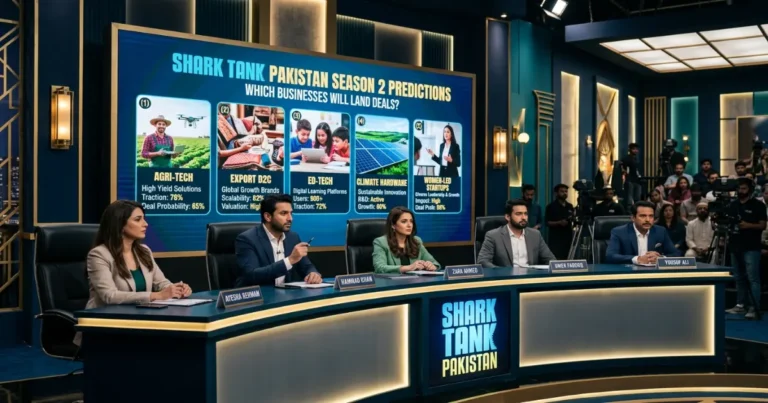
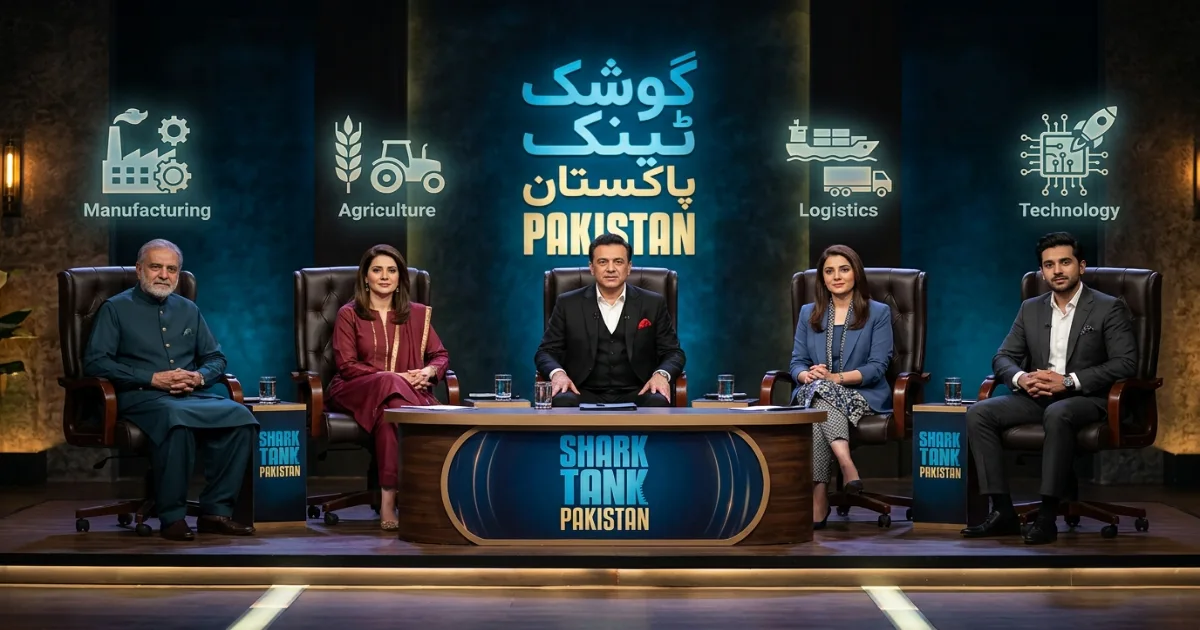
Shark Tank Pakistan’s panel, by contrast, draws from a more diverse industrial base. You’ll find sharks with deep experience in brick-and-mortar supply chains, export-oriented manufacturing, agri-processing, and services. This diversity means a textile innovator, a food-tech founder, or a logistics disruptor can all find a shark who genuinely understands their industry’s unit economics. The trade-off? Pure tech plays may not get the same depth of technical scrutiny they’d receive from India’s digitally native panel.

Judging Style Deep Dive: Warmth vs. Directness — a False Binary
One of the laziest narratives circulating online is that Indian sharks are “harsher” and Pakistani sharks are “softer.” That’s not accurate — and it misses the real dynamic.
The Indian Approach: Performance With Purpose
Indian sharks have mastered the art of televised investor scrutiny. They know the cameras are rolling, and they understand that memorable moments — Aman Gupta’s razor-sharp one-liners, Namita Thapar’s “yeh meri expertise nahi hai” dismissals — become social media currency. But beneath the performance, there’s genuine rigor. Indian sharks rarely invest without clear paths to scale, and their “tough love” often pushes founders to articulate their vision more sharply than they ever have before.
The Pakistani Approach: Mentorship Wrapped in Candor
Pakistani sharks, still relatively new to the televised format, bring a different energy. The feedback is often more conversational, more rooted in the question “Can this business actually work in Pakistan’s specific conditions?” Rather than delivering dramatic rejections, Pakistani sharks tend to explain why a business doesn’t fit their portfolio — and sometimes even offer actionable restructuring advice before going out. This doesn’t mean they’re easier to pitch. It means the value extraction for founders — even those who don’t get a deal — can be higher.
🧠 Insider Insight from Shark Tank Pakistan
Multiple contestants from Season 1 have noted — in post-show interviews — that even the sharks who opted out gave them 5-10 minutes of detailed verbal feedback. One founder described it as “a free consulting session from a CEO I’d never get a meeting with otherwise.” This mentorship dimension is something Indian sharks occasionally offer too, but it’s less systematically embedded in the format. On Pakistan’s panel, it appears to be the norm, not the exception.
Deal Structure Comparison: Equity, Valuation & the Terms That Trip Founders Up
This is where the Shark Tank India vs Pakistan comparison becomes intensely practical for any founder considering which show’s lessons to study before pitching.
Equity Expectations
On Shark Tank India, sharks routinely ask for 5% to 20% equity, with typical asks clustering around 8–12% for established businesses and 15–25% for early-stage ventures. The competition among sharks sometimes drives equity demands down — a founder with multiple offers can negotiate hard.
On Shark Tank Pakistan, equity expectations are shaped by a smaller, more cautious funding environment. Sharks may ask for slightly higher equity stakes — 10–30% is not uncommon — reflecting the higher perceived risk in Pakistan’s volatile economy. However, they also tend to offer more hands-on operational support, which partially justifies the higher ask. The key difference: on Pakistan’s panel, the post-investment involvement is often explicitly negotiated into the deal, not left as an implicit promise.
Valuation Gaps
Indian startups tend to arrive with higher valuation expectations, buoyed by a market that’s seen aggressive funding rounds. Sharks frequently push back, calling valuations “unrealistic” or “bleeding edge.” Pakistani founders, operating in a market with fewer comparable exits, often struggle to justify their valuation at all — and sharks press hard on revenue multiples, asset backing, and realistic exit timelines.
Side-by-Side: Shark Tank India vs Pakistan Deal Dynamics
| Dimension | Shark Tank India | Shark Tank Pakistan |
|---|---|---|
| Typical Equity Ask | 5%–20% (compressed by competition) | 10%–30% (reflects higher risk premium) |
| Valuation Climate | Founders often overvalue; sharks push down | Founders struggle to justify; sharks probe deeper |
| Deal Complexity | Mostly straight equity; some royalty deals | More conditional deals, milestone-based tranches |
| Post-Deal Involvement | Variable — some sharks deeply involved, others hands-off | Often explicitly structured; mentorship is a selling point |
| Due Diligence Fall-Through | Reportedly 20–30% of on-air deals collapse post-DD | Likely similar or slightly higher; smaller ecosystem = more scrutiny |
| Royalty Deals | Common — sharks use royalty as a risk mitigator | Less frequent; sharks prefer equity with operational input |
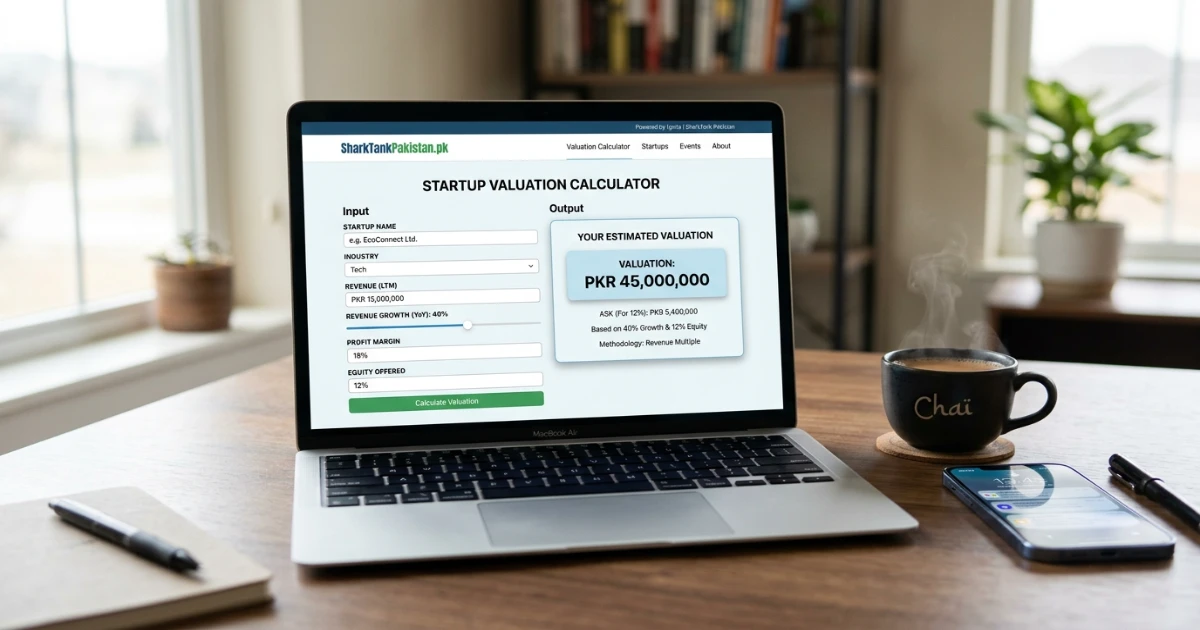
If you’re preparing to pitch on either show — or simply want to understand what investors value — run your numbers through the SharkTankPakistan.pk Valuation Calculator. It forces you to confront the same reality check the sharks will give you: your revenue, your growth rate, and your market size need to tell a coherent story.
The Pitch Room Psychology: What Founders Experience on Each Show
Having analyzed dozens of pitches from both shows, a pattern emerges that few commentators discuss.
On Shark Tank India, the pitch room energy is electric but adversarial by design. Founders face rapid-fire interruptions. Sharks talk over each other. The pressure is manufactured to test composure. This format rewards founders who can command a room — extroverts who thrive under verbal sparring. Quieter but equally competent founders sometimes get steamrolled.
On Shark Tank Pakistan, the energy is more measured. Interruptions happen, but the panel tends to let founders complete their narratives before drilling down. This doesn’t mean it’s easier — the questions, when they come, are often more surgically precise about operational details. The format rewards founders who can demonstrate depth of thought rather than stage presence alone.
💡 Which Style Suits You?
If you’re a Pakistani founder preparing your pitch — whether for the show or for private investors — ask yourself honestly: Do you perform better under rapid-fire pressure or under sustained, methodical questioning? Your answer should shape how you rehearse. For India-style panels, practice defending your numbers in 20-second bursts. For Pakistan-style panels, prepare 3-minute deep-dives on each operational lever of your business.
Which Show’s Lessons Apply to You? A Situation-Based Guide
Not all founders should study both shows the same way. Here’s how to calibrate your learning based on where you are.
If You’re Pre-Revenue or Idea-Stage
Watch Shark Tank Pakistan more closely. Pakistani sharks spend more time evaluating the founder’s capability and the operational feasibility of an idea under local constraints. India’s panel, by contrast, often expects some traction before engaging seriously. If you’re pre-revenue, Pakistan’s episodes will teach you how to defend a vision when you don’t yet have numbers.
If You’re Generating Steady Cash Flow
Study Shark Tank India’s negotiation sequences. Indian sharks are masters at pushing valuations down using comparable benchmarks, market saturation arguments, and brand scalability concerns. Learning to counter these arguments will serve you well — even if you’re pitching in Pakistan, because sophisticated Pakistani investors increasingly use similar frameworks.
If You’re a Traditional Business (Manufacturing, Retail, Agri)
Shark Tank Pakistan’s panel, with its broader industrial expertise, offers more relevant feedback patterns. Watch how Pakistani sharks evaluate asset-heavy models, inventory cycles, and supply chain risks. India’s panel — brilliant for D2C and tech — may not give these sectors the depth of scrutiny your business requires.
If You’re a Tech or App-Based Startup
Shark Tank India is your richer learning resource. The Indian panel’s digital-first mindset means their questions about user acquisition funnels, cohort retention, and platform economics are sharper. Supplement with Shark Tank Pakistan to understand how tech adoption curves and payment infrastructure realities differ in the Pakistani market.
Beyond the Cameras: The Real Ecosystem Impact
The most important difference between Shark Tank India vs Pakistan isn’t visible on screen. It’s what happens after the credits roll.
Shark Tank India has demonstrably shifted India’s startup culture. The show made “valuation” and “equity” household terms. It inspired thousands of college students and mid-career professionals to pursue entrepreneurship. It normalized the idea that a stranger in a suit could write you a cheque if your idea was good enough. Regional language spinoffs and a surge in Tier-2 and Tier-3 city applications followed.
Shark Tank Pakistan is still in its early innings, but the impact signals are promising. The show is introducing millions of Pakistanis — many of whom have never interacted with formal venture capital — to the language of startup investing. It’s demystifying terms like “cap table,” “dilution,” and “term sheet.” More importantly, it’s showcasing Pakistani innovation that rarely makes headlines: agri-tech solutions, local e-commerce enablers, sustainable manufacturing startups. The visibility alone is a form of ecosystem development.
However, there’s a nuanced risk. Both shows can create unrealistic expectations — that a 10-minute pitch is all it takes, that every business deserves venture funding, and that rejection means failure. Pakistani founders, operating in a thinner funding environment, are especially vulnerable to this misinterpretation. The sharks themselves have occasionally flagged this: “Not every business needs equity funding. Sometimes debt, bootstrapping, or a strategic partner is the right answer.”
Common Pitfalls — and When This Whole Comparison Doesn’t Matter
Let’s inject some contrarian honesty.
Pitfall 1: Over-Indexing on Television Deals
The deals you see on both shows are television products, not representative samples of real-world startup funding. Deals are condensed, dramatized, and shaped by production incentives. Using either show as your primary investor education will distort your expectations. Watch for patterns, not prescriptions.
Pitfall 2: Assuming Pakistani Sharks Are “Easier”
Some Pakistani founders walk into pitches — whether on the show or outside it — expecting local investors to be less demanding than Indian ones. That’s dangerous. Pakistani sharks may express themselves differently, but they’re underwriting the same fundamental risks — and in a tougher macro environment, their scrutiny is often higher, not lower.
Pitfall 3: Copying Indian Pitch Styles in Pakistan
Rehearsing a high-energy, rapid-fire, brand-story-heavy pitch — the kind that wins on Shark Tank India — can backfire in front of Pakistani investors who want to hear about operational resilience and contingency planning first. Adapt your communication style to your audience.
When the Comparison Genuinely Doesn’t Matter
If you’re building a genuinely exceptional business with strong unit economics and a clear path to profitability, the differences between the two panels shrink dramatically. Great businesses attract investment regardless of geography. The nuances explored in this article matter most for borderline pitches — the ones where investor psychology, panel composition, and cultural signaling tip the balance. For the top 10% of startups? Neither panel will let you go.
Put This Into Practice: Use SharkTankPakistan.pk’s Tools
Reading about judging styles and deal structures is useful. Applying them to your own numbers is transformative. Here’s how to bridge the gap:
- Run your valuation. Open the Startup Valuation Calculator on SharkTankPakistan.pk. Input your actual revenue, growth rate, and asset base. The output won’t just give you a number — it’ll show you where your assumptions are weakest, which is exactly what a Pakistani shark would probe.
- Model your equity offer. Use the Equity & Loan Calculator to simulate different deal structures. What happens if you give 15% equity vs 25%? How does a royalty component change your long-term economics? Practice defending each scenario aloud.
- Study the best pitches. Revisit the best pitches from Shark Tank Pakistan Season 1. Notice not just what the founders said, but when the sharks leaned in — and when they leaned back. Those micro-moments are your coaching cues.
Real-World Echoes: What Pakistani Founders Can Learn From Both Panels
Consider the pattern: On Shark Tank India, a D2C snack brand might get grilled on branding, distribution moat, and CAC-to-LTV ratios. On Shark Tank Pakistan, a similar food business would likely face questions about raw material sourcing during import restrictions, cold-chain logistics in cities with unreliable power, and pricing sensitivity in an inflation-hit consumer market.
Neither set of questions is better. They reflect different operating realities. The smartest Pakistani founders watch both shows and learn to answer both sets of questions: the brand-scale questions from India’s sharks and the operational-resilience questions from Pakistan’s panel. That dual fluency is rare — and it’s a competitive advantage if you ever pitch cross-border investors.
Frequently Asked Questions
Which Shark Tank is better for learning about startup funding — India or Pakistan?
Both offer value, but for different reasons. India’s show teaches brand scaling, valuation negotiation, and digital-first growth. Pakistan’s show teaches operational resilience, local-market unit economics, and navigating macroeconomic constraints. Study both, but prioritize the one closest to your market reality.
Do Pakistani sharks take more equity than Indian sharks?
Generally, yes — Pakistani sharks often ask for 10–30% equity compared to India’s 5–20% range. The difference reflects higher perceived risk in Pakistan’s economy and a smaller pool of competing investors, which reduces downward pressure on equity demands.
Can I apply lessons from Shark Tank India to a Pakistani business pitch?
Partially. Indian episodes teach excellent lessons on brand storytelling, competitive positioning, and handling rapid investor questioning. But you’ll need to supplement those with Pakistan-specific preparation: currency risk contingency, import substitution strategy, and realistic local market sizing.
Why do some deals on both shows fall apart after filming?
Due diligence often reveals discrepancies — inflated revenue claims, undisclosed liabilities, or unclear cap tables. In Pakistan, additional complications like undocumented family ownership structures or informal debt can surface during DD and kill deals that looked solid on camera.
Is Shark Tank Pakistan more focused on traditional businesses than tech startups?
The panel’s composition makes it more receptive to manufacturing, agri-processing, and services businesses than India’s predominantly digital/consumer panel. However, tech startups still pitch — they simply need to be prepared for questions about infrastructure dependencies and adoption timelines specific to Pakistan.
How do I apply to Shark Tank Pakistan?
Visit the official application portal and prepare a concise pitch covering your business model, traction, team, and funding ask. For detailed guidance, read our step-by-step application guide on SharkTankPakistan.pk.
Which show has produced more successful post-show startups?
Shark Tank India, with multiple seasons and a larger deal volume, has a longer track record of post-show success stories. Shark Tank Pakistan is newer, but early indicators suggest strong post-deal mentorship is helping several Season 1 companies scale within Pakistan and explore export markets.
📋 Your Fast-Track Cheat Sheet: Top 3 Actions to Take
- Benchmark your valuation against both markets. Use the SharkTankPakistan.pk valuation calculator to understand what your numbers look like through a Pakistani investor’s lens — then test them against Indian multiples to see the gap. Knowing the difference makes you impossible to blindside.
- Build a dual-purpose pitch deck. Prepare one version that’s tight, high-energy, and brand-forward (India-style) and another that’s operationally detailed with contingency scenarios (Pakistan-style). You’ll be ready for any room you walk into — on or off camera.
- Study the rejections, not just the deals. On both shows, the richest learning material is in the pitches that didn’t close. Watch why sharks said no. Was it valuation? Market size? Founder credibility? The pattern of rejections is your diagnostic checklist for strengthening your own startup.