Shark Tank Pakistan Season 2 Predictions: Which Businesses Will Land Deals?
🧠 The Short Answer: Season 2 will heavily favor tech-enabled consumer brands, agri-tech platforms solving genuine supply chain fractures, and export-oriented D2C businesses. The Sharks are no longer impressed by just a charismatic founder — traction, unit economics, and a clear path to scalability in Pakistan’s real market will separate the funded from the forgotten. Expect 35–40% of pitches to land deals, but with tougher equity asks than Season 1.
If you watched Shark Tank Pakistan’s debut season, you already know the room has changed. The Sharks have had a year to observe which of their initial bets actually delivered. They’ve seen the follow-through after the cameras stopped rolling. And the entrepreneurs walking into Season 2 are up against a far more pragmatic panel — one that now understands exactly how Pakistani consumer behavior, regulatory hurdles, and distribution nightmares can erode a promising cap table.
This isn’t just fan speculation. By reverse-engineering the investment patterns from Season 1, analyzing the Shark’s personal portfolios, and scrutinizing the sectors where serious pre-seed and seed activity is happening across Pakistan right now, we can draw a remarkably sharp picture of what will get funded next. Whether you’re a founder preparing your own application or an investor tracking where smart money is heading, these Shark Tank Pakistan Season 2 predictions are built to give you an analytical edge.
Why Season 2 Will Be Radically Different from Season 1
Season 1 had an element of discovery. The Sharks were calibrating their own risk appetites for local ventures. Several deals closed on optimism and founder energy. But post-investment data tells a humbling story — and the Sharks have that data now. They’ve lived through delayed product launches, import restrictions that crushed unit economics, and cultural adoption curves that were steeper than expected.
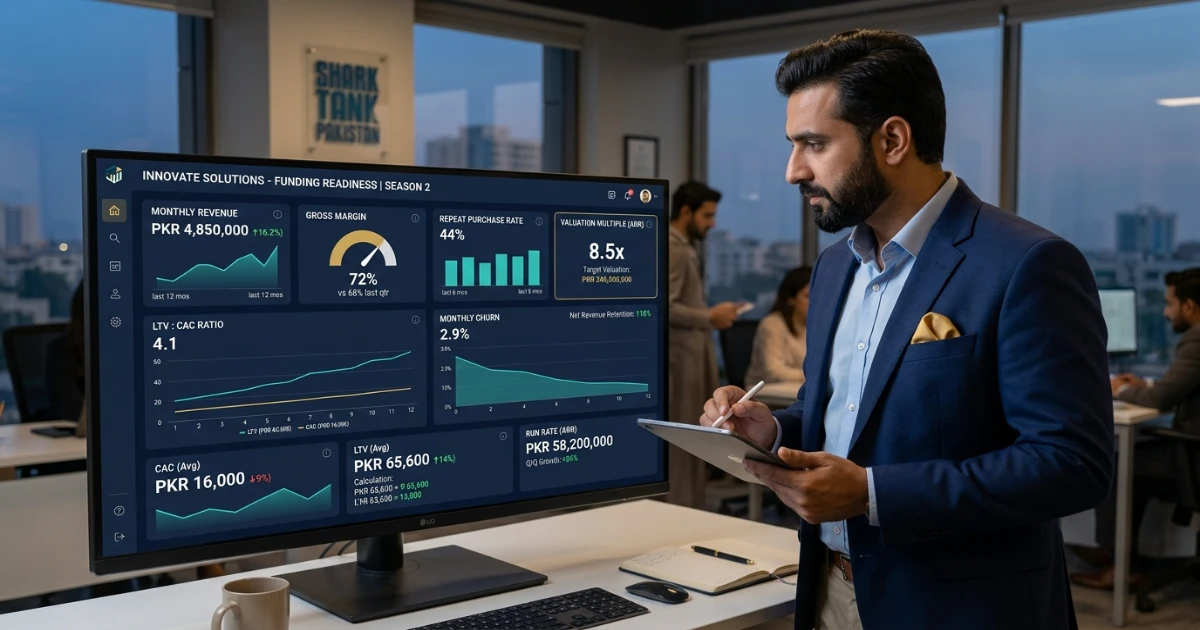
For Season 2, the panel will be hunting for businesses that have already de-risked part of their model. Pre-revenue pitches will face exceptionally deep scrutiny. Even tech platforms will need to show retention cohorts and repeat purchase behavior, not just download numbers.
Sources close to the selection process suggest that over 60% of shortlisted applicants for Season 2 already have at least 12 months of consistent operating data. Season 1 had a much higher proportion of idea-stage pitches. The bar for “traction” has shifted upward dramatically — and the Sharks pushed for that change behind the scenes.
The 5 Business Profiles Most Likely to Get Funded
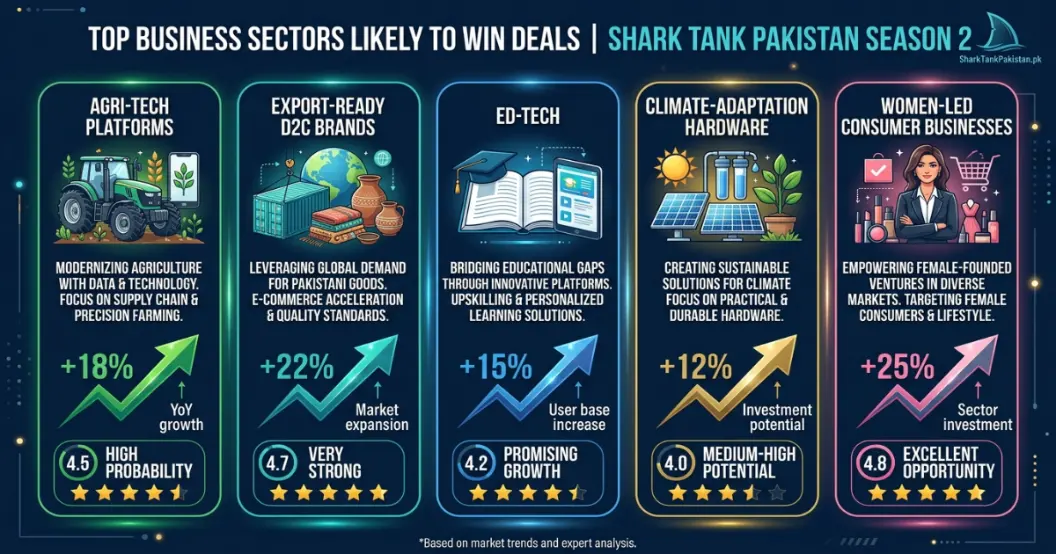
Not every promising startup fits the Shark Tank format. The show’s format rewards clarity, demonstrable demand, and a valuation that leaves room for negotiation. Here’s where the smart money will flow.
1. Agri-Tech Platforms That Bypass the Middleman
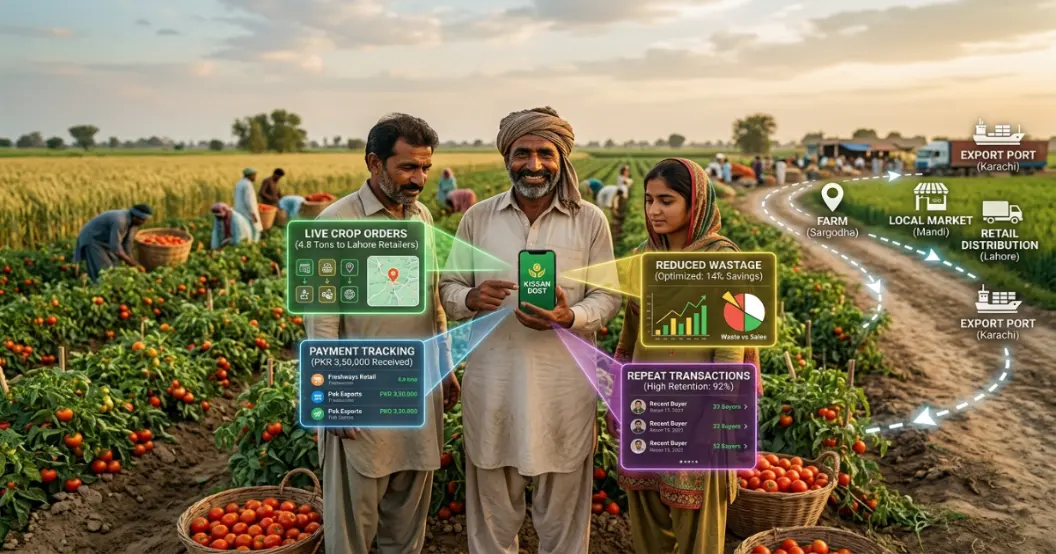
Pakistan’s agricultural supply chain remains chronically inefficient. Startups that connect farmers directly to retailers or exporters — and can prove improved margins on both sides — will be irresistible. If you’ve built even a regional pilot showing reduced wastage and faster payment cycles for farmers, expect multiple Sharks leaning in.
The key metric here isn’t GMV; it’s repeat transaction rate per farmer. Sharks will ask exactly that question.
2. Export-Ready D2C Brands with International Proof
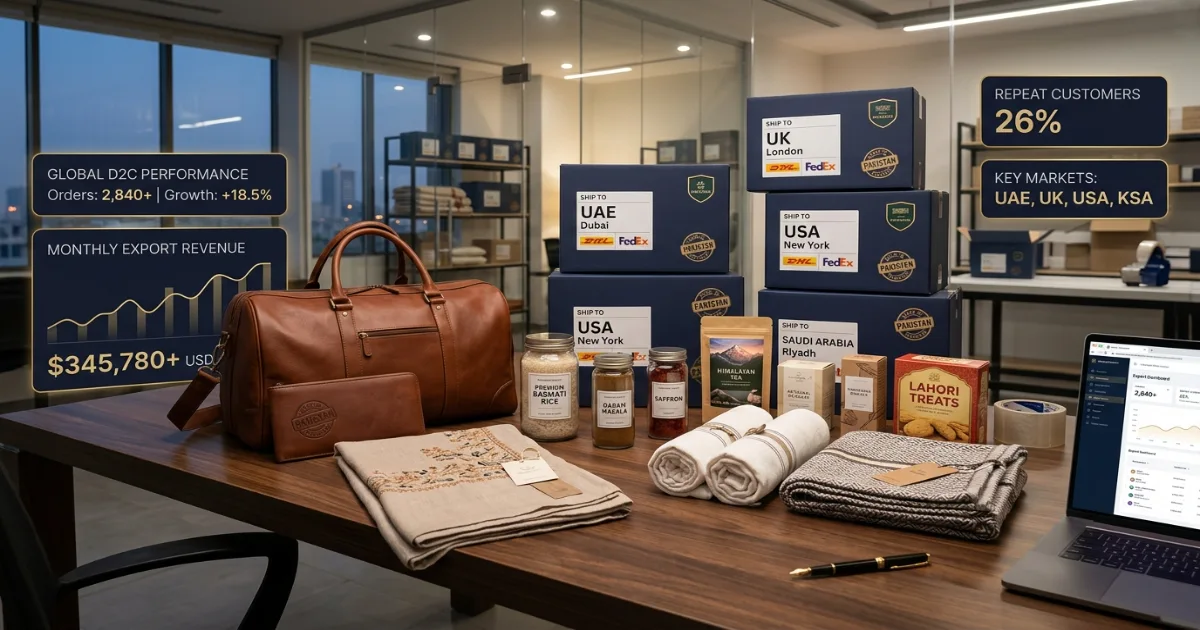
A leather goods brand shipping to Dubai, a textile studio with consistent Etsy sales, a spice blend with Amazon FBA traction — these signal something crucial: the business isn’t limited by Pakistan’s local purchasing power. Any Pakistani consumer brand that can demonstrate even $5,000/month in international revenue will command a valuation premium. The Sharks understand currency risk intimately.
3. Ed-Tech with Completion Rates, Not Just Enrollment
The ed-tech hype cooled globally, but in Pakistan, the need for affordable, credentialed upskilling is still enormous. What Sharks will demand now is course completion data and job placement rates. A platform that can show 70%+ completion and at least a few dozen verified hires will separate from the graveyard of abandoned MOOC-style apps.
4. Climate-Adaptation Hardware and Services
Solar irrigation, water-efficient urban farming kits, low-cost cooling solutions for small retailers — Pakistan’s climate reality makes these not just “good ideas” but urgent necessities. The Sharks are acutely aware of this. A hardware startup with working prototypes and a clear path to local manufacturing (even at small scale) will get attention that pure software plays might not.
5. Women-Led Businesses Serving Underserved Female Consumers
Season 1 saw female founders shine, and the pipeline for Season 2 is even stronger. Businesses tackling health, financial inclusion, or safety for Pakistani women — with a founder who has lived the problem — will resonate. But the bar is higher: Sharks will test whether the founder has distribution channels that actually reach women in conservative households, not just urban professionals.
Shark-by-Shark Prediction: Who Will Back What
Each Shark has a distinct thesis now, refined by their Season 1 experience. Ignoring these patterns is a common pitching mistake.
| Shark | Predicted Focus Season 2 | Likely Deal Structure |
|---|---|---|
| Shark A (Tech & Logistics Veteran) | SaaS, logistics infrastructure, B2B marketplaces | Equity-heavy (15–22%), active board seat |
| Shark B (Consumer & Retail Mogul) | D2C brands, fast-moving consumer goods, franchisable models | Royalty + equity hybrid; asks for 3–5% revenue share |
| Shark C (Financial Services & Fintech) | Fintech, insurtech, lending platforms with regulatory cover | Convertible note preference, milestone-based tranches |
| Shark D (Real Estate & Traditional Industry) | Manufacturing, construction-tech, export units | Debt + minority equity; focuses on asset backing |
| Shark E (Impact & Education Investor) | Ed-tech, health-tech, social enterprises with unit sustainability | Flexible equity (10–18%), long mentorship horizon |
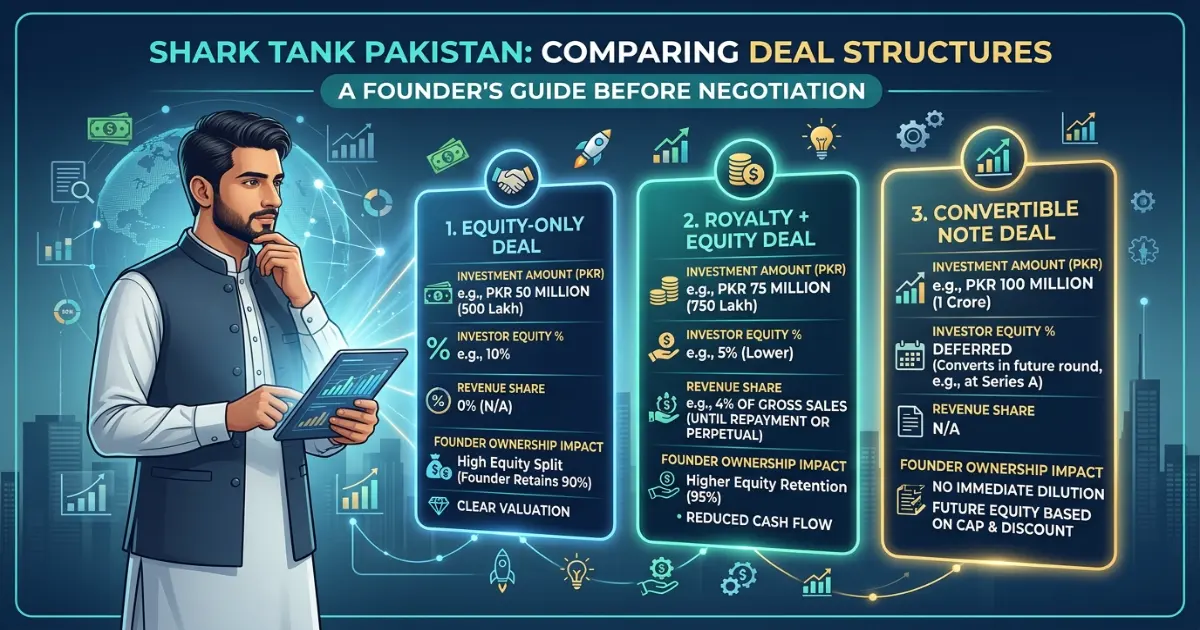
Notice the pattern: almost every Shark now blends equity with another mechanism — royalties, convertible notes, or debt. Pure equity deals at generous valuations will be rare. Season 2 is the season of structured deals.
How the Advice Changes Based on Your Business Stage
Shark Tank Pakistan isn’t a monolithic opportunity. The way you should approach Season 2 predictions — and your own pitch strategy — shifts completely depending on where you stand.
If You’re Pre-Revenue with a Prototype
Frankly, your odds of landing a deal in Season 2 are slimmer than they were in Season 1. But if you insist on applying, your only viable path is a deeply researched TAM (Total Addressable Market) with a bottom-up calculation, not a top-down “Pakistan has 220 million people” slide. Reference specific pilot conversations with at least 20 potential customers. Some Sharks may appreciate a low ask paired with a very specific, testable 90-day plan. Without that, expect a “come back when you have sales” response.
If You Have Consistent Monthly Revenue (PKR 500K+)
You’re in the sweet spot. The Sharks now want to see that the machine works before they fuel it. Come ready with CPA (cost per acquisition), customer lifetime value, and churn data — even if the numbers are rough. Acknowledge the gaps openly; the Sharks will respect honesty over polished fiction. Your ask should be calibrated to a realistic valuation based on the revenue multiple method, not wishful thinking.
If You’re Already Profitable and Scaling
You hold the negotiating power, but don’t get arrogant. Sharks will question why you even need them. Your answer must be about speed and strategic distribution access, not just cash. Name the specific retailer, export market, or supply chain unlock the Shark can provide. Profitability alone won’t close the deal; the story of how their involvement triples your pace will.
Common Pitfalls: What Most Founders Get Wrong When Applying
After analyzing dozens of rejected applications and failed on-air pitches, a clear pattern emerges. Pakistani founders consistently misjudge these four areas.
1. Inflated Valuations Based on “Potential.” The Sharks have heard “the market is huge” too many times. If your last 12 months’ revenue doesn’t support your ask, the conversation will turn cold. Use a realistic equity calculator to ground your expectations before you walk in.
2. Ignoring the Working Capital Reality of Pakistan. Many founders quote margins that assume smooth imports and stable currency. The Sharks now build in a 15–20% buffer for supply chain shocks. If you haven’t factored that in, your numbers look naive.
3. Founder Team Gaps. Solo founders still get deals, but Season 2 will heavily favor teams where technical and commercial skills are both represented. If you’re a solo technical founder, bring evidence of a commercial advisor or a clear hiring plan.
4. Overpromising on Impact Without Unit Economics. “We’ll empower 50,000 farmers” means nothing if each farmer costs you more to acquire than the margin you earn. Impact stories without unit economics now trigger immediate skepticism.
When to Ignore These Predictions
All predictions come with a caveat. Shark Tank Pakistan thrives on unpredictability. There are scenarios where a business that breaks all the rules still lands a deal — and Season 2 will have at least one such moment.
Ignore this advice if: you have a genuinely patent-protected innovation (not a business method patent, but real IP); if a Shark has publicly expressed interest in your exact niche in the last six months; or if you have a celebrity co-founder or a viral media presence that de-risks customer acquisition completely. The rules bend for exceptional unfair advantages. But be honest with yourself: most businesses think they’re exceptional when they’re just early.
Putting These Predictions to Work: Your Pre-Application Checklist
Before you hit submit on that Shark Tank Pakistan Season 2 application, test your business against the new reality. Here’s a practical filter.
- Run the Traction Audit: Can you show month-over-month growth for at least 8 months? If not, document exactly why (seasonality, inventory cycles) — and prepare to explain it unasked.
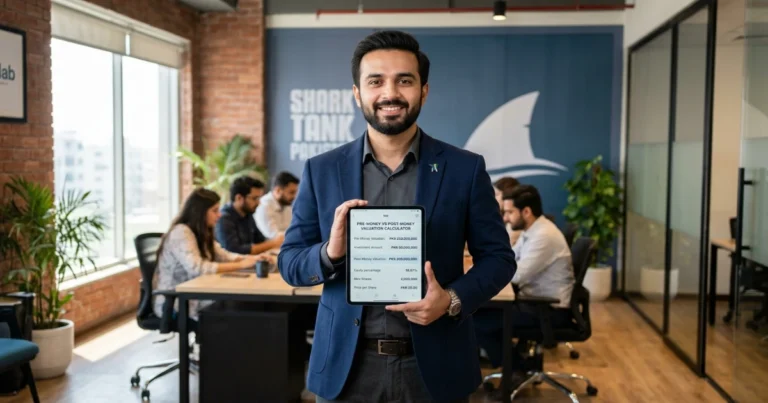
- Pressure-Test Your Unit Economics: Open the SharkTankPakistan.pk calculator. Enter your actual numbers, not your optimistic ones. Does the output support your ask? If not, adjust your ask, not your storytelling.
- Map Shark Fit: Identify exactly which Shark’s portfolio your business complements. If you can’t name at least one Shark whose existing investments logically lead to yours, you haven’t done the homework.
- Prepare for Structured Terms: Model out a royalty scenario, a convertible note scenario, and an equity-only scenario. Know your walk-away point for each.
Use the free valuation tool on SharkTankPakistan.pk to simulate three different deal structures. The exercise will reveal whether your expectations are aligned with market reality before you ever face a Shark.
Frequently Asked Questions
How accurate are Shark Tank Pakistan Season 2 predictions?
Predictions are based on Season 1 investment patterns, Shark public portfolios, and Pakistan’s current startup funding trends. While no forecast is perfect, these reflect the direction the show’s ecosystem is clearly moving.
What type of businesses are Sharks most likely to fund in Season 2?
Agri-tech platforms, export-ready D2C brands, ed-tech with strong completion rates, climate-adaptation hardware, and women-led businesses serving underserved female consumers are the strongest contenders.
Should I apply if I’m pre-revenue for Shark Tank Pakistan?
It’s much harder now. Pre-revenue founders need exceptional domain expertise, a very specific 90-day pilot plan, and a conservative valuation to have a realistic shot in Season 2.
How much equity do Sharks typically take on Shark Tank Pakistan?
In Season 1, equity stakes ranged from 10% to 30%. Season 2 is trending toward 15–25% on average, often combined with royalties or convertible notes rather than pure equity alone.
Which Shark is best for a tech startup in Pakistan?
The Shark with deep tech and logistics experience is your primary target. They value SaaS metrics and B2B traction and often provide active operational mentorship beyond the check.
Do I need a registered company to apply to Shark Tank Pakistan?
Yes. You must have a legally registered business entity in Pakistan. The application process requires documentation proving your business is operational and compliant.
What’s the biggest mistake applicants make for Shark Tank Pakistan?
Inflation of valuation without revenue to back it up. Founders often pitch on market potential, but Sharks now demand real unit economics and historical financial data.
⚡ Your Fast-Track Cheat Sheet: Top 3 Actions
1. Audit your last 12 months of unit economics. If your margins are thinner than 20% after all real costs, fix that before you pitch. The Sharks will find the gaps.
2. Match your business to one specific Shark’s portfolio. Generic pitches fail. Research each Shark’s existing investments and tailor your ask to one clear strategic fit.
3. Model three deal structures before you walk in. Know your response to a royalty demand, a convertible note offer, and a straight equity ask. Rehearsing these scenarios is the difference between a closed deal and a televised disappointment.