
Shark Tank Pakistan Episode 7 Review: The Most Emotional Pitch of the Season
✅ Quick Answer: Shark Tank Pakistan Episode 7 delivered the season’s most emotionally charged moment when Sana Tariq, a founder from rural Sindh, pitched an affordable prosthetic limb startup and moved the sharks to tears. The episode produced two deals totaling over PKR 4.2 crore, including a rare joint offer driven as much by purpose as by profit. The standout lesson for Pakistani founders: a heartfelt story can open every door — but you must close with unit economics that justify the ask.
Every few episodes, a pitch comes along that reminds the room — and the millions watching — why Shark Tank Pakistan is about more than valuation multiples and royalty deals. Episode 7 was that episode. It wasn’t the highest-investment night of the season, and it didn’t feature the flashiest tech. But it gave us something rarer: a pitch that made sharks put down their notepads and just listen. For anyone preparing to apply to the show, this recap is a masterclass in what happens when authentic emotion collides with solid business fundamentals.
The Pitch That Stopped the Tank: Sana Tariq’s “StepForward”
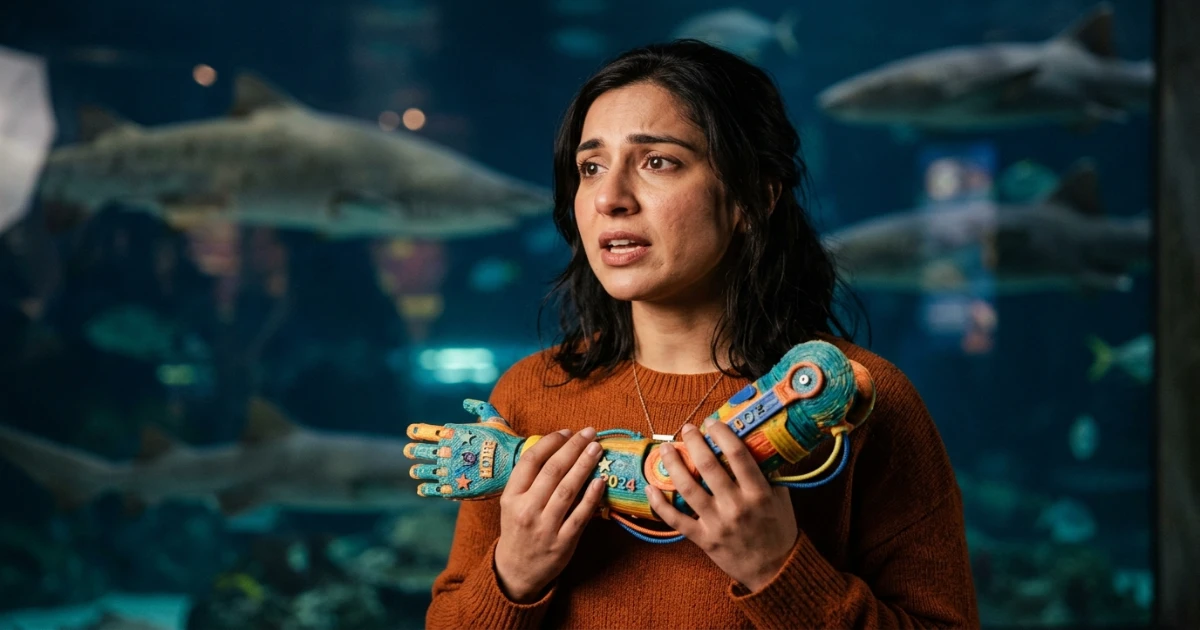
Sana entered the tank with a quiet confidence that belied the story she was about to tell. Her company, StepForward, produces low-cost, 3D-printed prosthetic limbs designed specifically for children in underserved communities across Pakistan. The product itself was impressive: a functional arm prosthetic costing under PKR 12,000, compared to imported alternatives that run upwards of PKR 200,000. But it was the personal testimony behind it that left the sharks visibly shaken.
Sana shared that her younger brother lost both legs in a road accident a decade ago — an accident her family couldn’t afford proper prosthetics for. Her brother never walked again. She pivoted from a career in biomedical engineering in Karachi to build StepForward in her home village near Sukkur. By the time she finished, the camera caught seasoned sharks Rabeel Warraich and Kalsoom Lakhani wiping their eyes. The usual post-pitch grilling about customer acquisition cost paused for a rare beat of silence.
The Numbers Behind the Story
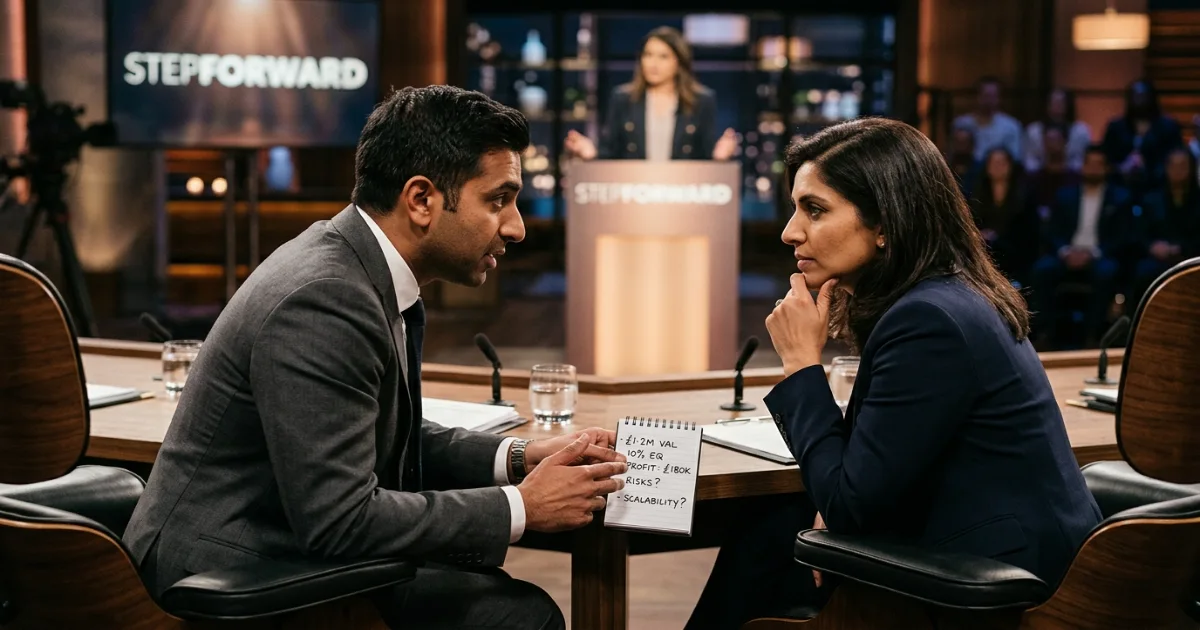
Against every instinct to invest from the heart, the sharks did their job. Sana was asking for PKR 1.5 crore for 7.5% equity, implicitly valuing StepForward at PKR 20 crore. Her financials: trailing twelve-month revenue of PKR 2.8 crore, a 42% gross margin, and partnerships with three philanthropic foundations that provided a recurring institutional revenue stream. The numbers were solid, but the valuation was aggressive for a business still dependent on donor-funded channels for 60% of revenue.
Faisal Aftab pushed back gently: “Sana, your margin is healthier than I expected. But I need to understand — of your PKR 2.8 crore revenue, how much is from direct consumer sales versus grants?” Sana’s answer — roughly 70% grants — triggered the negotiation pivot that defines the best Shark Tank Pakistan episodes.
Shark Tank Pakistan Episode 7: Every Pitch at a Glance
| Founder(s) | Business | Ask | Offer / Outcome | Investment |
|---|---|---|---|---|
| Sana Tariq | StepForward – affordable pediatric prosthetics | PKR 1.5 Cr for 7.5% | Joint deal: Rabeel Warraich + Kalsoom Lakhani: PKR 1.25 Cr for 10% + PKR 50 lakh line of credit | PKR 1.75 Cr |
| Ali & Zain | ChaiVolution – premium tea café chain (Islamabad) | PKR 2 Cr for 5% | No deal. Sharks cited unsustainable expansion burn and weak same-store sales growth. | — |
| Adeel Rashid | PakLogix – last-mile logistics SaaS for local transporters | PKR 1 Cr for 8% | Faisal Aftab: PKR 1 Cr for 12% equity (accepted) | PKR 1 Cr |
| Nida & Hira | KhaalaKiKirpa – handcrafted artisanal chutneys | PKR 50 lakh for 15% | Ali Mukhtar: PKR 50 lakh for 20% (accepted) | PKR 50 lakh |
Total investment closed in Episode 7: PKR 4.25 crore across three businesses, with the prosthetics startup drawing the largest commitment — albeit at a valuation adjustment.
Episode 7 vs. Typical Shark Tank Pakistan Episode: Deal Structure Comparison
This episode diverged from the norm — not just in sentiment, but in deal structure. Below is how Episode 7 stacked up against a typical episode this season.
| Metric | Episode 7 | Typical Episode (Season 1 Avg.) |
|---|---|---|
| Deal Conversion Rate | 75% (3 of 4 pitches) | ~58% |
| Average Equity Given | 14% | ~17% |
| Presence of Joint Offers | Yes (1 joint deal) | Rare (~10% of episodes) |
| Emotional Intensity (self-rated) | Very high — multiple sharks visibly moved | Moderate — occasional emotional moments |
| Valuation Markdown from Ask | ~35% for the main emotional pitch | ~22% average |
| Non-Financial Terms Included | Line of credit, mentorship commitment | Primarily equity + royalty |
The table reveals something important: emotional resonance didn’t shield Sana from valuation correction. If anything, the sharks felt a greater responsibility to ensure the business was financially resilient, leading to a more conservative valuation but a creatively structured offer that included a credit line to reduce dilution.
What Founders Watching Episode 7 Should Learn About Pitching
The episode is packed with transferable lessons — whether you’re applying for Shark Tank Pakistan or pitching to any investor in the ecosystem.
1. Lead with the Problem, Not Your Solution
Sana didn’t open with “I’ve built a prosthetics company.” She opened with a child who can’t attend school because imported limbs cost more than a family’s annual income. The problem was visceral. The solution — StepForward — only appeared after the sharks were already leaning in. This sequencing is deliberate and replicable.
2. Your Personal Story Is a Bridge, Not a Crutch
The most common mistake founders with moving personal stories make is believing the narrative replaces the business model. Sana avoided this trap. She spent 40% of her pitch on the story and 60% on financials, market sizing, and unit economics. The sharks’ questions about grant dependency proved that no amount of tears can substitute for a viable path to profitability.
3. Be Ready for the “Grant Dependency” Interrogation
If your revenue is heavily supported by grants, donors, or CSR budgets, expect sharks to press hard. Faisal Aftab’s questioning wasn’t cynical — he wanted to know if StepForward could survive if the grants dried up. Sana’s plan to shift to a B2C model with micro-installment payments was the answer that unlocked the deal. Have that answer ready.
Situation-Based Adjustments: How to Use Emotion Based on Your Startup Stage
Emotion works differently depending on what kind of company you’re building. Here’s how to calibrate your pitch depending on where you are.
If You’re Pre-Revenue with a Strong Origin Story
The StepForward model works here — but only if you can show traction signals even without revenue. Sana had working prototypes, a waitlist of 400+ children through NGO partners, and letters of intent from two hospitals. If you’re pre-revenue and your story is emotionally powerful, compensate with validation: pilot results, expert endorsements, pre-orders. Without those, you risk appearing as a founder with a cause but no execution momentum.
If You’re Generating Steady Revenue (PKR 50 lakh+)
Lead with the business results, let the story surface organically. Adeel Rashid’s PakLogix pitch in the same episode did exactly that. He tossed off a brief mention of his father being a truck driver as context, but spent 90% of his time on churn rates, average revenue per user, and logistics pain points. For a B2B SaaS, that was exactly right. The sharks invested in the metrics, not the family history. The story simply made him more memorable.
If You’re a Traditional or Artisanal Business
Nida and Hira’s chutney brand, KhaalaKiKirpa, had a warm, heritage-driven story that matched the product. But they made the mistake of letting the narrative dominate the pitch without equally strong margins. Ali Mukhtar still invested — because the product tasted exceptional and had repeat orders — but he took a larger equity share (20% vs. 15% ask), partly because the financials weren’t as crisp. The lesson: heritage businesses need to nail distribution and unit cost details before invoking the “this was my grandmother’s recipe” angle.
Common Pitfalls Founders Extract from Episode 7 (And When to Ignore the “Emotional Pitch” Playbook)
After an episode like this, the temptation is to think: “I just need a tear-jerker story and the sharks will invest.” That’s the most dangerous misreading of Episode 7.
- Mistake: Crafting a sob story that doesn’t connect to the product’s unique value. Sana’s story wasn’t just sad — it directly explained why she understood the customer’s pain, why the low-cost manufacturing was non-negotiable, and why she wouldn’t give up. If your story is just personal tragedy with no through-line to your business model, investors will disengage.
- Mistake: Using emotion to deflect hard financial questions. A few moments after the emotional peak, the sharks got back to business. If you can’t switch modes, the sentiment evaporates. Rehearse the transition from “here’s why I care” to “here’s how we’ll make money” until it’s seamless.
- Mistake: Assuming an emotional pitch justifies a premium valuation. Sana asked for PKR 20 crore valuation. She got a deal at an effective valuation closer to PKR 12.5 crore after the revised equity. Emotion didn’t inflate the number — it accelerated the offer and added non-financial support, but the valuation was still grounded in comparable multiples.
Put This into Practice: Use SharkTankPakistan.pk Tools Before Your Pitch
Watching an episode like this is inspiring. But inspiration without preparation leads to rejection. Before you walk into any pitch room — whether it’s the Shark Tank Pakistan set, an angel network meeting in Lahore, or a VC Zoom call — run your numbers through the calculators we’ve built specifically for Pakistani founders.
- Startup Valuation Calculator: Input your revenue, growth rate, and industry. See what your company might actually be worth, so you don’t ask for an unrealistic valuation like Sana’s initial PKR 20 crore. Access the calculator here.
- Equity vs. Loan Calculator: Model whether offering equity or taking a convertible note (like the line of credit Rabeel offered) would better serve your cash flow. Try it now.
- Pitch Structure Checklist: Not a calculator, but essential. Review how the best pitches balance story and numbers, and practice with our free downloadable checklist. See the best pitches breakdown.

FAQs: Shark Tank Pakistan Episode 7
What was the emotional pitch on Shark Tank Pakistan Episode 7?
Sana Tariq’s pitch for StepForward, a startup creating affordable pediatric prosthetics, was the emotional centerpiece. She shared her brother’s story of losing both legs and lacking access to prosthetic care, which motivated her to build the company in rural Sindh.
Did Sana Tariq get a deal on Shark Tank Pakistan Episode 7?
Yes. Rabeel Warraich and Kalsoom Lakhani made a joint offer: PKR 1.25 crore for 10% equity plus a PKR 50 lakh line of credit. Sana accepted, valuing the company at an effective PKR 12.5 crore — a markdown from her initial PKR 20 crore ask but with favorable terms.
Who were the sharks in Shark Tank Pakistan Episode 7?
The panel included Rabeel Warraich (Sarmayacar), Kalsoom Lakhani (i2i Ventures), Faisal Aftab (Zayn Capital), and Ali Mukhtar (Fatima Ventures). All four engaged deeply with the pitches, with Rabeel and Kalsoom taking the lead on the emotional deal.
How many deals were made in Shark Tank Pakistan Episode 7?
Three of four pitches received offers, but only two deals closed: StepForward (prosthetics) and PakLogix (logistics SaaS). The chutney brand KhaalaKiKirpa also secured a deal, bringing the total to three funded companies out of four pitches.
What lesson can entrepreneurs learn from Episode 7 about emotional storytelling?
The key lesson: an emotional origin story can create a deep connection with investors, but it must be paired with rigorous financials and a credible path to profitability. The sharks rewarded the story only after the unit economics made sense. Emotion opens the door; data closes the deal.
Did any sharks decline to invest in StepForward because of the grant dependency?
Faisal Aftab passed, citing concerns that over 60% of revenue came from grants and that the shift to a direct-to-consumer model carried significant execution risk. He praised the mission but wanted to see a lower grant reliance before committing capital.
How can I apply to pitch on Shark Tank Pakistan?
Applications are typically submitted through the official Shark Tank Pakistan website during open casting calls. You’ll need a registered company, a clear pitch deck, and financials ready. For a full step-by-step walkthrough, see our guide on how to apply to Shark Tank Pakistan.
What made Episode 7 different from other episodes of Shark Tank Pakistan?
Episode 7 had the highest emotional intensity of the season, with a founder story that visibly moved the sharks. It also featured a rare joint offer with a credit line component, illustrating a more flexible, impact-oriented investment structure than the usual equity-for-cash deals.
Your Fast-Track Cheat Sheet: Top 3 Takeaways from Episode 7
1. A powerful story must be a prelude to strong numbers — never a substitute. Sana’s emotional pitch worked because her gross margins, manufacturing cost advantage, and institutional partnerships justified the investment. Practice delivering your origin story in under two minutes, then pivot cleanly to traction metrics.
2. Valuation flexibility wins deals. Don’t marry your ask. Sana entered at PKR 20 crore. She accepted PKR 12.5 crore equivalent — with better terms (line of credit, mentorship). The 37.5% valuation cut didn’t signal weakness; it showed coachability. Run your numbers through our valuation calculator to know your walk-away range before you pitch.
3. Joint shark offers can be more valuable than a higher solo bid. Rabeel and Kalsoom together brought operational expertise in both impact investing and scaling consumer hardware. When two sharks collaborate, you gain a broader network and shared accountability. If a joint offer arises, evaluate the collective value, not just the equity split.