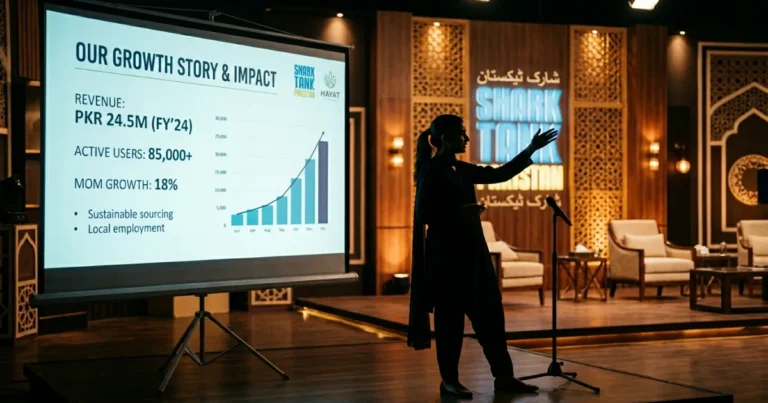
Shark Tank Pakistan Season 2 Start Date: Everything We Know, Predict & How to Be Ready (2026)
🥁 The Short Answer: Shark Tank Pakistan Season 2 is widely expected to premiere in October or November 2026, following the production rhythm set by Season 1. Greenlit Entertainment and the show’s producers have confirmed a second season is in active development. If you’re planning to apply, the audition window could open as early as April to June 2026 — which means the best time to start preparing your pitch, financials, and application is right now. Even if the exact date hasn’t been officially locked in, the patterns are clear enough to act on.
The question isn’t just “when will Season 2 air?” It’s “am I ready if the call comes sooner than expected?” Across Pakistan, founders are already dusting off pitch decks, tuning their unit economics, and refreshing their understanding of what Sharks actually want. And frankly, they should be. Season 1 didn’t just entertain — it shifted how Pakistani families talk about startups at the dinner table. Season 2 is going to be bigger, louder, and far more competitive.
In this guide, we’re pulling together every official signal, production update, industry prediction, and preparation insight you need. No fluff. No recycled headlines. Just a clear, actionable roadmap for anyone who wants to be on the right side of the Season 2 curve — whether you’re a founder, a fan, or someone still deciding if your idea is ready for national television.

What We Know Officially About Shark Tank Pakistan Season 2
Let’s separate confirmed facts from educated guesses. Greenlit Entertainment, the production house behind Shark Tank Pakistan, confirmed in early 2026 that a second season has been commissioned. The renewal wasn’t a surprise — Season 1 pulled in millions of viewers, generated thousands of applications, and sparked a genuine cultural conversation about entrepreneurship in Pakistan. But “renewed” doesn’t mean “airing next week.”
Here’s what’s been communicated through official and credible industry channels:
- Production status: Pre-production and casting groundwork began in Q1 2026. The production team is reportedly scouting for a broader, more diverse applicant pool — including startups from cities that were underrepresented in Season 1, like Quetta, Peshawar, Faisalabad, and Hyderabad.
- Shark lineup: No official confirmation yet on whether all Season 1 Sharks will return. Industry chatter suggests a mix of returning investors and at least one or two new Sharks, potentially from the fintech and agri-tech sectors — two spaces that have exploded in Pakistan since Season 1 wrapped.
- Format changes: Producers have hinted at “format enhancements” without spilling specifics. If regional adaptations like Shark Tank India and Shark Tank Dubai are any guide, expect refinements to the deal structure, potentially more time per pitch, and possibly a dedicated segment for very early-stage ideas.
- Filming window: Based on typical production cycles, principal filming is likely to occur between July and September 2026, which would place the on-air premiere comfortably in the October–November window.
Shark Tank Pakistan Season 2 Start Date: The Most Realistic Timeline
Everyone wants a single date. We get it. But broadcast scheduling — especially for a high-stakes format like Shark Tank — depends on a dozen moving parts: production timelines, sponsor commitments, network scheduling, post-production editing, and marketing ramp-up. Still, we can triangulate with decent accuracy.
Season 1 followed a relatively predictable cadence: auditions opened in spring, filming happened in mid-to-late summer, and episodes started airing in the fall. There’s no reason to think Season 2 will deviate dramatically from that playbook. If anything, the production team now has more experience and should execute faster.
| Milestone | Season 1 Timing (Actual) | Season 2 Timing (Projected) |
|---|---|---|
| Official Season Announcement | Early Q2 2024 | Already Announced (Q1 2026) |
| Application / Audition Window Opens | April – June 2024 | April – June 2026 (Expected) |
| Principal Filming | July – September 2024 | July – September 2026 |
| Marketing Ramp-Up Begins | September 2024 | September 2026 |
| Season Premiere (On-Air) | October 2024 | October – November 2026 |
| Episode Count | 12–14 Episodes | 14–16 Episodes (Predicted) |
If you’re building your preparation timeline around these dates, aim to have your pitch, financials, and application materials fully ready by April 2026. That gives you a buffer if the window opens earlier — and trust us, earlier is always possible when producers are eager to lock in compelling stories.

Predictions: What’s Likely to Change in Season 2
Sequels are tricky. A sophomore season can either refine what worked or overcorrect and lose the magic. Based on watching every episode of Season 1, tracking post-show outcomes, and paying attention to how the Pakistani startup ecosystem has evolved since then, here are our grounded predictions.
1. More Sharks from Untapped Sectors
Season 1 featured Sharks with backgrounds in retail, logistics, tech, and manufacturing. Since then, Pakistan’s agri-tech sector has attracted serious global attention, and fintech has continued its explosive growth. Don’t be surprised if Season 2 introduces a Shark with deep agri-tech or fintech credentials — someone who can write a meaningful cheque and also open distribution channels in sectors where traditional VCs have been slow to enter.
2. Higher Scrutiny on Unit Economics
Season 1 Sharks sometimes let passionate storytelling override hard-nosed number-crunching. Post-show, several deals collapsed because the unit economics didn’t hold up. Season 2 will almost certainly feature sharper questioning around customer acquisition cost, lifetime value, gross margins, and real — not projected — revenue. If your numbers wobble under pressure, the Sharks will smell it from across the set.
3. A Broader Geographic Applicant Pool
Season 1 was heavily skewed toward Karachi, Lahore, and Islamabad. The production team has publicly indicated they want to change that. We’re predicting targeted audition drives in secondary cities — and possibly a dedicated outreach campaign to women founders, who were underrepresented in Season 1 despite Pakistan having a growing cohort of female-led startups.
4. More Post-Show Accountability
Viewers — and the business press — are savvier now. They track which deals actually close. Season 2 will likely include more transparency around deal outcomes, possibly with a “Where Are They Now” segment woven into the season. This puts pressure on both Sharks and founders to be more serious about closing.
🧠 Why This Matters for Your Application: If these predictions hold, the ideal Season 2 applicant isn’t just someone with a great story — it’s someone with verifiable traction, clean financials, and a clear understanding of their market. You don’t need to be perfect, but you do need to be honest and prepared. The era of winging it on charisma alone is fading fast.

How to Prepare Your Shark Tank Pakistan Season 2 Application
This is where most guides stop at “work on your pitch.” We’re going deeper, because the competition for Season 2 will be fiercer than anything the casting team saw in Season 1. Thousands of founders have now watched the show, studied what worked, and are actively reverse-engineering their applications. You need to be sharper.
Step 1: Get Your Business Structure Right — Now
If you’re operating as an unregistered sole proprietorship, pause everything and fix that. Sharks invest in formal legal entities — typically private limited companies registered with the SECP. If you haven’t incorporated yet, the process takes 2–4 weeks in Pakistan. Don’t let something this basic disqualify you at the application stage. Also ensure your tax filings are current; Sharks and their due diligence teams will check.
Step 2: Know Your Numbers Cold
You need to be able to answer these questions without hesitation:
- What’s your monthly revenue for the last 12 months — actual, not projected?
- What’s your gross margin per unit or per service delivered?
- What does it cost you to acquire one paying customer?
- How much cash do you have in the bank right now?
- What’s your monthly burn rate?
- If you’re pre-revenue, what’s your provable traction — waitlist signups, LOIs, pilot results?
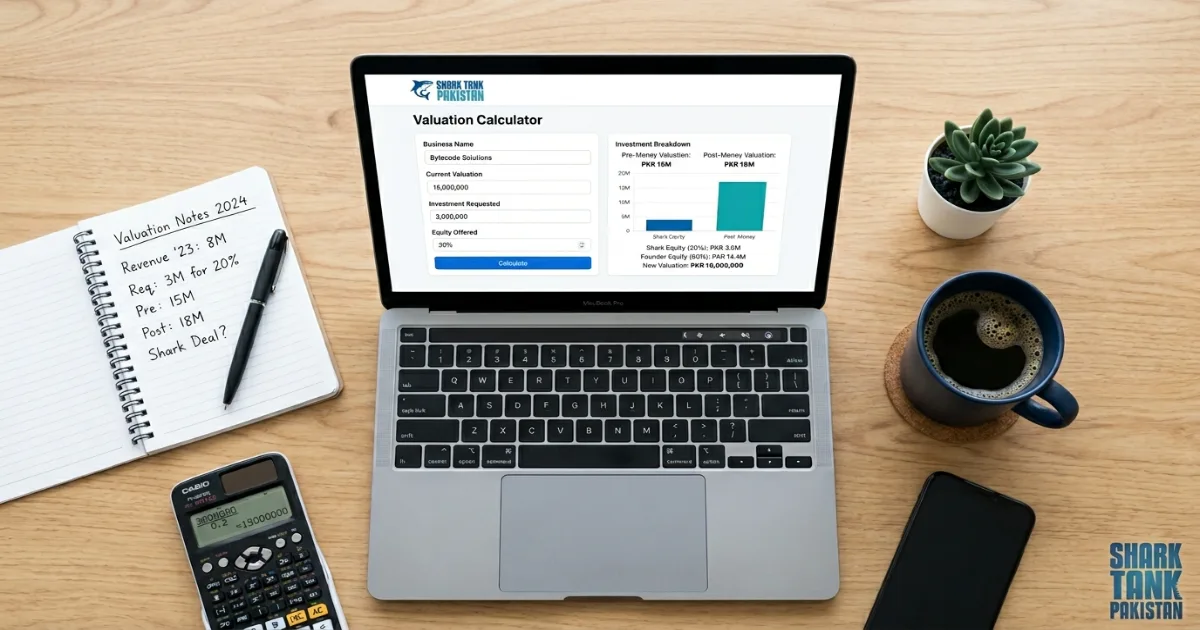
If any of those make you nervous, you have work to do. Use the SharkTankPakistan.pk Valuation Calculator to stress-test your numbers before you even think about filming.
Step 3: Build a Pitch That Survives the First 30 Seconds
Sharks decide — emotionally and instinctively — whether they’re interested within the opening moments. Your pitch needs a hook that’s specific, memorable, and rooted in a real problem. “We’re the Uber of X” is lazy and signals you haven’t thought deeply about your market. Better: “3 million Pakistani small retailers lose 15% of their inventory to poor record-keeping. We built a tool that reduced that to under 4% in our pilot with 200 shops in Gujranwala.” See the difference?
Step 4: Prepare for the Ask
Decide before you walk in: How much are you raising? What percentage of equity are you offering? And — critically — what valuation does that imply? If you’re asking for Rs. 1 crore for 10% equity, you’re valuing your business at Rs. 10 crore. Can you justify that with revenue, assets, IP, or traction? If not, adjust your ask or be prepared to get grilled. The Equity & Loan Calculator on SharkTankPakistan.pk can help you model different scenarios before you commit to a number.
Season 1 vs. Season 2: What’s Changing and What’s Staying
If you watched Season 1 closely, you have a playbook — but it needs updating. Here’s a side-by-side look at the key differences we’re anticipating.
| Dimension | Season 1 (2024) | Season 2 (2026, Predicted) |
|---|---|---|
| Applicant Pool Size | ~3,000–4,000 applications | 7,000+ (due to Season 1’s visibility) |
| Shark Expertise Mix | Retail, logistics, tech, manufacturing | Likely additions: agri-tech, fintech, possibly health-tech |
| Due Diligence Rigour | Moderate — several post-show deal collapses | Significantly higher — pre-screening and post-pitch verification emphasised |
| Geographic Diversity | Karachi, Lahore, Islamabad dominant | Targeted outreach to secondary cities and underrepresented regions |
| Women Founder Representation | Limited (under 15% of aired pitches) | Expected improvement — active outreach anticipated |
| Deal Structures | Mostly straight equity; occasional royalty deals | More creative structures expected — revenue-based financing, convertible notes possible |
Situation-Based Guidance: How Your Preparation Should Shift
Not every founder is in the same position. Here’s how your approach to Season 2 should differ depending on where you stand right now.
🟢 If You’re Pre-Revenue with a Prototype or MVP
Your path is harder — but not impossible. Season 1 did feature pre-revenue deals, but they almost always involved exceptional storytelling, a demonstrably large market, and some form of validated traction (pilot results, LOIs, user signups, or a patent). Focus your application on: the size of the problem, why existing solutions fail, what your pilot or beta testing revealed, and why you are the right founder to solve it. Don’t overinflate projections — Sharks respect honesty about the stage you’re at.
🔵 If You’re Generating Consistent Revenue (Rs. 10 lakhs+/month)
You’re in the sweet spot. Sharks love a business that’s already working and just needs capital to scale. Your job is to show: sustainable unit economics, a clear growth trajectory, and a specific plan for how the investment will multiply revenue. “We’ll spend it on marketing” is too vague. “We’ll deploy Rs. 40 lakhs into a targeted digital campaign across three cities where our CAC is already under Rs. 600 and our payback period is 4 months” — that’s a conversation starter.
🟠 If You’re a Traditional Business (Not a Tech Startup)
Don’t self-reject. Season 1 featured food brands, textile businesses, and consumer goods companies that got deals. The key is framing: traditional businesses need to demonstrate scalability, defensible margins, and some form of differentiation — whether it’s a unique recipe, a distribution moat, or a brand that resonates with a specific community. The “boring” business that prints cash is often more investable than the flashy app with no revenue.
🔴 If You’re Applying from Outside Karachi/Lahore/Islamabad
The production team wants you. Seriously — they’re actively looking for stories from underrepresented cities. Use your location as a strength: you understand a market that coastal investors overlook. Frame your pitch around local market insight that outsiders miss. A food startup from Peshawar that understands the taste preferences of Khyber Pakhtunkhwa better than any Karachi-based competitor? That’s a genuine moat.
Common Pitfalls & When to Ignore Generic Advice
Not all advice that sounds good is good. And some of the most common mistakes we saw in Season 1 are completely avoidable.
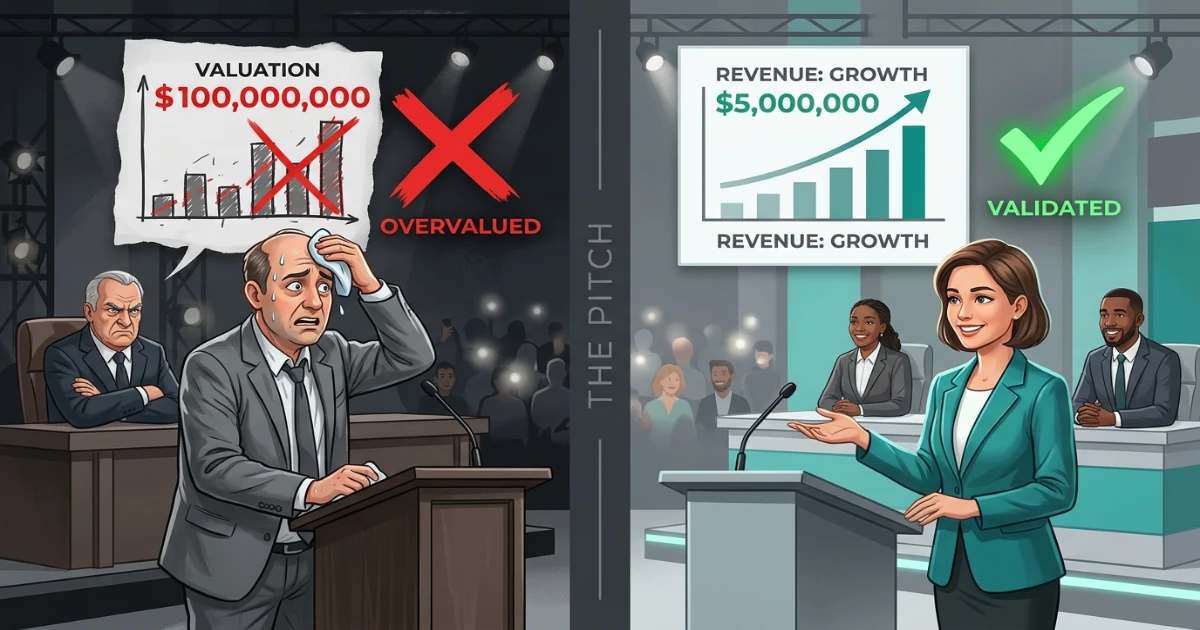
❌ Pitfall 1: Overvaluing your business because “someone else got a higher valuation on TV.” Comparison is poison. The deal a SaaS company got with 10x revenue multiples doesn’t apply to your consumer brand. Sharks value businesses based on sector, growth rate, margins, and risk — not based on what the last founder walked away with. Go in with a valuation you can defend with data, not ego.
❌ Pitfall 2: Thinking a TV deal guarantees funding. Several Season 1 handshake deals collapsed post-show during due diligence. The on-air agreement is a statement of intent, not a binding contract. If your books aren’t clean, the deal will die quietly — and the audience might never even know.
❌ Pitfall 3: Over-rehearsing to the point of sounding scripted. Sharks and producers can tell. A pitch that sounds memorised word-for-word lacks the authenticity that connects with investors — and with viewers at home. Know your key points inside out, but leave room for genuine conversation.
⚠️ When to Ignore “Standard” Pitch Advice: Generic pitch frameworks designed for Silicon Valley VC rooms don’t always translate to Shark Tank Pakistan. Pakistani Sharks often care as much about founder character, resilience, and local market knowledge as they do about TAM and CAGR. If you have a gritty founder story — bootstrapping through a crisis, pivoting after a failure, serving a community that big players ignore — lead with it. That’s not a “soft” detail; it’s often the deciding factor when two businesses look similar on paper.
How SharkTankPakistan.pk Tools Can Strengthen Your Application
You don’t need an MBA to get your numbers right. You need the right tools and a willingness to use them honestly. Here’s how our resources can help before you submit that Season 2 application.
- Startup Valuation Calculator: Input your revenue, growth rate, assets, and industry — and get a realistic valuation range. Use this to calibrate your equity ask before you walk into the tank. Overasking on valuation is the fastest way to lose credibility in the first 60 seconds.
- Equity vs. Loan Calculator: Not sure whether to offer equity or propose a royalty/loan structure? This calculator models both scenarios so you understand the long-term cost of each option. Critical if a Shark counteroffers with a different structure on the spot.
- Pitch Preparation Guides: Our library includes episode breakdowns, deal analyses, and founder interviews from Season 1 — real patterns you can study to understand what worked, what didn’t, and why.
Real-World Context: What Season 1 Taught Us About Pakistani Startup Funding
Beyond the entertainment, Season 1 surfaced some uncomfortable truths about the Pakistani startup ecosystem — truths that will shape Season 2 in ways most commentary misses.
First, the “valuation gap” is real. Many founders walked in with Silicon Valley-style expectations and met Sharks who value businesses based on hard assets, cash flow, and local market realities. That mismatch isn’t going away. Pakistani investors — even the most forward-thinking Sharks — are generally more conservative on valuation than their American counterparts. Understanding that before you pitch prevents the kind of awkward standoffs that make for good TV but bad outcomes.
Second, post-deal execution matters more than the on-air handshake. Aired deals created a temporary halo effect — social media buzz, a spike in orders, congratulatory messages. But the founders who actually closed their funding and grew their businesses were the ones who had clean legal structures, defensible financials, and realistic expectations about how long due diligence takes in Pakistan (hint: longer than you think).
Third, the show changed the conversation. Before Shark Tank Pakistan, many traditional business families viewed “startup” as a risky, slightly suspicious word. Season 1 made entrepreneurship aspirational in a way that government policy papers and startup conferences never quite achieved. Season 2 has an even bigger opportunity — and responsibility — to showcase the full diversity of Pakistani entrepreneurship.
Frequently Asked Questions
When will Shark Tank Pakistan Season 2 start?
While no exact date has been officially confirmed, Shark Tank Pakistan Season 2 is expected to premiere in October or November 2026. This is based on Season 1’s production cycle and credible industry reporting. The audition window will likely open several months earlier, around April to June 2026.
Has Shark Tank Pakistan Season 2 been officially confirmed?
Yes. Greenlit Entertainment, the production company behind the show, confirmed in early 2026 that Season 2 has been commissioned. Pre-production and casting groundwork are already underway, with filming anticipated in mid-to-late 2026.
How can I apply for Shark Tank Pakistan Season 2?
Applications are expected to open through an online portal and potentially through in-person audition drives in major Pakistani cities. Keep an eye on official Greenlit Entertainment channels and SharkTankPakistan.pk for updates. Preparing your pitch, financials, and legal documentation before the window opens gives you a significant advantage.
Will the same Sharks return for Season 2?
No official Shark lineup has been announced yet. Industry insiders expect a mix of returning Sharks from Season 1 and at least one or two new investors, potentially from high-growth sectors like agri-tech and fintech that have gained prominence in Pakistan’s startup ecosystem.
How much equity do Sharks typically take on Shark Tank Pakistan?
Based on Season 1 data, equity stakes ranged from 10% to 40%, with most deals landing in the 15%–25% range. The exact percentage depends on your valuation, growth stage, revenue, and negotiation dynamics. Overvaluing your business is the most common reason offers fall apart.
Do I need a registered company to apply for Shark Tank Pakistan?
Yes, or you should be in the process. Sharks invest in formal legal entities — typically private limited companies registered with the SECP. If you’re operating as an unregistered sole proprietorship, prioritise incorporation before applying. The process takes 2–4 weeks in Pakistan.
What’s the biggest mistake Season 1 applicants made?
The most common mistake was overvaluing the business without defensible numbers. Several on-air deals also collapsed during post-show due diligence because financial records were incomplete or inconsistent. Clean books and a realistic valuation are non-negotiable for Season 2.
Is Shark Tank Pakistan only for tech startups?
No. Season 1 featured food brands, textile businesses, consumer goods, and service-based companies alongside tech startups. The show is open to any scalable business with a compelling story, regardless of sector. Traditional businesses with strong margins and clear differentiation are absolutely welcome.
⚡ Your Fast-Track Cheat Sheet: Top 3 Actions to Take Right Now
- Lock in your legal structure and financial documentation. If you’re not a registered entity with clean books, fix that — today. Incorporation takes weeks, and tax filings take longer. This alone can disqualify you before you ever reach the pitch stage.
- Run your numbers through the valuation and equity calculators on SharkTankPakistan.pk. Know what your business is actually worth, what equity you can realistically offer, and how different deal structures change your long-term outcome. Walking in with data-backed confidence is your single biggest edge.
- Start crafting your founder story now — not the week before applications open. The best pitches blend hard numbers with a compelling personal narrative. Why you? Why this problem? What have you overcome? Get that story clear, authentic, and tight enough to deliver in under 90 seconds.