
How to Apply for Shark Tank Pakistan Season 2: The Complete Step-by-Step Guide
🥁 The Short Answer: Applying for Shark Tank Pakistan Season 2 starts with an online application form (expected to open April–June 2026), followed by a multi-stage selection process that includes an audition video, a producer interview, and a final in-person pitch to the Sharks. To even reach the starting line, you need a registered business, clean financials, and a tight founder story. This guide walks you through every stage — from preparation to closing the deal — so you don’t get eliminated early.
Every season, thousands of Pakistani entrepreneurs sit down to fill out the Shark Tank application. Most never hear back. Not because their businesses are bad — but because they didn’t understand what the selection team actually looks for. They submit half-filled forms, rambling videos, and financial projections copied from a template. This guide is here to change that. If you’re serious about securing a spot on Season 2, treat this article as your pre-flight checklist. We’ll cover the official application process, what happens behind the scenes during casting, how to build a bulletproof submission, and exactly what tools on SharkTankPakistan.pk can help you stand out.
The application isn’t just a form. It’s your first pitch — the one that determines whether anyone ever sees your second. Over the next several thousand words, we’ll make sure you get it right.

Understanding the Application Timeline for Season 2
Before diving into the “how,” let’s clarify the “when.” While official dates for Season 2 haven’t been locked in, the production team at Greenlit Entertainment follows a predictable cycle. Based on Season 1’s schedule and current industry signals, here’s what you should plan for:
| Stage | Expected Window | What You Need to Do |
|---|---|---|
| Online Applications Open | April – June 2026 | Submit your completed form, pitch video, and financial snapshot |
| Initial Screening & Shortlisting | June – July 2026 | Wait for callback; prepare for producer interview |
| Producer Auditions (Virtual/In-Person) | July – August 2026 | Pitch to casting producers; demonstrate personality and business viability |
| Final Selection & Shark Pitch Scheduling | August – September 2026 | Receive confirmation, refine pitch for the actual Sharks, prepare due diligence documents |
| Filming (On-Set Pitch) | September – October 2026 | Present in front of the Sharks; negotiate live if an offer is made |
The key takeaway: don’t wait for the application to open to start preparing. The strongest candidates spend 2–3 months getting their materials ready. By the time the portal goes live, you want to be uploading, not scrambling.
Step 1: Get Your Business Legally Ready
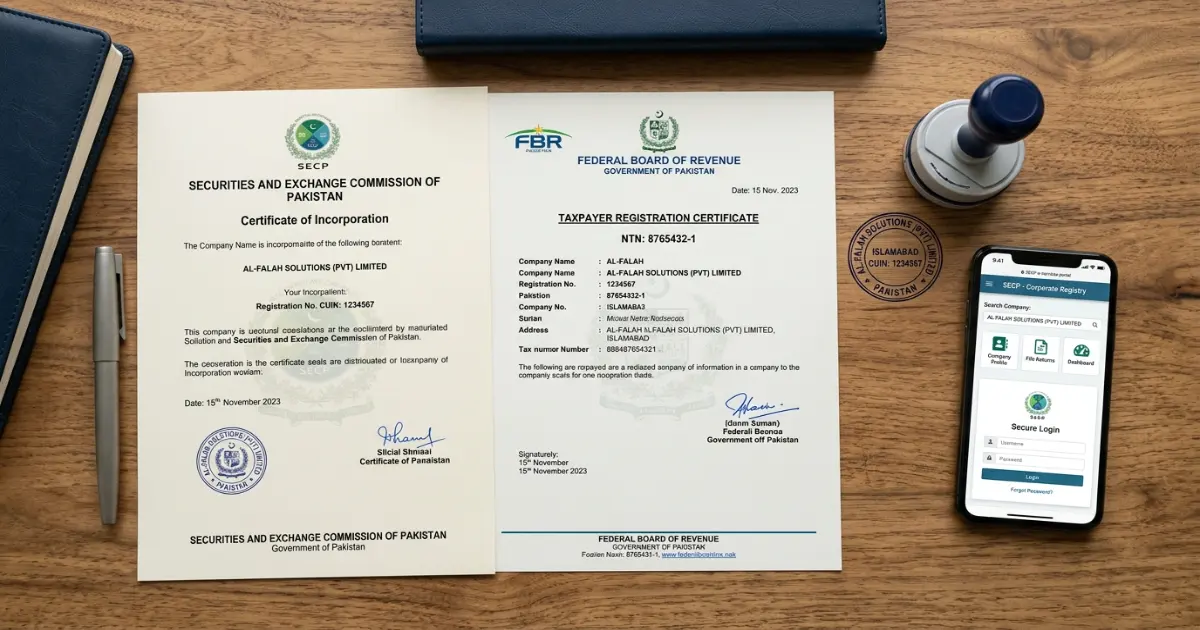
This is the most common early rejection filter. If your business isn’t a recognized legal entity, the application may not even be reviewed. Sharks invest in companies they can transact with — and in Pakistan, that means a private limited company registered with the Securities and Exchange Commission of Pakistan (SECP). Sole proprietorships and unregistered partnerships are almost always an instant “no.”
Here’s what you need to have in place:
- SECP Incorporation: Completed with a valid NTN and incorporation certificate. The process takes 2–4 weeks, so start now if you haven’t already.
- FBR Tax Registration: Active taxpayer status. The Sharks’ due diligence teams cross-check this, and any irregularities can kill a deal even after an on-air handshake.
- Clean Cap Table: Know exactly who owns what percentage of the company. If you’ve given away equity informally, clean it up before applying. A messy cap table is a red flag.
- Bank Account in Company Name: Separate personal and business finances. Sharks expect to see that you treat your startup as a real business, not a side project.
Step 2: Build Your Core Application Materials
The online application form will ask for basic information: founder details, business description, revenue figures, funding ask, and a short pitch video. But filling out the form is the last 10% of the work. The real preparation happens in the weeks leading up to it. Here’s what you need to compile:
A. The One-Minute Pitch Video
This is your single most important asset. The casting team watches hundreds of these. The ones that grab attention don’t start with “Hi, my name is…” and a shaky camera. Instead, they open with a clear problem statement, a tight summary of the solution, and a hook that makes the viewer want to know more. Film it horizontally in good lighting, keep it under 60 seconds, and make sure your face is visible. No slides. Just you, talking to the camera like you’re explaining your business to someone you respect.
B. The One-Page Financial Snapshot
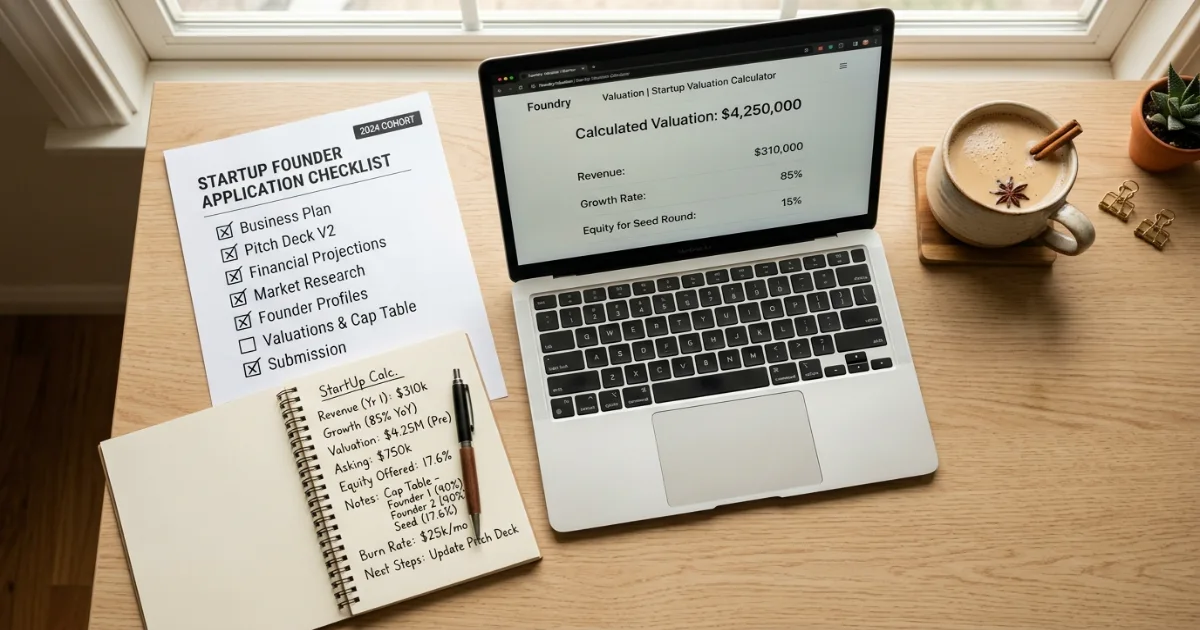
Even if the form doesn’t explicitly require a full financial statement, have one ready. Include: 12-month trailing revenue (actual), gross margin, monthly burn rate, current cash position, and the exact funding ask with equity offered. If you’re pre-revenue, include verifiable traction metrics — pilot results, LOI count, active users, waitlist numbers. Vague claims won’t cut it. Use the valuation calculator on SharkTankPakistan.pk to model your numbers and ensure your ask is defensible.
C. The Founder Story Outline
Shark Tank Pakistan is as much about the founder as the business. The application will ask about your background, your motivation, and any obstacles you’ve overcome. Write this out in narrative form — not bullet points — and practice delivering it naturally. The strongest stories reveal a specific insight or moment that led you to build this business. Generic ambition isn’t enough.
🧠 Why This Matters: Season 1 casting trends showed a clear preference for founders who could articulate why they chose their market, not just how big it is. The “why” creates emotional resonance with both the producers and the eventual Shark panel. Don’t skip this part — it’s often the tiebreaker between two equally strong businesses.
Step 3: Navigating the Producer Audition (If You Advance)
If your application passes the initial screen, you’ll be invited to a producer audition — either virtual or in-person in Karachi, Lahore, or Islamabad. This is not the final Shark pitch. It’s a screen test. The producers are evaluating two things simultaneously: business viability and television presence. Here’s what changes at this stage:
- Expect a time limit. You may have as little as 3–5 minutes to present your business and answer questions. Practice delivering a version of your pitch that covers the problem, solution, market size, traction, and ask — all within that window.
- Show your personality. The producers need to see that you can be compelling on camera. That doesn’t mean being loud or theatrical. It means being clear, warm, and confidently yourself. Nervous monotone is a quick path to the rejection pile.
- Be ready to answer “Why now?” and “Why you?” These are the two questions that separate the forgettable applicants from the ones producers fight over. Have concrete answers, not clichés.
Step 4: The Final Pitch — What Actually Happens
Only a fraction of producers’ auditions convert into a Shark Tank filming slot. If you get the call, congratulations — but the hardest part is still ahead. The pitch you’ve been practicing needs to be adapted for five individual Sharks, each with their own investment philosophy. In Season 1, we saw deals break down because the founder couldn’t pivot when a Shark challenged a specific number or questioned the market size.
At this stage, go beyond the script. Prepare for curveball questions: “What if a competitor copies this next month?”, “Why haven’t you raised this money from a bank?”, “What’s your personal burn rate?”. The best applicants treat the conversation as a negotiation, not a presentation. They listen, adjust, and don’t get defensive when their numbers are scrutinized. Your preparation on the Equity vs Loan Calculator will pay dividends here because you’ll understand the real trade-offs of any counteroffer.

Situation-Based Preparation: Tailoring Your Application for Your Stage
🔴 If You’re Pre-Revenue (Idea Stage or MVP Only)
Your application must anchor on traction metrics that aren’t revenue: number of beta users, pilot program results, letters of intent from potential customers, or even patent filings. One Season 1 applicant received interest despite zero revenue because they had a signed letter from a major textile group promising a pilot order. Concrete validation — even without cash — matters.
🟢 If You’re Generating Consistent Revenue
Lead with growth trajectory, unit economics, and how the Shark’s capital will multiply output. Avoid the mistake of thinking revenue alone guarantees a spot. The casting team has seen plenty of profitable businesses; they’re looking for scalable, interesting stories. Frame your numbers in a narrative.
🔵 If You’re a Traditional Manufacturing or Services Business
Don’t try to sound like a tech startup. Package your differentiation honestly: a proprietary process, a decades-old family recipe, a distribution network that competitors can’t easily replicate. One of the most memorable Season 1 pitches involved a regional snack brand; the founder’s authenticity and encyclopedic knowledge of his supply chain won the Sharks over.
🟠 If You’re Applying from Outside Major Cities
Use your location as a strength. You speak a market language that city-based Sharks often miss. Frame your business around local market nuance and underserved demand. The production team is actively seeking geographic diversity — your origin story can become a casting advantage.
Common Mistakes That Get Applications Rejected
Having reviewed Season 1 patterns and spoken with former applicants, here are the five fastest ways to sabotage your application:
- Submitting a pitch video that’s too long or unfocused. Over 90 seconds and you’ve likely lost the screener. Keep it tight.
- Overvaluing the business with no evidence. If the implied valuation in your ask is miles ahead of your revenue, you’ll be flagged as unrealistic.
- Neglecting the “why you” part of the story. A great business with a forgettable founder doesn’t make good television. Inject your personal journey.
- Applying without a registered entity. This is a hard stop. No exceptions. We’ve said it twice because it eliminates a surprising number of applicants.
- Copy-pasting generic marketing language. Terms like “disruptive,” “Uber of X,” and “revolutionary” are eye-roll triggers. Describe your business in plain, specific Urdu/English that sounds human.
How SharkTankPakistan.pk Tools Can Give You an Edge
You don’t have to figure out your valuation or pitch structure alone. Our platform exists to help Pakistani founders walk into the process with clarity. Here’s how to use our resources for your application:
- Startup Valuation Calculator: Plug in your actuals — revenue, assets, growth rate — and get a defensible valuation range. Use this to dial in your equity ask before you type it into the application. An unrealistic number can get your form discarded at the screening level.
- Equity Loan Calculator: Model different funding structures. If a Shark offers a royalty deal instead of equity, you’ll already understand the long-term cost. This keeps you from freezing when the terms deviate from your original plan.
- Season 1 Pitch Library & Recaps: Study which pitches worked, which didn’t, and why. Patterns repeat. Smart applicants learn from the founders who came before them.
A Real-World Season 1 Example: What a Successful Application Looked Like
One of the most instructive cases from Season 1 was a Karachi-based food startup that entered the tank with a modest valuation and a deeply personal founder story. Before applying, the founder spent three weeks cleaning up his books so that every line item could be traced back to a bank statement. His pitch video opened with a specific, heartbreaking statistic about child malnutrition in Pakistan — and then pivoted to how his product addressed one root cause affordably. The application stood out because it balanced emotional weight with hard data. The lesson: neither raw numbers nor pure storytelling alone gets you in. It’s the integration of both.
Frequently Asked Questions About Applying
How do I apply for Shark Tank Pakistan Season 2?
Applications will open through an online portal on the official Greenlit Entertainment website, expected in April–June 2026. You’ll need to fill out a detailed form, upload a one-minute pitch video, and provide financial information about your business. Prepare all materials in advance to avoid a rushed submission.
Do I need a registered company to apply?
Yes, a private limited company registered with SECP is almost always required. Sole proprietorships and unregistered partnerships are generally not considered because Sharks cannot invest in unincorporated entities. If you haven’t incorporated yet, start the process immediately.
Can I apply if my business is not yet profitable?
Yes, pre-revenue and pre-profit startups can apply. However, you must demonstrate significant traction — such as active users, pilot results, letters of intent, or intellectual property. A compelling story and clear market demand can compensate for lack of profit, but you must be honest about your stage.
What happens after I submit my application?
After submission, the production team screens applications. Shortlisted candidates are invited to a producer audition, either virtually or in-person, where you pitch again and answer questions. If you pass that stage, you may be selected for the final filmed pitch in front of the Sharks.
Is there an application fee?
No, the application process for Shark Tank Pakistan is completely free. Be wary of anyone asking for payment to guarantee a spot — there are no agents or intermediaries authorized to collect fees on behalf of the show.
How much equity should I offer in my application ask?
Season 1 data shows that most successful deals involved 10%–25% equity, depending on the business stage and valuation. Use the SharkTankPakistan.pk valuation calculator to determine a defensible ask. Overpricing your equity can result in immediate rejection.
Can I apply with a business partner?
Yes, co-founders can apply together, and many Season 1 pitches featured teams. However, each co-founder should be clearly identified in the application, and you should have a defined equity split. The Sharks will ask about roles and decision-making authority.
What makes a strong pitch video?
A strong pitch video opens immediately with the problem, shows your solution, includes real traction numbers, and conveys why you are uniquely qualified to build this business. Keep it under 60 seconds, well-lit, horizontally shot, and speak naturally rather than reading a script.
⚡ Your Fast-Track Cheat Sheet: Top 3 Actions to Take Today
- Incorporate your business and get your financials audit-ready. Without an SECP-registered entity and clean tax status, your application won’t pass the first screen. This is the non-negotiable foundation.
- Record and refine your one-minute pitch video now, not when applications open. Film it multiple times, get feedback from unbiased people, and iterate until it’s tight, authentic, and impossible to ignore.
- Use the SharkTankPakistan.pk valuation calculator to determine a realistic ask. Know exactly how much you’re raising, what percentage of equity it represents, and what that says about your company’s worth. Walk into every stage with data, not guesses.