Crowdfunding in Pakistan: Is It Legal? Best Platforms & Success Tips
⚡ Quick Answer: Yes, crowdfunding is legal in Pakistan — but the rules depend entirely on the model you choose. Reward-based and donation-based crowdfunding operate in a relatively open space, while equity-based crowdfunding (where backers get shares) is now regulated by the SECP under its 2019 Equity-Based Crowdfunding Regulations. The key to success isn’t just picking a platform; it’s understanding which legal structure fits your campaign, crafting a compelling story, and knowing how to reach Pakistani backers — both locally and in the diaspora.
If you’re a Pakistani founder, creator, or social entrepreneur, you’ve probably asked yourself: Can I actually raise money through crowdfunding here? Is it even allowed? You’re not alone. Crowdfunding Pakistan has evolved rapidly over the past five years — from a grey-area concept whispered about in startup circles to a legitimate, SECP-recognized funding avenue. Yet confusion still reigns. Some founders assume it’s outright illegal. Others jump in without understanding the regulatory landmines. This guide clears the fog.
At SharkTankPakistan.pk, we’ve tracked every funding trend that matters to Pakistani entrepreneurs — from the Sharks’ deal structures on screen to the quieter, grassroots funding revolutions happening off-screen. Crowdfunding sits squarely at the intersection of ambition and regulation. Done right, it can fund your prototype, validate your idea, or even close a full seed round. Done wrong, it can land you in regulatory trouble or, worse, burn trust with early supporters.
What Crowdfunding Actually Means for a Pakistani Entrepreneur in 2026
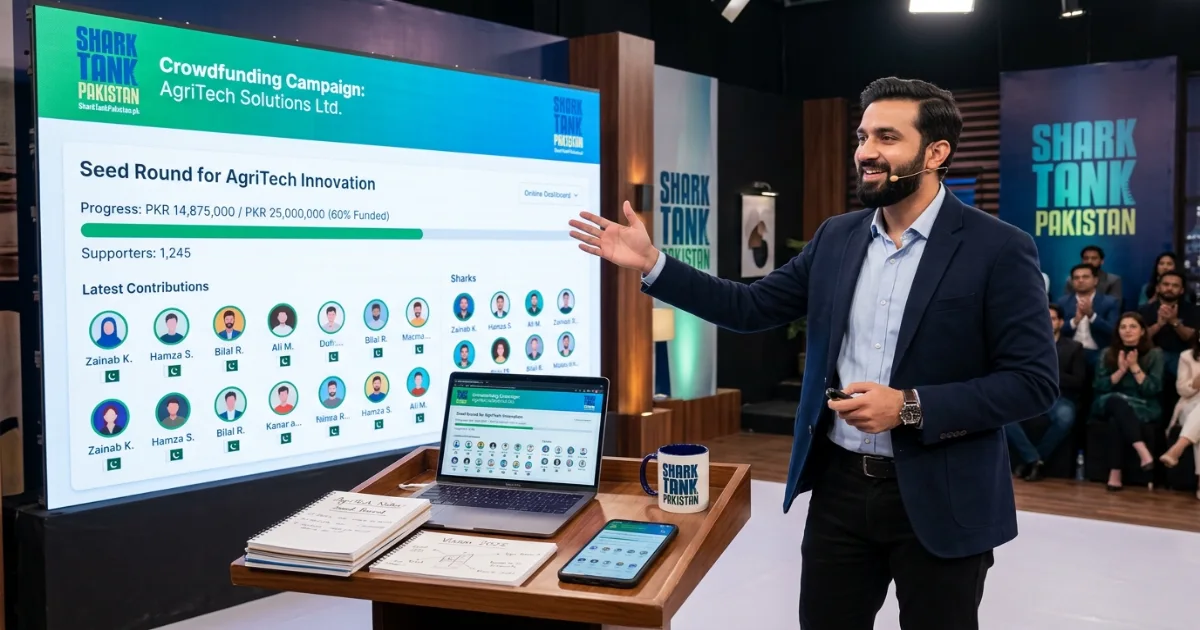
Let’s strip away the jargon. Crowdfunding is simply raising small amounts of money from a large number of people — usually through an online platform — to fund a project, product, or business. Globally, the crowdfunding market surpassed $20 billion in transaction volume, and while Pakistan’s share remains modest, it’s growing at an accelerating clip thanks to improved digital payment infrastructure, a young population comfortable with online transactions, and a massive overseas Pakistani community eager to support homegrown ventures.
But here’s what most generic guides won’t tell you: in Pakistan, crowdfunding carries cultural weight that Western platforms don’t fully account for. Trust operates differently. A Lahore-based backer might support your campaign because they know someone who knows your family. A Karachi-based investor on an equity platform wants to understand not just your financials but your intent. And the Pakistani diaspora — arguably the single most powerful funding source for local campaigns — responds to narratives rooted in identity, nostalgia, and impact. If your campaign reads like a Silicon Valley pitch deck, you’ll miss the mark.
Is Crowdfunding Legal in Pakistan? The Real Regulatory Picture
This is the question that brings most people here. The short answer: yes, but the legal path differs sharply by model.
1. Donation-Based Crowdfunding
This is the oldest and least regulated form in Pakistan. Platforms like Seed Out and various Islamic charitable portals facilitate donation-based campaigns, often for medical emergencies, education, or community projects. No securities laws are triggered because backers receive nothing of financial value in return. You don’t need SECP registration for a pure donation campaign — but you do need transparent accounting. Mishandling donated funds can still land you in legal trouble under general fraud and trust laws.
2. Reward-Based Crowdfunding
This is the Kickstarter/Indiegogo model: backers receive a product, service, or acknowledgment in exchange for their contribution. In Pakistan, reward-based crowdfunding operates in a regulatory grey zone that leans toward permissibility. Since backers aren’t receiving equity or a financial return, SECP generally does not treat these campaigns as securities offerings. Many Pakistani hardware startups, filmmakers, and creators have successfully used this model. The catch? You must still comply with consumer protection laws, e-commerce regulations, and tax obligations once you start delivering rewards.
3. Equity-Based Crowdfunding (The Game-Changer)
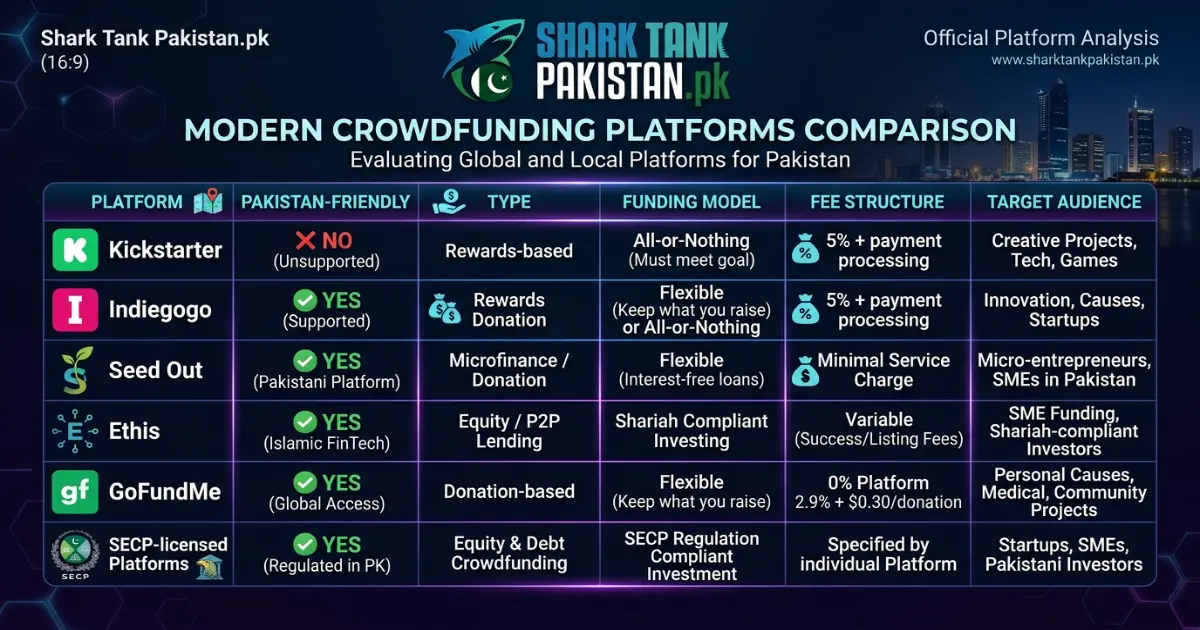
This is where things got serious. In 2019, the SECP issued the Equity-Based Crowdfunding Regulations, creating a legal framework for startups to raise capital from a large pool of investors in exchange for shares. Under these rules:
- Only SECP-licensed crowdfunding platforms can host equity campaigns.
- Issuers (the companies raising funds) must be private limited companies registered in Pakistan.
- There are investment limits per individual backer to protect retail investors.
- Campaigns must disclose financials, business plans, and risk factors in a standardized format.
- Funds raised are held in an escrow account until the target is met.
This regulatory move was a watershed moment for crowdfunding Pakistan — it legitimized equity crowdfunding as a genuine alternative to venture capital and angel investment, especially for early-stage startups that might not yet be ready for a Shark Tank Pakistan pitch but still need structured capital.
🧠 Insider Insight: The SECP regulations were modeled partly on the UK’s FCA crowdfunding rules and Malaysia’s equity crowdfunding framework — both Islamic-finance-friendly jurisdictions. This means Pakistan’s framework has built-in compatibility with Shariah-compliant structures, which is a significant advantage if you’re targeting faith-conscious backers.
4. P2P Lending (Debt Crowdfunding)
Peer-to-peer lending — where individuals lend money to businesses or other individuals and earn interest — is also regulated by the SECP under separate P2P lending regulations. This is distinct from equity crowdfunding, but it’s relevant if you’re exploring all alternative funding routes. Note that interest-based models may conflict with Islamic finance principles, so Shariah-compliant alternatives (like Musharakah-based structures) are emerging.
Best Crowdfunding Platforms for Pakistani Entrepreneurs
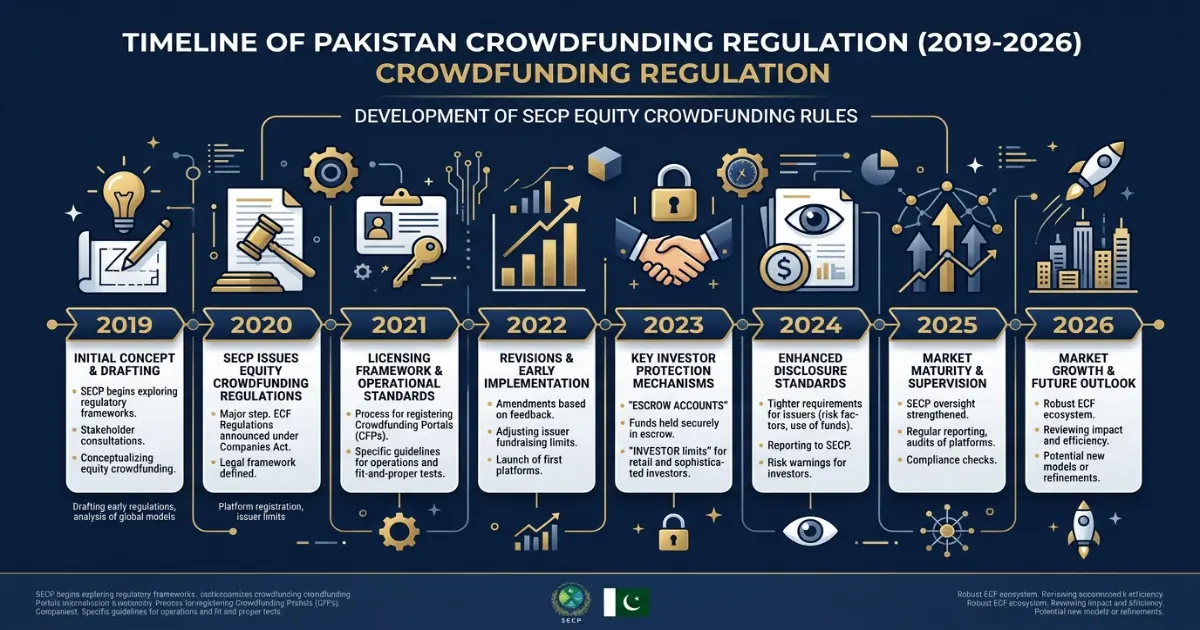
Not all platforms are created equal — and not all of them work for Pakistan-based campaigns. Here’s the landscape as of 2026:
| Platform | Type | Pakistan-Friendly? | Best For | Key Limitation |
|---|---|---|---|---|
| Kickstarter | Reward-Based | ❌ Requires US/UK/EU bank account & identity | Creative projects, hardware, films | Pakistan-based creators need a proxy or partner in a supported country |
| Indiegogo | Reward-Based | ✅ More flexible — accepts some non-US campaigns | Tech gadgets, innovation products | Payment processing can be tricky; fewer diaspora backers than Kickstarter |
| Seed Out | Donation / Islamic Microfinance | ✅ Pakistan-based, fully local | Social enterprises, micro-entrepreneurs, Zakat-eligible campaigns | Not designed for tech startups or equity raises |
| Ethis | Equity / Islamic | ✅ Operates in multiple Muslim-majority countries including Pakistan | Shariah-compliant equity crowdfunding, real estate, SME funding | Smaller investor base; campaign vetting is rigorous |
| SECP-Licensed Local Platforms | Equity | ✅ Fully compliant with Pakistani law | Private limited companies raising PKR 5M–50M+ | Nascent ecosystem; fewer active investors than global platforms |
| GoFundMe | Donation | ⚠️ Limited — requires supported country payment setup | Personal causes, medical emergencies | Not for business fundraising; Pakistan access is inconsistent |
How to Run a Successful Crowdfunding Campaign in Pakistan: A Step-by-Step Guide
A crowdfunding campaign isn’t a “post and pray” exercise. The most successful Pakistani campaigns follow a deliberate process. Here’s how to structure yours:
Step 1: Choose Your Model & Platform
This decision shapes everything: your legal obligations, your backer expectations, and your fulfillment commitments. If you’re a tech startup seeking PKR 10M+ and willing to give up equity, the SECP-licensed equity route is your best (and only legal) option. If you’re launching a physical product and want to validate demand, reward-based crowdfunding on Indiegogo — or Kickstarter via a supported-country partner — makes more sense. If you’re a social enterprise, Seed Out’s donation model aligns naturally with your mission.
Step 2: Register Your Entity (If Required)
For equity crowdfunding under SECP regulations, you must have a registered private limited company in Pakistan. For reward and donation campaigns, a sole proprietorship or even an individual identity may suffice — but having at least a basic registered entity adds credibility. Backers, especially diaspora contributors, want to know they’re sending money to something real.
Step 3: Set a Realistic Funding Goal
This is where most Pakistani campaigns stumble. They either aim too high with no traction to justify the number, or too low and then can’t deliver. A good rule of thumb: calculate your minimum viable funding need, then add 20–25% for platform fees, payment processing, taxes, and fulfillment costs. For context, successful Pakistani reward campaigns on international platforms typically raise between $5,000 and $60,000. Equity campaigns on SECP-licensed platforms can go higher — PKR 5M to PKR 50M — but require audited financials and a board-ready business plan.
Step 4: Craft a Story That Resonates
Your campaign page is not a pitch deck — it’s a story. The most funded Pakistani campaigns share three traits: a clear problem rooted in local or regional context, a founder story that feels authentic (not corporate), and a tangible outcome backers can visualize. If you’re targeting the diaspora, weave in elements of identity, nostalgia, and national pride — but earn them, don’t exploit them. Backers can smell inauthenticity from a mile away.
Step 5: Build Your Pre-Launch Audience
The single biggest predictor of crowdfunding success is pre-campaign momentum. Before you go live, you should have: a warm email list of at least 200–500 people, active social media communities (WhatsApp groups count — they’re powerful in Pakistan), and 30–50 confirmed backers ready to contribute on day one. Campaigns that hit 30% of their goal within the first 48 hours are overwhelmingly more likely to succeed. Cold-launching a campaign — where nobody knows it’s coming — is a recipe for crickets.
Step 6: Launch, Manage, and Over-Communicate
Once live, treat your campaign like a full-time job for its duration (typically 30–45 days). Post updates every 2–3 days. Respond to backer questions within hours. Share milestones — even small ones. Pakistani backers, especially those unfamiliar with crowdfunding, need reassurance that their money is being handled responsibly. Silence breeds doubt. Doubt kills campaigns.
Step 7: Fulfill with Integrity
The campaign ended successfully? Congratulations — now the real work begins. Fulfillment delays are the #1 source of backer complaints globally, and Pakistan-based campaigns face additional challenges with shipping, customs, and logistics. Be upfront about timelines. If you’re shipping physical products internationally, factor in at least 30–45 extra days for customs clearance. A delayed-but-communicated reward is forgivable. Ghosting your backers is not.
💡 Pro Tip from the Shark Tank Pakistan Ecosystem: Several Shark Tank Pakistan contestants have used crowdfunding before or after their TV appearance — not as a replacement for equity funding, but as proof of market demand. If you can show a Shark that 400 people already paid for your prototype on Indiegogo, your negotiating position strengthens dramatically. Crowdfunding validates more than your idea — it validates you as a founder who can execute.
Situation-Based Adjustments: How Your Crowdfunding Strategy Should Change
If You’re Pre-Revenue (Idea Stage)
Focus on reward-based or donation-based crowdfunding. Equity crowdfunding at this stage is extremely difficult unless you have a stellar founding team with track records. Your campaign must lean heavily on the strength of your story, your prototype (even if rough), and early social proof. Aim for a smaller, achievable goal — PKR 300K–PKR 1.5M is realistic for a first campaign. Use the funds to build an MVP, not to pay yourself a salary. Backers fund progress, not lifestyles.
If You’re Generating Consistent Revenue
You now have options. Equity crowdfunding becomes viable because you can demonstrate traction with real numbers. SECP-licensed platforms will look at your revenue history, unit economics, and growth trajectory. Your campaign narrative shifts from “believe in my idea” to “join my growth journey.” Funding goals can be higher — PKR 5M–30M — and you can target semi-professional angel investors alongside retail backers.
If You’re a Traditional Business (Not a Tech Startup)
Crowdfunding isn’t just for apps and gadgets. Pakistani food brands, textile ventures, artisanal crafts, and agri-businesses have run successful campaigns — especially on donation and reward platforms. For traditional businesses, the story often resonates more with the diaspora (nostalgia for homegrown products) and local communities (supporting a neighborhood enterprise). Equity crowdfunding for traditional businesses is harder under SECP rules, but not impossible if your financials are clean and your growth plan is credible.
If You’re Pitching on Shark Tank Pakistan vs. Crowdfunding First
These aren’t mutually exclusive. A successful crowdfunding campaign can be your strongest asset in the Tank. It proves: (a) people want what you’re building, (b) you can market and sell, and (c) you’ve already de-risked the idea with real capital. Conversely, appearing on Shark Tank Pakistan — even without a deal — can drive massive traffic to a live crowdfunding campaign. The smartest founders sequence them strategically: crowdfund to build momentum, then enter the Tank with validated traction, a stronger valuation argument, and a fallback funding source if the Sharks pass.
Common Pitfalls & When to Ignore This Advice
Mistake #1: Assuming All Crowdfunding Is the Same
This is the most expensive error. Running a donation campaign and calling it “equity crowdfunding” can get you flagged by the SECP. Conversely, structuring a simple reward campaign with unnecessary legal overhead wastes time and money. Match the model to your needs.
Mistake #2: Ignoring the Diaspora
Pakistani founders frequently build campaigns aimed only at local backers, forgetting that the 9-million-strong Pakistani diaspora has higher disposable income and a proven appetite for supporting homegrown ventures. If your platform doesn’t easily accept international payments, you’re leaving the bulk of your potential funding on the table.
Mistake #3: Underestimating Fulfillment Costs
Shipping from Pakistan to international backers is expensive and logistically complex. Many first-time campaigners set reward prices that don’t cover postage, customs duties, or packaging — and end up losing money on every fulfilled order. Get real quotes from logistics partners before you set reward tiers.
When to Ignore Crowdfunding Advice Entirely
If you’re building a deep-tech startup that requires significant R&D with no near-term deliverable for backers, crowdfunding may be a poor fit. Backers — especially in reward models — expect a tangible outcome within a reasonable timeframe. If your timeline is 18+ months to delivery, consider angel investment or venture capital instead. Similarly, if your business model involves sensitive IP that can’t be disclosed publicly, the transparency required by crowdfunding platforms may hurt more than it helps.
Real-World Example: A Pakistani Campaign That Got It Right
Consider the case of a Lahore-based sustainable fashion startup that launched a reward-based campaign on Indiegogo in late 2024. Their funding goal was $12,000. They pre-built a WhatsApp community of 600+ supporters, coordinated a day-one blitz across Instagram and Facebook groups popular with the Pakistani diaspora in the UK and Canada, and offered tiered rewards that included both the product and a “name on our founder wall” recognition tier — a simple but powerful nod to identity-driven giving. They hit their goal in 9 days and closed at $27,400. More importantly, the campaign became a talking point when they later pitched to local investors — and one of those investors became their lead angel.
The lesson? Execution beats platform. The platform is just the infrastructure. Your community, your story, and your follow-through are what separate funded campaigns from forgotten ones.

Frequently Asked Questions
Is crowdfunding legal in Pakistan?
Yes. Donation and reward-based crowdfunding operate with minimal restrictions. Equity crowdfunding is legal under the SECP’s 2019 Equity-Based Crowdfunding Regulations, which require using SECP-licensed platforms and a registered private limited company. P2P lending is also regulated separately by the SECP.
Can I use Kickstarter from Pakistan?
Not directly. Kickstarter requires a bank account and verified identity in a supported country (US, UK, Canada, Australia, and several EU nations). Pakistani creators typically work with a trusted co-creator or partner in a supported country, or use Indiegogo which has more flexible eligibility requirements.
What is the best crowdfunding platform for Pakistani startups?
It depends on your model. For equity crowdfunding, use an SECP-licensed local platform or Ethis for Shariah-compliant raises. For reward-based campaigns, Indiegogo is the most accessible international option. For social enterprises, Seed Out is purpose-built for the Pakistani context.
How much can I realistically raise through crowdfunding in Pakistan?
Reward-based campaigns by Pakistani creators typically raise $5,000–$60,000 on international platforms. Equity campaigns through SECP-licensed platforms can raise PKR 5M–50M+, depending on your traction and financials. Donation-based campaigns vary widely — from PKR 100K for personal causes to PKR 10M+ for well-organized charitable drives.
Do I need a registered company to crowdfund in Pakistan?
For equity crowdfunding under SECP regulations, yes — you must have a registered private limited company. For donation and reward campaigns, a sole proprietorship or even an individual identity may be acceptable, but having a registered entity significantly boosts backer trust.
How do SECP regulations affect equity crowdfunding?
The SECP’s 2019 regulations require equity crowdfunding to be conducted exclusively through licensed platforms. Companies must disclose financial statements, business plans, and risk factors. Individual investment limits apply, and all funds must be held in escrow until the campaign target is met. These rules protect retail investors and legitimize the model.
Can Shark Tank Pakistan contestants use crowdfunding?
Absolutely. Many contestants use crowdfunding before their TV appearance to validate demand, or after — even without a deal — to capitalize on the visibility. Showing a successful crowdfunding track record can significantly strengthen your negotiating position with the Sharks.
What are the biggest mistakes Pakistani founders make with crowdfunding?
The top errors include: choosing the wrong crowdfunding model for their needs, ignoring the Pakistani diaspora as a funding source, setting unrealistic funding goals, underestimating fulfillment and shipping costs, and launching without a pre-built audience. The most common fatal mistake is treating crowdfunding as passive fundraising rather than an active, full-time campaign.
🚀 Your Fast-Track Cheat Sheet: Top 3 Actions to Take
- Pick your model and platform with legal clarity. If you’re offering equity, go SECP-licensed — no shortcuts. If you’re offering rewards, Indiegogo or a Kickstarter proxy is your best international bet. Match the legal structure to your campaign type before you ask for a single rupee.
- Build your community before your campaign. Spend at least 4–6 weeks pre-launch growing a warm audience — WhatsApp groups, email lists, social media followers, and diaspora networks. Campaigns with day-one momentum succeed at dramatically higher rates. Cold launches almost always fail.
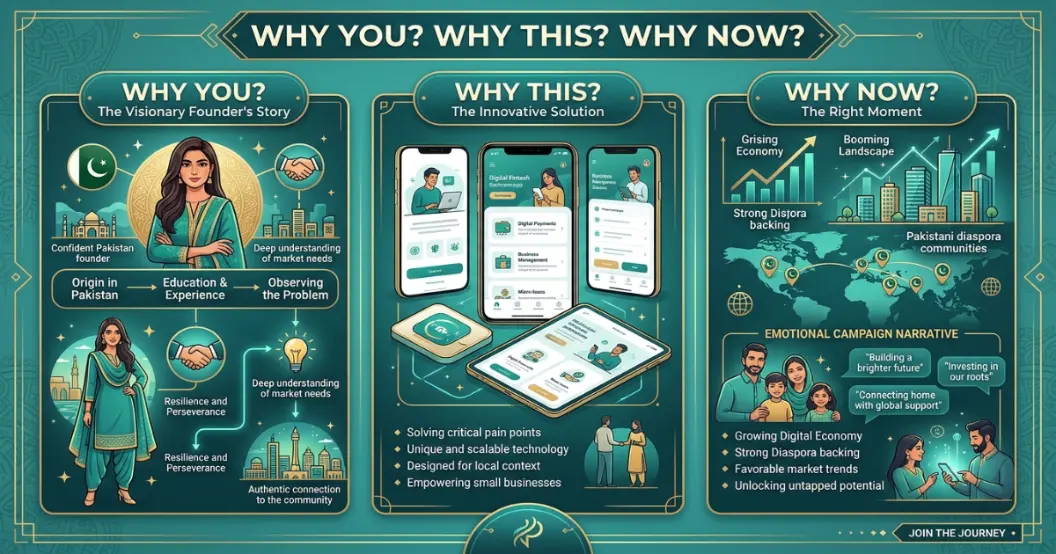
- Tell a story that only you can tell. Pakistani backers — local and diaspora alike — fund people, not just products. Your campaign page should answer: Why you? Why this problem? Why now? If your story could belong to any generic startup anywhere, rewrite it until it couldn’t.
Ready to take the next step? Explore our Startup Valuation Calculator to determine what your business is worth before you set your crowdfunding goal — or walk into the Tank.