Freelancing vs Startup: Which Path Makes More Money in Pakistan?
💡 The Short Answer: For predictable, immediate income with low risk, freelancing wins — top Pakistani freelancers routinely earn $2,000–$5,000 per month. For long-term wealth and asset building, a startup offers a far higher ceiling, but with zero guarantee of success. The smartest path many don’t consider: start freelancing to build skills and capital, then launch a product or scalable service business from that foundation. This hybrid approach is behind a significant number of the startups that eventually land on Shark Tank Pakistan.
Every ambitious Pakistani with a laptop and an internet connection eventually faces this question: stick with freelancing and climb the income ladder, or take the leap into building a startup? It’s a question that the freelancing vs business Pakistan debate doesn’t fully answer with a simple “this is better.” The reality is nuanced, deeply personal, and tied to where you are right now in your career, finances, and risk appetite.
I’ve mentored freelancers making 8,000 PKR a month and others pulling in 15 lakhs. I’ve also seen startups that were funded on Shark Tank Pakistan and grew into national brands, and many more that evaporated within 18 months. The goal here isn’t to push you toward one or the other. It’s to give you the clearest picture yet of what each path actually demands and pays — in rupees, in time, and in sanity — so you can decide with your eyes open.

Real Income: What Freelancers and Startup Founders Actually Earn in Pakistan
Let’s move past the highlight reels. Here’s what the income bands realistically look like, based on conversations with dozens of Pakistani freelancers and founders.
Freelancing: A beginner content writer or data entry operator might start at 25,000–40,000 PKR per month. With 2–3 years of focused skill-building — say in web development, UI/UX design, or software engineering — monthly earnings commonly reach 150,000–400,000 PKR. The top 5% of Pakistani freelancers, particularly those serving US and European clients directly as consultants, consistently bring in 800,000–1,500,000 PKR monthly. The key? They treat freelancing as a business, not a gig — with retainer clients, specialized niches, and a steady pipeline.
Startup: The curve is inverted. In the first 12–24 months, a founder’s personal income is often negative — they’re burning savings or reinvesting every rupee. Many founders pay themselves 0–50,000 PKR for the first two years. However, if the business achieves product-market fit and scales, the financial outcome can dwarf freelancing. A SaaS startup with 500 customers at 8,000 PKR/month each generates 4 million PKR monthly revenue — and a founder owning 60% of that entity has a vastly higher net worth trajectory than any freelancer. Even a modest consumer brand doing 20 lakhs/month in sales with healthy margins can pay the founder 5–10 lakhs monthly while building sellable equity.
Freelancing vs Business (Startup): A Detailed Comparison
| Dimension | Freelancing | Startup / Business |
|---|---|---|
| Income Ceiling | Capped by your personal hours; max ~1.5M PKR/month for elite few | Uncapped — scalable beyond personal time; potential for crores |
| Income Stability | High once established; retainers provide predictable cash flow | Low initially; feast-or-famine cycles until traction is proven |
| Time to First Rupee | 2–8 weeks to land first client | 3–18 months to meaningful revenue, sometimes longer |
| Risk of Zero Income | Moderate — client churn is real but manageable | Very high — most startups fail within 3 years |
| Scalability | Limited; scaling requires hiring a team (becoming an agency) | High — product, platform, or brand can scale exponentially |
| Asset Creation | No sellable equity; you are the asset | Builds a company with potential exit value (acquisition, IPO, or Shark Tank deal) |
| Skill Set Needed | Deep technical or creative skill; client management | Broad — product, marketing, team building, finance, sales |
| Lifestyle | Flexible, location-independent, often solitary | All-consuming in early years; high pressure but high ownership |
| Exit Potential | None; income stops when you stop working | Potentially life-changing lump sum from acquisition or investment |
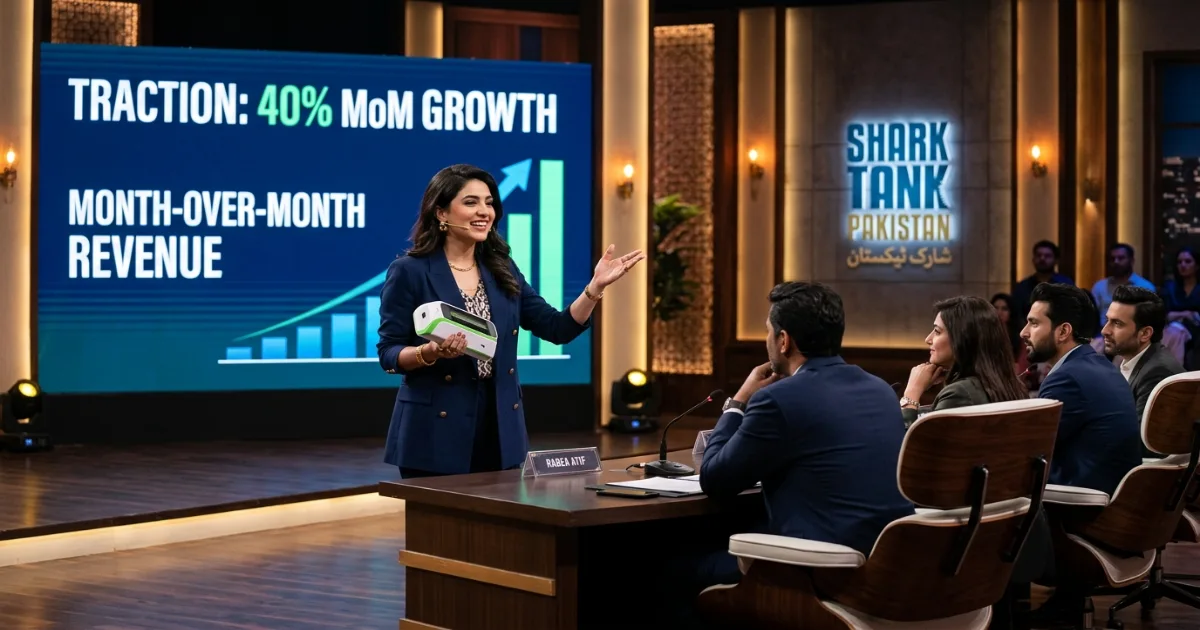
Many Pakistani founders who later raise money or appear on Shark Tank Pakistan didn’t jump straight into a startup. They freelanced first — built capital, honed a marketable skill, and most crucially, identified a recurring client problem they could turn into a product. The freelancer who builds custom e-commerce stores for 10 clients, then creates a Shopify theme or a local logistics plugin, pivots from selling hours to selling a scalable asset. This is not theory — it’s the origin story behind multiple funded Pakistani startups.
The Hidden Architecture: Why Freelancing Often Funds the Startup
Pakistan’s startup ecosystem lacks the deep, patient seed capital that exists in the US. Unless you come from a wealthy family or land a rare angel check, you’re likely bootstrapping. Freelancing becomes your venture capital. I’ve seen this pattern repeatedly: a developer freelances for two years, saves 30–40 lakhs PKR, then uses that to fund the first 18 months of building a SaaS product without taking outside investment. By the time they raise, they own far more equity and have de-risked the business substantially.
Even beyond money, freelancing teaches you commercial skills that are directly transferable to running a startup: negotiating with clients, managing scope creep, understanding what people will actually pay for, and delivering on deadlines. The freelancer-to-founder pipeline is arguably the most reliable path in Pakistan for those without family backing.
Situation-Based Guidance: Which Path Fits Your Life Right Now
🎓 If You’re a Student or Recent Graduate with No Savings
Freelancing is your immediate answer. You need cash flow, and you need it without taking on debt. Spend 2–3 months learning a high-income skill (web development, copywriting, graphic design) and start pitching on Upwork and Fiverr. Your goal in year one: hit 80,000–120,000 PKR/month consistently. That stability gives you options — including the option to start a business later with a financial cushion.
💼 If You Already Have 2+ Years of Freelance Income and 15–20 Lakhs Saved
You’re at the pivot point. You can continue freelancing — perhaps raising rates and working fewer hours — or begin building a startup on the side. Start with a “freelance-informed product”: something you’ve already validated because multiple clients asked for it. Build a minimal version while maintaining 2–3 key retainer clients. Only when the product revenue exceeds 50% of your freelance income should you consider going all in.
👥 If You Have a Co-Founder and a Clear Startup Idea
The startup path becomes more viable with a team. Shared risk, complementary skills, and emotional support multiply your chances. But one of you should ideally maintain some freelance income to cover living expenses for the first 6–12 months. The “all in from day one with no income” model is a fast track to burnout in Pakistan unless you have substantial savings or family support.
🏙️ If You’re in a Tier-2 City with Limited Local Clients
Freelancing through global platforms like Upwork and Fiverr is a great equalizer — your location doesn’t matter as long as your internet is stable and your skills are sharp. A startup that relies on local customers, on the other hand, may struggle in smaller cities with less purchasing power. Digital products or online services that reach customers in Karachi, Lahore, and Islamabad — or internationally — are a better bet if you build a business.
Common Pitfalls & When to Ignore the “Startup Dream” Entirely
There’s a cultural pressure in Pakistan right now — amplified by Shark Tank Pakistan and social media — to be a “founder.” It sounds more impressive than “freelancer.” That pressure leads people to quit a steady 3-lakh/month freelancing practice to chase a startup that never crosses 50,000/month in profit. Don’t be that person.
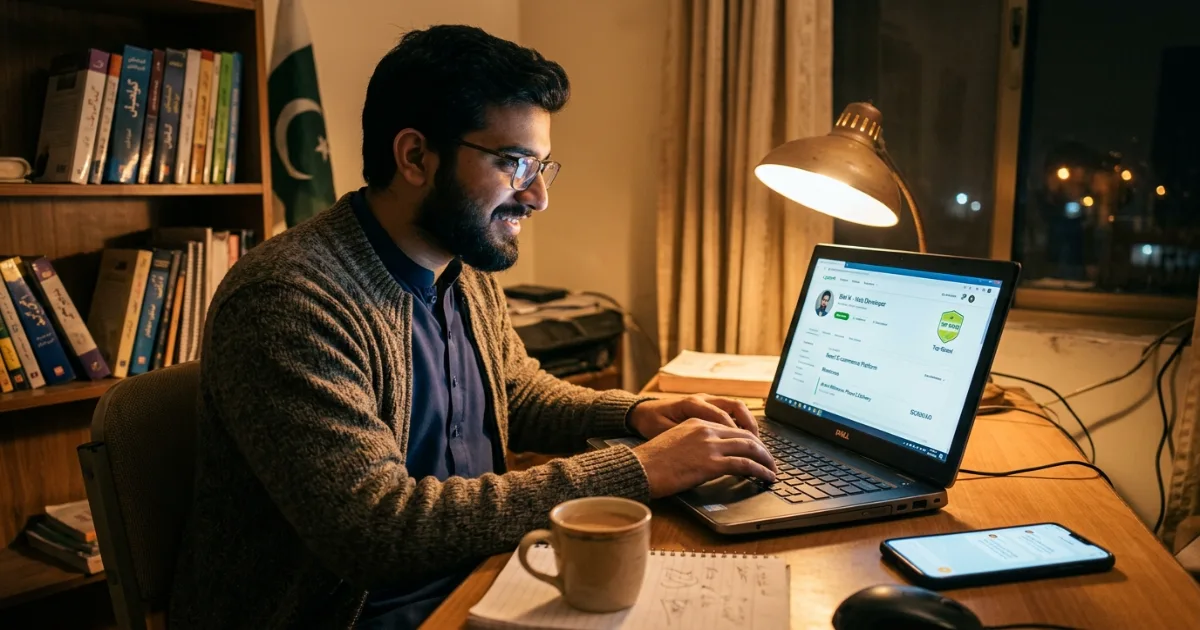
- Don’t start a business just because freelancing feels “small.” A freelancer earning $3,000/month in Pakistan is in the top 2% of earners. That’s not small. That’s a legitimate, high-value career.
- Don’t assume a startup will “click” quickly. The data is brutal. Most startups fail. If you can’t tolerate 12–18 months of uncertainty and potential zero income, stick with freelancing and explore a side project first.
- Avoid the “idea trap.” Many freelancers think, “I’ll build an app and get rich.” But without deep understanding of a market need — ideally from serving those customers as a freelancer — the app is likely to gather digital dust.
- When freelancing is genuinely the better long-term path: If you deeply enjoy mastering a craft, hate managing people, and want location freedom with high income, lean into elite freelancing. The top freelance software architects and consultants in Pakistan bill $75–$150/hour. That’s a crores-per-year trajectory without ever taking investment.
- When a startup might be right: You have a validated problem, unique insight, the stomach for risk, and a desire to build something that outlasts your own time. Then, and only then, go build it.
📊 Data Point: A 2025 survey of 300 Pakistani digital workers found that freelancers with 4+ years of experience had a median monthly income of 310,000 PKR, while first-time founders who quit freelancing to start a business reported a median personal income of just 48,000 PKR in their first 18 months of operation. However, the top 10% of those founders had crossed 800,000 PKR/month by year three. The distribution is far wider on the startup side — higher highs, lower lows.
How SharkTankPakistan.pk Tools Can Help You Decide — and Execute
The calculators on this site aren’t just for funded startups. They’re equally useful for a freelancer thinking about productizing a service or a founder modeling future rounds.
If you’ve built a software product from your freelance insights and are starting to see traction, the Valuation Calculator helps you understand what your side project might be worth to an investor. Even if you don’t raise money, knowing your valuation frames every decision about growth, hiring, and pricing.
If you’re weighing whether to stay a solo operator or bring on a co-founder — essentially a decision about equity — the Equity vs Loan Calculator shows the long-term financial impact of giving up a slice of your future. A freelancer who stays independent keeps 100% of their income. A founder who gives away 30% equity in a $500,000 company has a $350,000 stake vs $500,000. Run those numbers before you sign anything.

Frequently Asked Questions About Freelancing vs Business in Pakistan
Is freelancing more profitable than a business in Pakistan?
In the short term, yes. A skilled Pakistani freelancer can earn 2–5 lakhs PKR/month within 2–3 years, which outpaces most early-stage founders. Over a 10-year horizon, a successful startup with sellable assets can generate far greater wealth — but the failure rate is high. Profitability comparisons must account for risk.
Can I start a business while freelancing in Pakistan?
Absolutely, and it’s the recommended approach. Maintain 2–3 stable freelance clients to cover living costs while building your product or service business on the side. Transition fully only when business revenue consistently exceeds 50% of your freelance income.
What type of freelancing pays the most in Pakistan?
Software development (especially full-stack, mobile, and AI/ML), high-end UI/UX design, and specialized consulting in fields like blockchain or cybersecurity command the highest rates, often $50–$150/hour. Niche B2B copywriting and technical writing also pay well. The common factor: deep, rare skills with global demand.
Do I need to register a company to start a business in Pakistan?
For a freelancing sole proprietorship, you can operate under your own name with a bank account and tax registration. To build a fundable startup — especially if you plan to pitch on Shark Tank Pakistan — registering a private limited company is essential. It provides legal structure for equity investment.
How do Pakistani freelancers find high-paying international clients?
Beyond Upwork and Fiverr, successful freelancers build a presence on LinkedIn, contribute to open-source projects, write case studies, and ask for referrals. Cold outreach to companies with a tailored portfolio often lands the highest-value, long-term contracts away from platform fees.
Is Shark Tank Pakistan only for tech startups, or can service businesses apply?
Shark Tank Pakistan considers a wide range of businesses, but the Sharks heavily favor scalable models — usually product or platform-based. A pure freelancing agency with no proprietary IP or scalable asset is unlikely to get a deal. However, a service business that has productized its offering or built unique tech can be competitive.
What’s the biggest mistake freelancers make when turning into founders?
They underestimate the shift from “maker” to “manager” and from “doing the work” to “building a system.” A great freelancer can deliver excellent client work. A great founder must hire, delegate, sell, and sometimes do things they’re bad at. Many brilliant freelancers fail as founders because they can’t let go of the craft.
Which path has better work-life balance: freelancing or startup?
Freelancing offers far more control over your hours and location. Startups, especially in the first 2–3 years, commonly demand 60–80 hour weeks and constant mental load. If lifestyle flexibility is your top priority, elite freelancing beats the startup grind in nearly every dimension.
⚡ Your Fast-Track Cheat Sheet: Top 3 Actions to Take Now
- If you lack savings, focus on high-income freelancing first. Identify a skill that can earn at least 100,000 PKR/month within 6 months and pursue it relentlessly. This creates the financial runway for everything else. Use platforms like Upwork and build direct client relationships.
- Don’t quit freelancing for a startup until you have a validated problem and initial traction. The best startups come from problems you’ve personally encountered while serving clients. Build the minimum version while keeping your income stable. Let actual customer demand — not ambition — pull you into full-time entrepreneurship.
- Use the SharkTankPakistan.pk tools to model your future. Whether you’re staying a freelancer or building a company, understanding valuation, equity dilution, and financial scenarios will make you savvier. Run the calculators, examine the numbers, and let data — not hype — guide your decision.