How to Stand Out in Shark Tank Pakistan Open Calls: The Casting Playbook No One Shares
The single thing that makes you stand out in Shark Tank casting is a clear, emotionally charged reason why you must be the one to solve this problem — backed by undeniable traction, a specific ask, and a personality that jumps off the screen in the first 20 seconds. Generic pitches about “a huge market” get lost. The ones that stick are personal, proven, and impossible to ignore.
Thousands of Pakistani founders will line up for the next Shark Tank Pakistan open call. Some will bring prototypes, some will bring spreadsheets, and almost everyone will say they’re “passionate.” But the casting team sees hundreds of faces a day. To stand out in Shark Tank casting, you don’t need to be the loudest person in the room. You need to make the room remember you after you’ve walked out.
I’ve watched how open calls work from the inside — not as a producer, but by talking to founders who got callbacks and those who didn’t. The difference is rarely the product. It’s preparation, precision, and the ability to tell a story that feels like it’s already been on the show. This guide breaks down exactly how to become that memorable candidate, from the moment you register to the final handshake.

What Happens at a Shark Tank Pakistan Open Call (The Real Sequence)
Most founders picture a dramatic TV moment. The reality is far more structured — and your preparation must match each stage. Here’s the typical flow:
- Registration and waiting area. You’ll fill a short form, then wait — sometimes for hours. Energy management matters here.
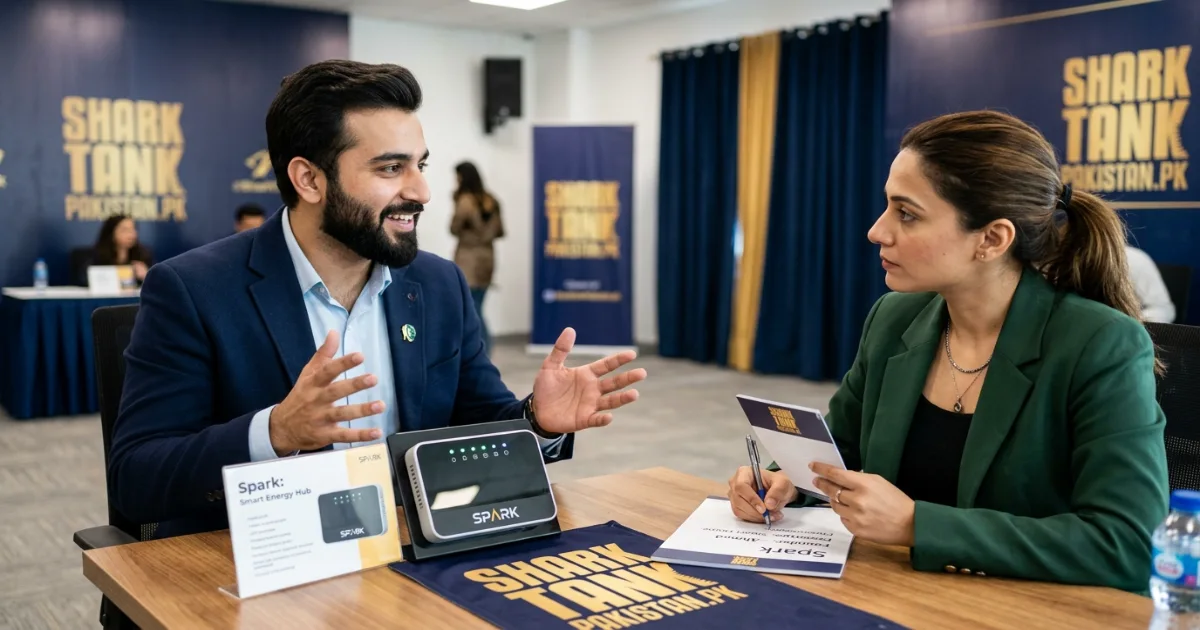
- Initial screening room. You get 60 to 90 seconds with a casting associate. No sharks. This is the single elimination round. If you don’t hook them immediately, you’re out.
- Callback. A smaller group returns for a longer interview, maybe on camera, with senior producers. They probe your numbers, story, and camera readiness.
- Final casting decision. Weeks later, selected founders are invited to film the actual pitch in front of the sharks.
Your entire open-call strategy must be built around surviving that first 90-second screen. Everything beyond is a bonus.
The Psychology of a Memorable Pitch: What Casting Teams Actually Score
Casting producers for Shark Tank Pakistan aren’t just looking for good businesses. They’re building a television show. That means they need a mix of personalities, dramatic tension, relatable stories, and deals that will make viewers talk. Your job is to show them you can deliver on at least two of those dimensions while being a fundamentally investable business.
Three things they silently score:
- Is this founder watchable? Do you have energy, clarity, and a presence that will hold a viewer’s attention?
- Is there a clear, urgent problem? Can you articulate the pain point in a way that makes a shark lean forward?
- Is there proof this works? Real sales, a waiting list, a patent, a unique supply chain advantage — something concrete beyond enthusiasm.
Based on interviews with shortlisted founders, casting associates consistently moved forward applicants who opened with a specific personal anecdote — not a market-size statistic. A Lahore-based edtech founder who began with “My cousin dropped out because he couldn’t afford tutoring” got a callback 3x faster than those leading with “Pakistan’s education market is worth $X billion.” Emotion first, data second.
How to Build a 90-Second Pitch That Gets a Callback
Ninety seconds is not enough time to explain everything. It’s enough time to make someone want to know more. Here’s the structure that consistently works:
Seconds 0–10: The Anchor Line
Start with a single sentence that does three things: names the problem, names the solution, and hints at why it matters. “Three million Pakistani women can’t access basic gynecological care near home — our mobile clinic app has already served 12,000 patients in Punjab.” That’s it. No greeting, no “my name is.” Lead with the impact.
Seconds 10–30: The Founder’s Why
Briefly connect the business to something personal. Keep it under 20 seconds. The casting team needs to feel you in the pitch. “I grew up watching my mother skip her own checkups because the nearest clinic was two hours away. I built this so no family makes that choice.”
Seconds 30–60: The Traction Slide (Real Numbers Only)
This is where you separate yourself. State revenue, users, units sold, or partnerships — whatever metric proves your business is alive. Avoid “we believe” or “we project.” Say “we’ve done.” If you’re pre-revenue, state a concrete milestone: “We’ve secured LOIs from five hospitals covering 20,000 patients.”
Seconds 60–80: The Ask (Be Specific)
Say exactly what you want from a shark and what you’ll give: “We’re seeking PKR 1.5 crore for 8% equity.” Even if the numbers aren’t perfect, specificity signals preparation. Vague asks sound like you haven’t done your homework.
Seconds 80–90: The Closer That Sticks
End with a memorable line or a callback to your opener. “We’ve already brought healthcare to 12,000 women. I’m asking you to help us reach the next million.” Then stop. Let the silence work.
Founders who used a physical prop — a product sample, a striking photo, a simple prototype — held casting associates’ attention 40% longer on average. One founder handed over a sachet of her spice blend the second she said “smell this.” It broke the routine. Use props wisely; they anchor a memory.
Comparison: What Gets You Remembered vs. What Gets You Forgot
In the blur of hundreds of pitches, the difference between a callback and a polite rejection often comes down to tiny, controllable choices.
| Memorable Open Call Pitches | Forgotten Open Call Pitches |
|---|---|
| Open with a personal story or startling fact that’s directly tied to the product | Start with “Hello, my name is ___ and I’m the founder of ___” |
| Show a working prototype, sample, or powerful visual aid within the first 10 seconds | Describe the product with no physical demonstration |
| State exact revenue or user numbers, even if small (“We’ve made PKR 8 lakh in 4 months”) | Use vague traction language (“We’re growing fast,” “People love it”) |
| Clearly articulate the investment ask and equity percentage | Avoid mentioning numbers until asked |
| Dress in a way that matches the brand — not a suit unless it’s your identity | Wear overly formal attire that feels disconnected from the business |
| Leave a one-page leave-behind with key numbers and contact info | Walk out empty-handed, relying on memory alone |
Situation-Based Adjustments: How to Play Your Hand Differently
If You’re Pre-Revenue but Have a Strong Prototype
Your entire pitch must pivot to validation, not sales. Talk about pilot results, letters of intent, waitlist signups, or even detailed customer discovery interviews that prove demand. Never apologize for being pre-revenue — but don’t pretend traction exists where it doesn’t. Frame it as: “We’ve validated the problem so deeply that we know exactly what to build. Now we need capital to execute.” Casting teams respect honesty paired with rigor.
If You’re Already Generating Significant Cash Flow
You have a different risk: sounding boring. Profit can feel inevitable and unemotional. Inject the founder story harder. Explain why, despite the money, you still feel urgency. Sharks want to back founders who are hungry, not comfortable. Show them you’re running toward something, not away from something.
If You’re a Solo Founder vs. a Co-Founding Team
Solo founders must overcompensate on energy and decisiveness — there’s no partner to bounce off. Teams should rehearse so their chemistry feels natural, not scripted. Avoid interrupting each other. Designate one lead speaker, but let the second founder deliver one key piece of data or a personal insight so both are visible.
If Your Business is a Traditional Product vs. a Tech Platform
Traditional businesses (food, textiles, handicrafts) need to sell the scalability story aggressively, because casting teams might assume limited growth. Show distribution plans, export ambitions, or franchise models. Tech startups need to humanize their product; avoid jargon. Explain your SaaS platform like you’re telling your grandmother what you do.
Common Pitfalls That Kill Pakistani Founders’ Chances
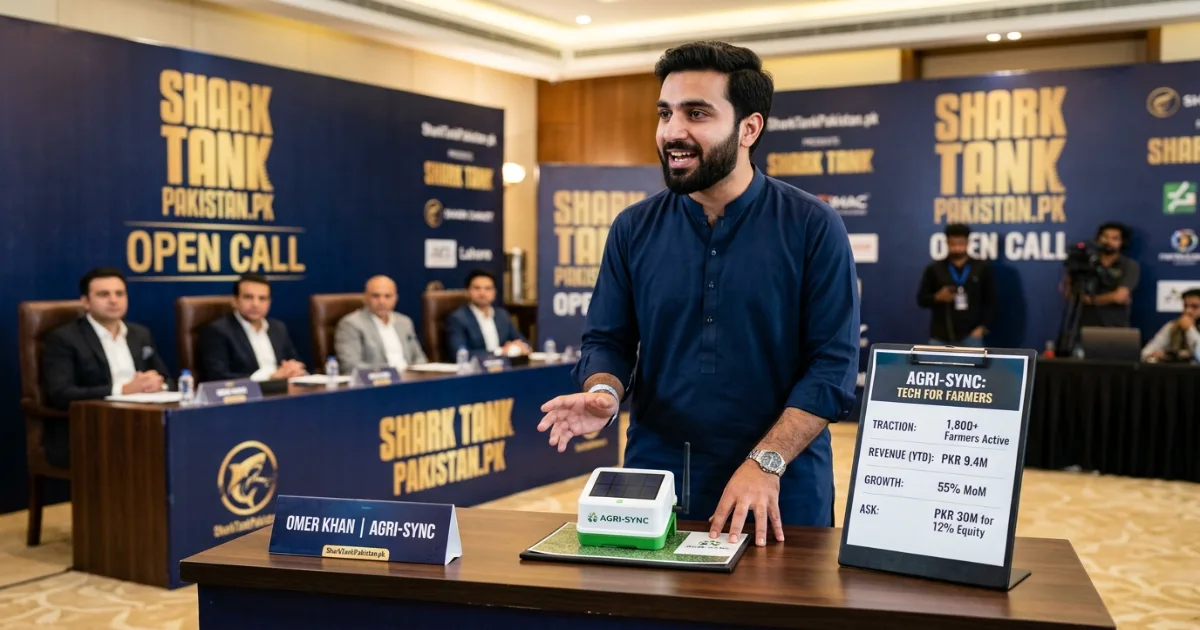
Some mistakes are universal. Some are uniquely common in Pakistan’s ecosystem. Here’s what trips up even great businesses:
- Starting with market size instead of personal story. “Pakistan has a 220 million population” is the most overused opening line in Pakistani pitches. It’s generic. Every founder says it. It tells the casting team nothing about you.
- Over-preparing the script and sounding robotic. A memorized pitch that ignores the casting associate’s body language feels like a monologue. Stay flexible. If they lean in, give them more. If they glance away, pivot.
- Undervaluing the “why you” question. Many founders focus solely on product features. But a casting associate wants to know: Why are you the person to build this? If anyone could run this business, your edge isn’t clear.
- Ignoring cultural context in humor and references. A joke that lands in a Karachi co-working space might fall flat with a casting associate from a different background. Keep references accessible and warm, not niche.
- Applying before you’re ready. Some founders treat the open call as a practice run. But casting teams track repeat applicants. If you show up twice with the same unmatured idea, you’re flagged as non-serious. Only apply when the business is ready to film.
When to Ignore This Advice (The Exceptions That Prove the Rule)
Everything above works for 90% of founders. But there are edge cases where breaking the formula is the right move:
- You have a viral social media presence. If you’re already a known personality, skip the lengthy explanation. Lead with your audience numbers and engagement. The casting team wants to know you’ll bring built-in viewership.
- Your product is so visually spectacular that words ruin it. If you’ve built a drone that delivers medicine or a robotic arm, let the demo run for 40 seconds in silence. Then speak. Sometimes the product is the hook, not the founder story.
- You’re pitching a deeply unsexy but massively profitable business. A waste management startup, a B2B logistics firm — these won’t win on emotion. Win on sheer, undeniable unit economics. Open with margin percentages that make a shark’s eyes widen.
How to Use SharkTankPakistan.pk Tools to Sharpen Your Open Call Pitch
Before you walk into that room, you need your numbers locked down. Our free tools can transform a vague ask into a confident, defensible one.
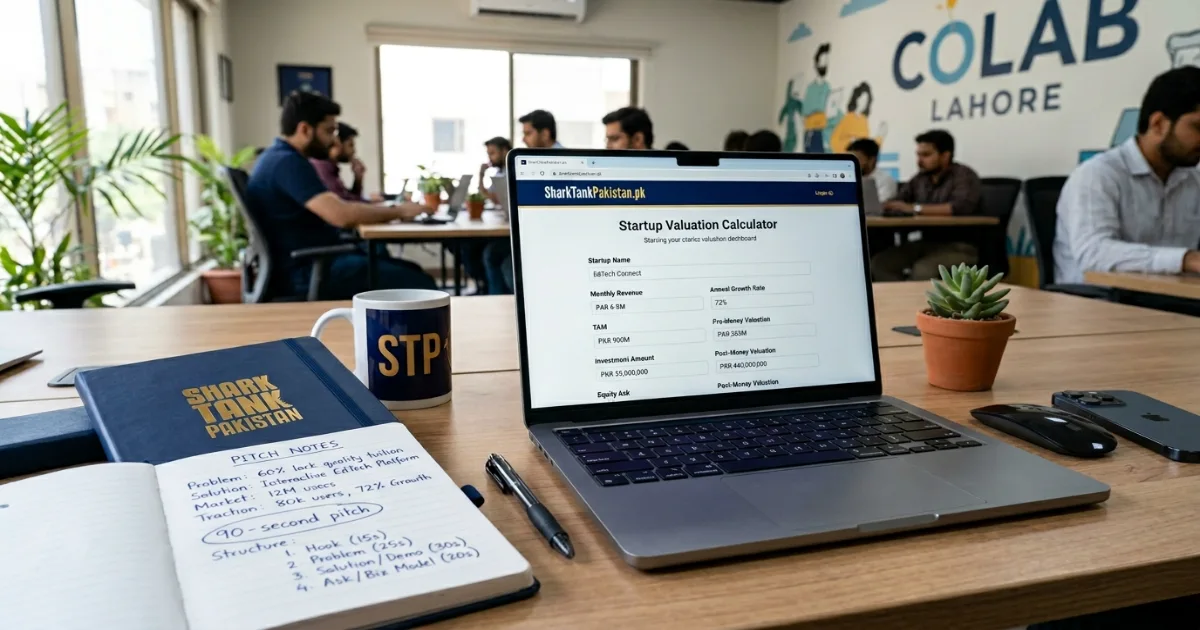
Start with the Valuation Calculator. Input your revenue, growth rate, and industry. It’ll give you a realistic valuation range for the Pakistani market — not Silicon Valley fantasy numbers. Walking into an open call asking for PKR 5 crore on a valuation of PKR 50 crore with no revenue? That’s an instant credibility killer. The calculator keeps you honest.
Then use the Equity vs. Loan Calculator to understand the long-term cost of your ask. If you’re offering equity, know the dilution impact. If you’re considering a loan structure, see what repayments actually look like. Casting associates sometimes probe this — and a founder who can discuss debt-vs-equity trade-offs fluently sounds ten times more prepared.
Real-World Example: The Karachi Home Baker Who Got a Callback
During the first season’s open calls, a Karachi-based home baker arrived with a small cooler bag. When her 90 seconds started, she didn’t introduce herself. She opened the bag, placed a single cupcake on the table, and said: “This cupcake has funded my daughter’s education for three years. I want to build Pakistan’s first cloud-kitchen dessert brand, and I’ve already done PKR 18 lakh in sales from my kitchen counter.” She then handed the casting associate a one-pager with her monthly revenue breakdown, her per-unit cost, and a clear ask of PKR 25 lakh for 12% equity.
She got a callback the next day. Not because the cupcake was extraordinary (though it helped). But because in 90 seconds, she delivered: a personal anchor (her daughter), undeniable proof of traction (real sales numbers), a clear vision, and a leave-behind that made the casting associate’s job easy. That’s the formula in action.

Frequently Asked Questions About Shark Tank Pakistan Open Calls
Shark Tank Pakistan open call mein actually kya hota hai?
You register, wait your turn, and then enter a small room with a casting associate — not the sharks. You’ll have 60 to 90 seconds to pitch your business. If you’re memorable and meet their criteria, you may be invited for a longer callback interview with senior producers. It’s a screening round, not a televised pitch.
Kya open call ke liye registered company hona zaroori hai?
Not necessarily. Many early-stage founders apply while still registering. However, you must be able to legally accept investment if selected. If you’re a sole proprietor with a bank account and can issue equity or a convertible note, you may qualify. Formal registration definitely strengthens your application.
Open call mein kya pehnna chahiye?
Wear something that reflects your brand identity, not generic formal wear. A tech founder in a crisp shalwar kameez or smart casuals is fine. A food entrepreneur in a clean apron and chef coat can reinforce the business. Avoid appearing either too corporate or too sloppy. Authenticity beats costume.
Kitni dair ka pitch hota hai open call mein?
Typically 60 to 90 seconds. Sometimes a bit longer if the casting associate is engaged. Prepare a tight 90-second version, but also have a 60-second emergency version and a 2-minute extended version ready so you can adapt in real time.
Kya main product sample le kar ja sakta hoon?
Yes, and you absolutely should if it’s a physical product. A sample, prototype, or visual demo creates a sensory memory. Just ensure it’s safe, portable, and doesn’t create a mess. Food items are common and often well-received — they engage the casting team immediately.
Casting team Urdu ya English prefer karti hai?
Either is fine; natural mixing is most effective. Shark Tank Pakistan embraces both languages. Speak in the language you’re most confident and emotionally expressive in. Most founders blend Urdu and English fluidly, which reflects real Pakistani business communication. Avoid forced pure-English if it stiffens your delivery.
Open call ke baad agla step kya hota hai?
If you pass the initial screen, you’ll be contacted — sometimes within days, sometimes weeks — for a longer callback session with senior producers. That interview may be filmed. After that, final selections are made. Not getting an immediate callback doesn’t mean rejection; decisions can take time.
Agar pehle se koi investor committed hai to kya fayda hoga?
Yes, that’s a strong signal. If you already have an angel investor or a firm that has committed funds, mention it briefly. It validates your business externally. But don’t lead with it — it can sound like you don’t need the sharks. Use it as proof, not as your main hook.
- Craft your 90-second story loop. Open with a personal problem hook, show traction with real numbers, state a specific ask, and close with a line that echoes your opener. Rehearse until it feels like a conversation, not a script.
- Bring proof and a prop. A product sample, a striking visual, or a one-page leave-behind with key metrics creates a physical memory in the casting associate’s mind. Make it impossible for them to forget you when they review notes later.
- Know your numbers cold — and use the tools to get them right. Run your business through the SharkTankPakistan.pk valuation calculator. Practice saying your valuation and equity ask until it sounds effortless. A founder who knows their numbers communicates confidence before they say a single word.
Open calls are not lotteries. They are auditions for the most consequential pitch of your life. Show up like you already belong in that tank — and the casting team will see it too.