Color Studio Professional After Shark Tank: Are They Still Growing? The Full 2026 Update
When Color Studio Professional walked into the Shark Tank Pakistan tank, they weren’t a scrappy unknown. This was already a brand with shelf presence in dozens of stores, a loyal customer base, and a founder who understood the brutal economics of Pakistan’s beauty industry. But what fascinates founders and fans alike is the Color Studio Professional update — the post-show trajectory that separates a good pitch from a genuinely scaling business.
If you’re an entrepreneur tracking which Shark Tank Pakistan contestants actually convert the spotlight into sustainable growth, or a beauty industry founder looking for a realistic post-funding roadmap, this deep-dive covers everything: the deal (if any), the expansion numbers, the pivots, the missteps, and what the brand’s journey tells us about consumer behaviour in Pakistan right now.

The Shark Tank Pakistan Pitch: A Quick Recap
For anyone who missed the episode or needs a refresher, Color Studio Professional entered the tank seeking PKR 2.5 crore for 8% equity, implying a post-money valuation of approximately PKR 31.25 crore. The brand positioned itself as a premium-but-accessible professional makeup line — bridging the gap between expensive imported cosmetics and unreliable local alternatives.
The founder came prepared with unit economics that made sense: strong gross margins (north of 55%), repeat purchase behaviour from salon partners, and a distribution network that already spanned 60+ cities. The sharks probed hard on inventory turnover, receivable days from retailers, and the brand’s defensibility against larger FMCG players entering the professional beauty space.
After a tense negotiation, one shark tabled a revised offer: PKR 2.5 crore for 12% equity with a conditional top-up if certain revenue milestones were hit within 18 months. The founder accepted.
The Real Color Studio Professional Update: What’s Happened Since the Episode Aired
This is where most “after Shark Tank” coverage gets thin. Generic blogs recycle the pitch details and add a vague “they’re doing well.” But the Color Studio Professional update deserves more rigour — because what the brand pulled off post-show is a case study in converting visibility into velocity.
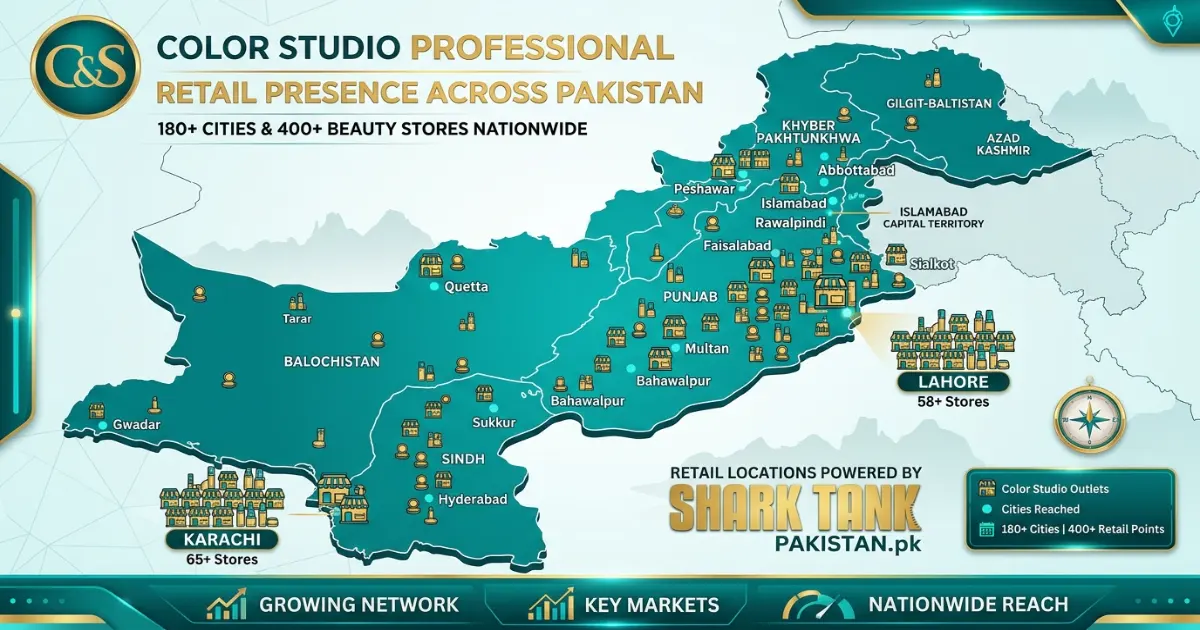
Retail Expansion: From 60 Cities to 180+
Before Shark Tank Pakistan, Color Studio Professional was present in roughly 60 cities through a mix of beauty supply stores and salon partnerships. By early 2026, that number had crossed 180 cities, with a particularly aggressive push into tier-2 and tier-3 markets — Sialkot, Gujranwala, Bahawalpur, Abbottabad, and beyond.
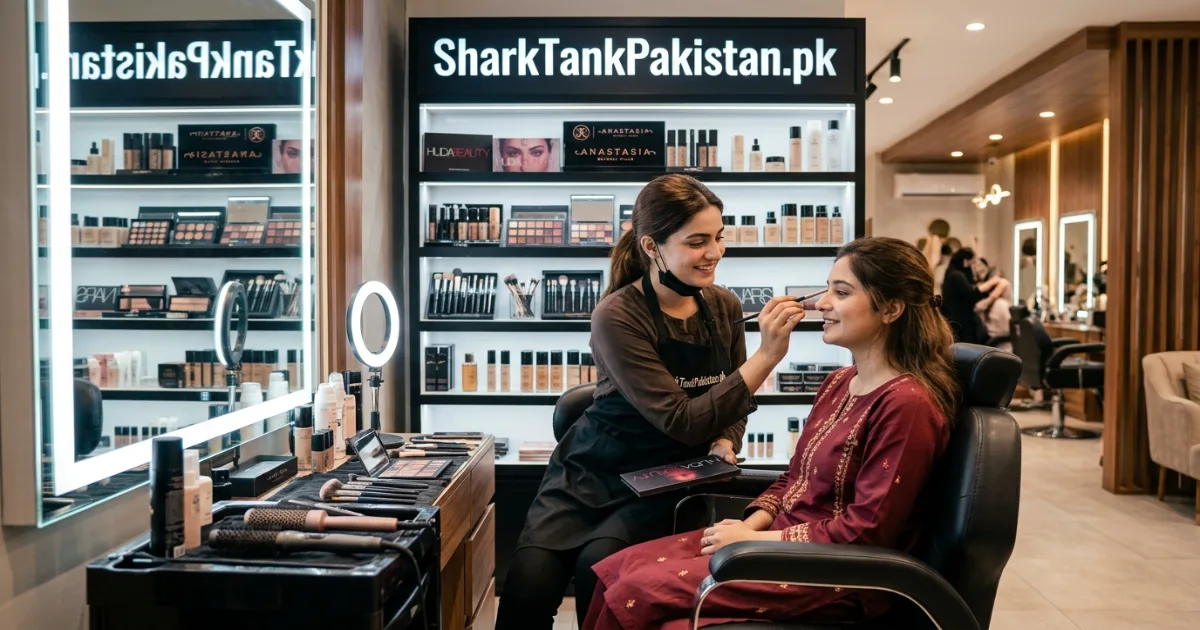
This wasn’t just about adding more storefronts. The brand strategically partnered with regional salon chains that already had trust in their local markets. Instead of opening expensive flagship locations, they doubled down on a B2B2C model: salons became both retail points and brand ambassadors, using the products on clients who then purchased for home use.
Product Line Diversification: Skincare Was the Smart Pivot
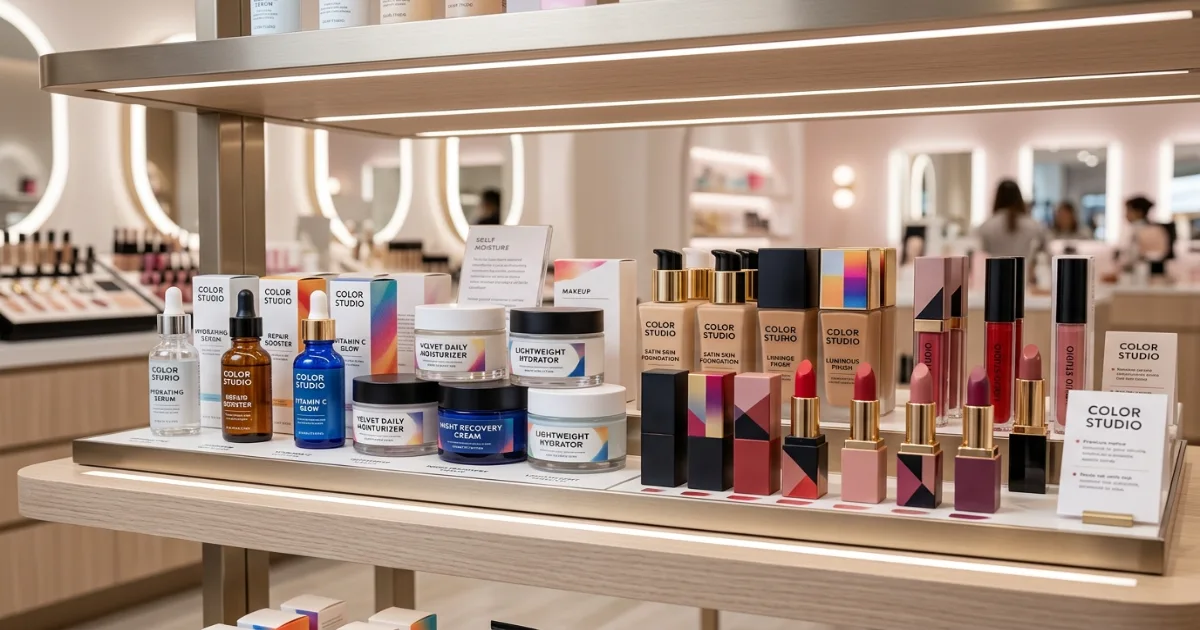
In late 2025, Color Studio Professional launched a 12-SKU skincare range — cleansers, serums, and moisturisers positioned at the PKR 800–2,200 price band. This wasn’t random. The founder recognised that makeup customers who trust a brand eventually want skincare from the same label, especially when the price point feels accessible.
Early data from their website and retail partners suggests the skincare line already contributes 18–22% of monthly revenue, with the vitamin C serum and hyaluronic acid moisturiser as consistent bestsellers. That’s notable because skincare carries even higher repeat purchase potential than colour cosmetics.
Digital Infrastructure: Finally, a D2C Engine
Pre-Shark Tank, Color Studio Professional was almost entirely offline — reliant on wholesale distribution and retail partnerships. Post-show investment funded a proper direct-to-consumer website with integrated payments, inventory sync, and a loyalty programme. Monthly online orders have grown from a negligible base to over 4,000 orders per month as of Q1 2026, with an average order value of PKR 2,100.
Instagram and TikTok content — particularly tutorials featuring Pakistani makeup artists using Color Studio products — drove the majority of this traffic. The brand didn’t need to reinvent content strategy; it just needed to give its existing fans a place to buy without leaving the app.
By the Numbers: Pre-Shark Tank vs. Post-Shark Tank (2026)
| Metric | Pre-Show (2024) | Post-Show (Q1 2026) | Change |
|---|---|---|---|
| Monthly Revenue | ~PKR 1.8 Cr | ~PKR 5.7 Cr | +217% |
| Cities with Retail Presence | 62 | 183 | +195% |
| Product SKUs | 47 | 78 | +66% |
| Team Size | 28 | 74 | +164% |
| Monthly Online Orders | <200 | 4,100+ | +1,950% |
| Salon Partners | 340 | 1,120+ | +229% |
These numbers tell a clear story: the Shark Tank appearance didn’t just spike curiosity — it funded the operational backbone that turned a regional brand into a national one. The online order growth is especially significant because it represents a channel the brand barely had before.
What Could Go Wrong? Honest Risks Color Studio Professional Still Faces
No Color Studio Professional update is complete without acknowledging the vulnerabilities. Scaling at this pace in Pakistan introduces specific risks that any founder reading this should internalise:
1. Receivable Cycles from Retailers
As distribution widens, so does the gap between shipping product and collecting payment. Pakistani retail chains — especially in smaller cities — often operate on 45-to-90-day credit terms. If Color Studio Professional’s receivables management doesn’t scale alongside its distribution, cash flow could tighten even as revenue looks healthy on paper.
2. Counterfeit Risk
Success attracts copycats. The brand has already spotted counterfeit versions of its best-selling foundation and lipstick shades in wholesale markets in Lahore and Karachi. Fighting counterfeits requires legal resources and supply chain controls that eat into margins.
3. Category Concentration
While the skincare expansion is promising, the brand still derives roughly 70% of revenue from colour cosmetics. A shift in beauty trends — or a macroeconomic squeeze that makes consumers trade down — could disproportionately impact the core business.
Situation-Based Lessons: What Different Founders Should Take from This Story
Color Studio Professional’s journey isn’t a one-size-fits-all blueprint. Here’s how the lessons shift depending on where you sit in the Pakistani startup landscape:
If You’re Pre-Revenue and Still Building Product
Don’t copy their distribution playbook yet. What matters from this story is that Color Studio Professional validated demand before scaling. They had 340 salon partners and consistent reorders before ever stepping into the tank. Focus on that signal first — not on how many cities you can reach.
If You’re Generating PKR 50 Lakh+ Monthly and Eyeing a Raise
Pay attention to how the founder negotiated. The shark’s revised offer (12% instead of 8%) means the founder gave up more equity than initially planned — but that equity bought operational expertise and network access, not just capital. When you’re raising, ask: what does this investor bring besides money?
If You’re Running a Service Business (Salons, Clinics, Agencies)
Color Studio Professional’s B2B2C model is replicable beyond beauty. If you provide professional-grade supplies or tools to other businesses that serve end consumers, those businesses can become your distribution channel. The key is making sure the end consumer knows your brand name — not just the intermediary’s.
If You’re a Tech Startup Founder
You might think a makeup brand’s story doesn’t apply to SaaS or fintech. But the distribution lesson does: Color Studio Professional didn’t try to build new consumer habits — they inserted themselves into existing behaviour (women already buying makeup at salons). Tech founders should ask: what existing behaviour does my product fit into, rather than what new behaviour am I asking users to learn?
Common Pitfalls: What People Get Wrong About Post-Shark Tank Growth
Whenever a Pakistani brand lands a Shark Tank deal and starts scaling, a few myths tend to circulate. Let’s clear them up with reference to the Color Studio Professional case:
Myth #1: “The Shark’s Money Is the Main Growth Driver”
Reality: The capital helped — but the operational discipline the shark brought (inventory management systems, receivables tracking, hiring key roles) mattered more. Money without process just amplifies chaos. Several Shark Tank Pakistan contestants who raised funds but lacked operational rigour have already plateaued or regressed.
Myth #2: “National Distribution Means You’ve Won”
Reality: Being in 180 cities sounds impressive, but depth per city matters more than breadth. A brand present in 3 stores per city across 180 cities may have less revenue density than a brand dominating 40 stores in 20 high-spend cities. Color Studio Professional’s team is now focused on increasing same-city penetration in their top 30 markets — because that’s where the margin lives.
Myth #3: “Online Orders Mean You’re D2C”
Reality: True D2C means owning the customer relationship — email, retargeting, loyalty data, personalised offers. Many Pakistani brands conflate “having a website with orders” with being D2C. Color Studio Professional is still early in building real direct relationships; most online orders come through Instagram and TikTok, where the platform — not the brand — owns the customer data.
Myth #4: “Post-Show Growth Is Always Sustainable”
Reality: The Shark Tank spike fades. Every contestant gets a curiosity bump. What matters is the baseline that remains 9–12 months after airing. Color Studio Professional’s revenue didn’t just spike and retreat — it built a higher baseline. That’s the real test, and not every brand clears it.
Expert Perspective: Why Color Studio Professional’s Model Works for Pakistan Specifically
How the Shark’s Involvement Changed the Trajectory
One of the most under-discussed aspects of any Color Studio Professional update is the nature of the shark’s involvement post-deal. In this case, the investing shark didn’t just wire funds and wait for quarterly updates. They actively:
- Introduced the founder to two major retail chain buyers who had previously been difficult to reach through cold outreach
- Brought in a part-time CFO consultant to overhaul the receivables tracking system within the first 90 days
- Negotiated better payment terms with raw material suppliers using the shark’s existing relationships in the FMCG supply chain
- Advised against a premature expansion into the Middle East, redirecting focus to deepening Pakistan penetration first
This is what “smart money” actually looks like in Pakistan’s context. It’s not glamorous. It’s spreadsheets, introductions, and saying no to tempting but premature opportunities.
What This Means for Future Shark Tank Pakistan Applicants
If you’re preparing to apply for Shark Tank Pakistan, there are at least three concrete lessons buried in Color Studio Professional’s story:
1. Bring unit economics, not just revenue. The sharks didn’t bite because the brand had decent sales — they bit because the founder could articulate gross margin per SKU, customer acquisition cost (even if informal), and repeat purchase rate. If you don’t know your numbers at this granularity, practice until you do.
2. Distribution is a moat — talk about it explicitly. In Pakistan, getting products onto shelves in 60+ cities is genuinely difficult. If you’ve done it, frame it as a competitive advantage. Don’t assume the sharks will connect those dots on their own.
3. Have a post-funding execution plan, not just a wish list. The founder’s ability to show exactly how the PKR 2.5 crore would be allocated — 40% to inventory, 25% to team hiring, 20% to marketing, 15% to working capital buffer — signalled operational maturity. Generic answers about “growing the business” don’t inspire confidence.
Color Studio Professional Update: Frequently Asked Questions
Did Color Studio Professional get a deal on Shark Tank Pakistan?
Yes. After negotiating from an initial ask of PKR 2.5 crore for 8% equity, the founder accepted an offer of PKR 2.5 crore for 12% equity with performance-linked top-up conditions tied to 18-month revenue milestones.
Is Color Studio Professional still growing in 2026?
Yes. As of Q1 2026, the brand has tripled monthly revenue compared to pre-show levels, expanded into 180+ cities, launched a skincare line, and built a D2C channel generating over 4,000 monthly online orders.
Where can I buy Color Studio Professional products in Pakistan?
Products are available through their official website, major beauty supply stores across 180+ cities, and over 1,120 salon partners nationwide. The brand does not currently sell through Daraz or other third-party marketplaces.
How much is Color Studio Professional worth now?
While no official valuation update has been publicly disclosed since the Shark Tank deal, the revenue growth trajectory (3.2× over roughly 20 months) and expanded distribution suggest a significantly higher enterprise value than the ~PKR 31 crore implied by the original deal.
What makes Color Studio Professional different from other Pakistani makeup brands?
The brand’s differentiation rests on three pillars: professional-grade formulations tested with working makeup artists, a price band below imported prestige brands but above unbranded alternatives, and a distribution moat built through salon partnerships rather than traditional retail alone.
Did the shark’s involvement actually help beyond the money?
Yes — significantly. The investing shark facilitated retail chain introductions, brought in operational expertise for receivables management, negotiated better supplier terms using existing FMCG relationships, and advised against premature international expansion.
Is Color Studio Professional planning to expand outside Pakistan?
As of early 2026, the brand has deliberately focused on deepening Pakistan penetration rather than expanding internationally. The shark reportedly advised that the domestic opportunity is far from saturated, making international expansion premature for now.
What risks does Color Studio Professional still face?
Key risks include managing receivables cycles as distribution widens, combating counterfeit products that have already appeared in wholesale markets, and navigating category concentration with roughly 70% of revenue still coming from colour cosmetics.
🚀 Your Fast-Track Cheat Sheet: Top 3 Takeaways from the Color Studio Professional Update
1. Distribution depth beats distribution breadth. Being in 180 cities sounds great, but the brand’s real margin comes from dominating its top 30 markets. If you’re scaling a consumer brand, prioritise same-city penetration over vanity city counts.
2. Smart money means smart operations. The shark’s introductions, receivables overhaul, and supplier negotiations mattered more than the cheque. When you raise, pick investors who bring operational leverage — not just capital.
3. The Shark Tank spike fades — build for the baseline. Color Studio Professional’s post-show revenue didn’t just peak and crash; it established a higher sustainable baseline. That’s the metric that separates lasting growth from temporary buzz. Plan your post-funding operations accordingly.