Housewife Business Ideas Pakistan: The Silent Rise of the 6-Figure Home CEO
⚡ The Short Answer: The most successful housewife-founded businesses in Pakistan don’t start with massive capital or formal offices. They start by converting a skill that society has systematically undervalued — cooking, stitching, organizing, even listening — into a monetizable, scalable asset, often using just a smartphone and a WhatsApp broadcast list, and many are now walking onto the Shark Tank Pakistan stage.
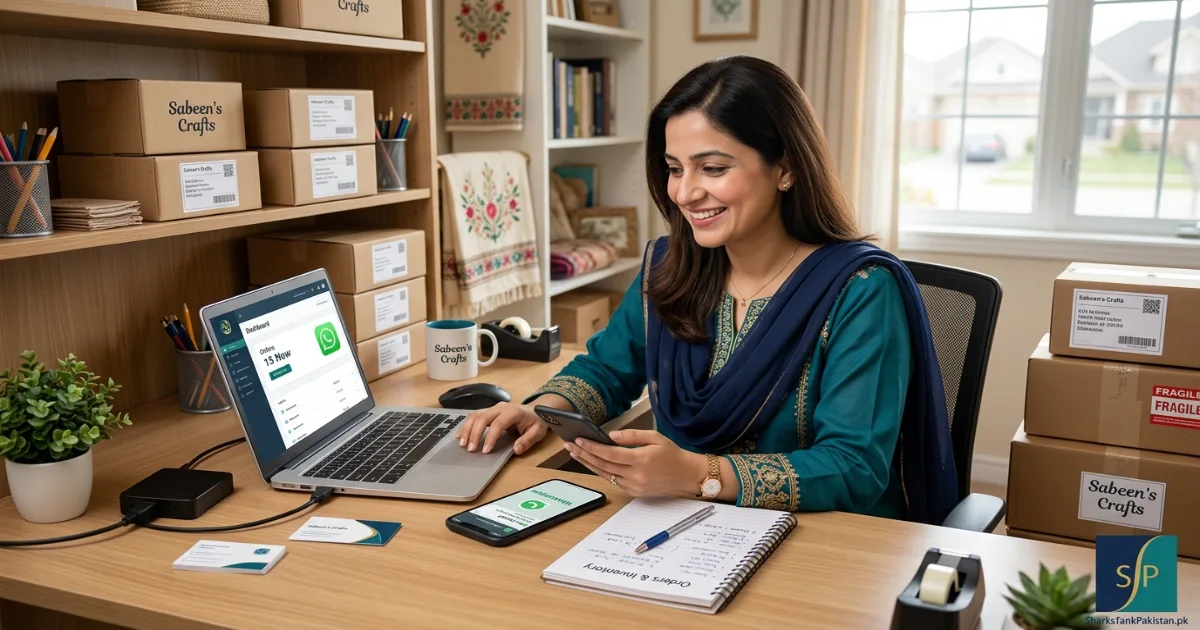
For decades, Pakistan’s economic narrative treated the housewife as a silent consumer, not a latent economic engine. That era is over. Walk through any middle-class neighborhood in Gulshan-e-Maymar, Johar Town, or F-10, and the most vibrant economic activity isn’t always the corner shop. It’s the woman in the back bedroom who runs a custom cake empire, the mother of three who has a thriving reselling network for luxury pret wear, or the recent bride who quietly built a six-figure freelance content agency between breakfast and school pick-up. The quest for viable housewife business ideas Pakistan isn’t a trend piece; it’s the most significant untold story of our private sector.
Here’s what I need you to understand before you skim for a list of ideas: the barrier isn’t a lack of ability. The barrier is the mental model. Most women looking for housewife business ideas in Pakistan are told to “start small.” I’m telling you to start with a moat. And that moat is your lived experience. A corporate MBA cannot replicate the supply chain knowledge of a woman who has managed a household budget through inflation. A Shark Tank Pakistan judge like Faisal Aftab or Rabeel Warraich isn’t just looking for a business; they’re looking for a founder who has authentic, non-obvious insight into a massive market. That market is often other women like you.
Why the Traditional “Listicle” Approach Fails Pakistani Women
Most articles on this topic give you a generic list: “start a bakery, do embroidery, open a day care.” That advice is lazy. It implies these are low-skill, low-barrier hobbies. The reality is a woman in Hyderabad running a “small” biryani business from home is navigating supply chain volatility (souring dahi in 45-degree heat, inconsistent gas pressure), digital payment delays, delivery rider negotiations, and customer psychology — often with higher emotional intelligence than a 22-year-old BBA graduate. The question isn’t *what* you can do. The question is: what business structure gives you the highest margin with the lowest time distraction from your primary household responsibilities, and how do you scale it without exposing yourself to bureaucratic harassment or cultural backlash?
This article will not give you a list of 50 ideas. It will give you the five business models that are actually producing six-figure incomes right now, and the exact playbook to move from WhatsApp order-taking to a defensible brand that could one day secure investment on Shark Tank Pakistan.
The Five 6-Figure Business Models That Actually Work
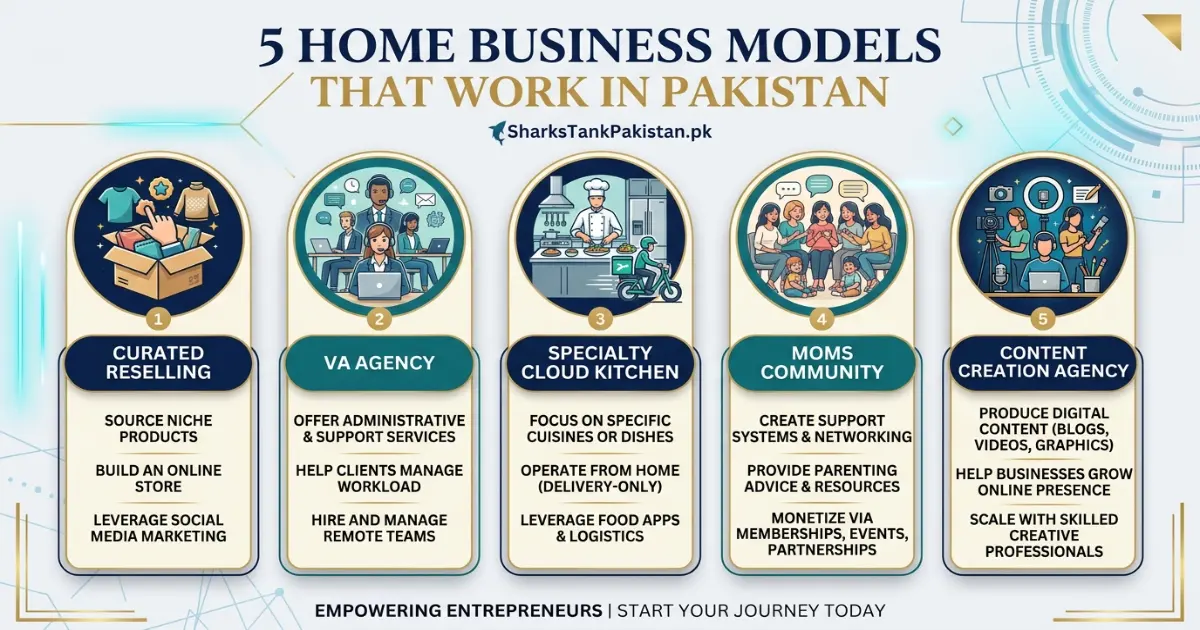
Forget the noise. Focus on these five models that leverage existing skills and require minimal physical mobility.
1. The “Exclusive” Reseller Model (Beyond Just Clothes)
This isn’t about blindly sharing catalog pictures from a wholesaler. The six-figure earners follow the boutique curator model. They don’t sell “lawn.” They sell a specific aesthetic — “corporate modest wear,” “breathable toddler clothes for humid cities,” or “modest luxury resort wear.” They buy sample pieces, shoot them on themselves or a mannequin in natural light, and build a community where the WhatsApp group has a waiting list. The key differentiator is trust. They have tried the fabric, tested the washing, and give blunt, honest sizing advice. This expertise builds a 30%+ repeat customer rate, which is the only metric that matters.
2. The Virtual Assistant to Agency Pipeline
International founders are desperate for organized, English-proficient remote help. The mistake is staying a solo virtual assistant for five years. The playbook is: spend six months mastering a high-value skill like email marketing funnel design or podcast editing for a single US or UK client. Then, register a sole proprietorship in Pakistan, hire two other women from your network, train them, and become an agency. I know a woman in Rawalpindi who started this way; she now employs 12 women, pays them well above market rate, and is eyeing a Shark Tank Pakistan pitch to fund a custom project-management platform for remote female teams. The pivot from freelancer to agency founder is where the wealth is.
3. The High-Margin Home Food (“Cloud Kitchen”)
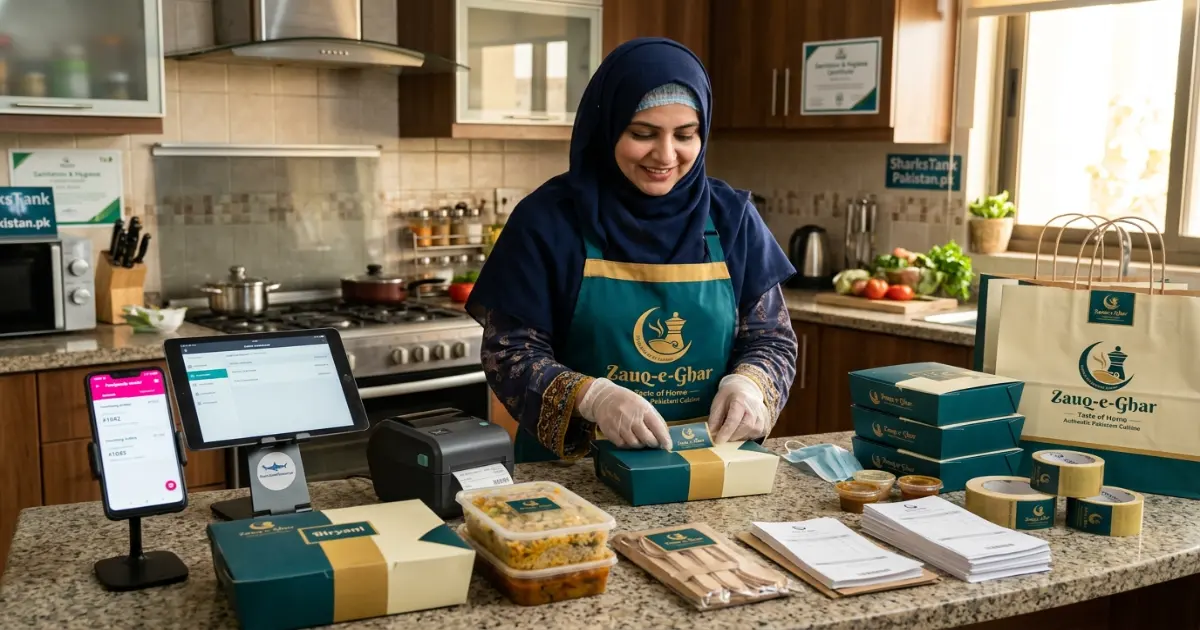
Stop selling generic biryani for PKR 250 a plate. You cannot win the price war against established restaurants. Instead, sell specialized, high-margin items that don’t require immediate consumption and travel well. Think: slow-cooked bone broth for health enthusiasts, premium granola, customized celebration grazing boxes, or specialized diet meal plans (PCOS-friendly, diabetic-friendly). The “health is wealth” wave in urban Pakistan is massive. If you can brand a food product as a wellness solution, your price point can be 3x the cost of local restaurant food. One such business in Lahore reached PKR 800,000 a month selling keto-friendly tiffin services, all from a home kitchen, before they even had a logo.
4. The Monetized “Moms Community”
If you are a mother in Pakistan, your biggest struggle is finding reliable information on schools, pediatricians, or safe playgrounds. If you’ve already done this research for your own children, you have a valuable asset. Build a hyper-local Facebook group or Instagram presence (e.g., “Bahria Town Moms” or “Islamabad Kids Activities”). Once you hit 5,000 true local members, businesses will pay you to be vetted and endorsed. Not via sleazy ads, but via honest reviews and affiliate deals. One such mom group in Karachi’s DHA converted into a full-fledged parenting events company, organizing safe, paid meetups and workshops.
5. The “Viral Creation” Productized Skill
Platforms like Canva and CapCut have leveled the playing field. If you have a natural eye for design or video editing, you don’t need a degree. Pakistani real estate agents, small restaurants, and local brands have terrible Instagram presences. Package your skill: “I will create 30 days of social media content for a local real estate office for PKR 25,000.” Do this for three clients, then hire help. The demand is insatiable because most traditional business owners in Pakistan are visually illiterate but recognize they need to be on Reels.
| Business Model | Startup Cost (PKR) | Time to First Revenue | Key Scalability Lever | Shark Tank Pitch Angle |
|---|---|---|---|---|
| Curated Reselling | 15,000 – 50,000 | 2-4 weeks | Customer Lifetime Value (LTV) | “I own a micro-brand with a 40% repeat rate and zero customer acquisition cost.” |
| VA Agency | 0 (Laptop + Internet) | 2-3 months | Value per Client (Upselling) | “We are a talent arbitrage platform fixing the global remote work gap with trained Pakistani women.” |
| Specialty Cloud Kitchen | 30,000 – 120,000 | 1-2 weeks | Branded Packaging & Niche | “We’re the ‘Nestle Health’ of niche, direct-to-consumer Pakistani wellness meals.” |
| Niche Community | 0 – 10,000 | 3-6 months | Member Count & Engagement | “I’ve aggregated a captive, high-trust audience of 50,000 mothers that no ad platform can reach.” |
| Content Creation Agency | 0 | 1-2 months | Recurring Retainers | “We make chaotic Pakistani brands look like international luxury on a local budget.” |
The “No-Scale” Trap: What Keeps a Housewife Business Stuck at PKR 50k
There is a glass ceiling at around PKR 80,000 to 120,000 in monthly revenue that traps most home-based women. It’s not a sales problem; it’s an operations and identity problem. You can generate PKR 100,000 by being the chef, the social media manager, the accountant, and the delivery coordinator. But you cannot generate PKR 500,000 that way. You will burn out, your children will feel the neglect, and the business will crash when you get sick.
The jump to six figures requires you to fire yourself from at least three roles. This is where housewife business ideas Pakistan often stall, because the founder fears losing control over quality. The solution is brutal standardization. Record a Loom video of every single process. Write down your recipe in grams, not “andaaza.” Create visual guides for how a box should be packed. When you standardize, you can delegate. And when you can delegate, you can scale. The sharks on Shark Tank Pakistan invest in systems, not solopreneurs who are one illness away from bankruptcy.
Situation-Based Strategy: Which Path Is Right for You?
If You Have Zero Business Experience and Only a Smartphone
Start with digital products or services that require zero inventory. Don’t buy PKR 30,000 worth of fabric. Instead, spend a week mastering Canva. Offer to redesign menus, wedding cards, or social media posts for local businesses. The friction here is the lowest. You’re selling a digital file, not a physical thing that needs to be stored, insured, or inspected. This is the safest sandbox to learn customer communication without risking your household savings. Use our Startup Valuation Calculator to understand what a client list is worth, even before revenue spikes.
If You Already Have a Steady WhatsApp Stream of Orders
You are in the validation stage. Your task now is to kill the payment friction. Do you still accept cash on delivery and chase riders for collection? Halt that immediately. Enforce a 50% advance payment via EasyPaisa or JazzCash before the order hits the kitchen. The clients who refuse aren’t your target market; they were the ones causing you cash flow anxiety. Next, you must separate your personal phone from your business phone. Get a second SIM and a dedicated device. When you can switch off the “business phone” at 7 PM, you reclaim your sanity and your professional boundaries.
If You Are Crafting Your Shark Tank Pakistan Application Story
Stop telling the story of “empowerment.” It’s a beautiful motive, but it’s not a business moat. Instead, tell the story of a supply chain insight. One successful female founder from Sahiwal who pitched a regional food brand on a similar platform didn’t talk about her struggle; she talked about her proprietary connection to a single local dairy farmer that let her produce fresher products at a 20% lower cost than any urban competitor. Your story as a housewife is a market research credential. You *are* the target audience. Use that. You know the exact WhatsApp message that triggers a sale. You know the exact packaging color that excites a Pakistani woman. That is proprietary data.
The Legal and Cultural Tightrope: Walking It Without Falling
Many housewives avoid formalizing because they fear attracting attention from tax authorities or neighborhood gossip. The answer is quiet professionalism. In the early stages (under PKR 100k/month), operating as a sole proprietor with a basic bank account often flies under the radar. But the moment you scale, the legal wall must go up. This protects you from liability. If you sell a food item, one bad incident can cost you your entire home if you aren’t legally shielded. Register a private limited company. It sounds massive, but in Pakistan today, the SECP process has been significantly streamlined. A private limited structure tells a Shark Tank Pakistan judge that your kitchen is a real company, protecting your personal assets from business risk.
Furthermore, platform regulation is tightening. The FBR is slowly integrating with payment gateways and food delivery platforms. Hiding is not a long-term strategy. A business that earns PKR 500,000 a month but is invisible to the system cannot get a loan to buy a bigger oven. It cannot sell to a foreign investor. You must treat the tax you pay as the subscription fee for growth. “I pay taxes, therefore I can export, I can take investment, and I can sleep at night.”
Common Pitfalls & When to Ignore This Advice
Pitfall 1: The “My Husband/Brother Will Handle It” Trap. If your business relies on a male relative to handle the sales calls, the supplier negotiations, or the bank visits, you do not own the business’s core relationships. The day he is unavailable, the revenue stops. Learn to do it yourself, or hire a professional woman to do it. When to adjust: If your market is exclusively male-dominated industrial supply, using a male front-end might be a tactical necessity, but only if the business contracts are in your name.
Pitfall 2: Underpricing by Competing with Unregistered Micro-Sellers. The market is flooded with women selling cakes for PKR 1,200 under the table. You cannot beat them on price. You must beat them on perceived value, packaging, and consistency. Charge double. The client who pays double complains less and refers better clients. When to adjust: If you’re in a pure commodity business like basic stitching, you cannot escape the price war; you must pivot to a creative niche immediately.
Pitfall 3: The “Flash Sale” Dependency. You only make money during Ramadan or Eid. You do nothing in between. This is a cash flow roller coaster. You must create a “baseline” product that generates steady, small daily income: a subscription service, a staple food item, or a retainer client. When to ignore: If your seasonal spike is so massive it covers the entire year’s expenses, then treat the business as a campaign-based model and enjoy the off-season, but account for it in your break-even analysis.
Your Digital Toolkit: The Apps That Run the Operation
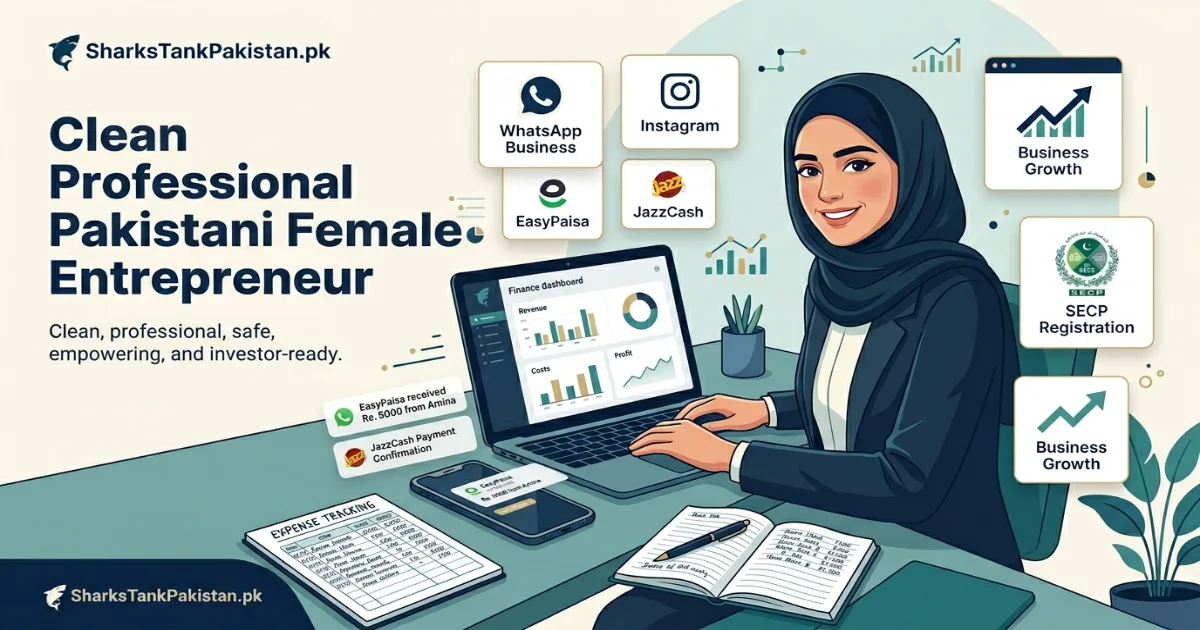
This isn’t about fancy software. This is about survival tools specifically useful in the Pakistani context. Use WhatsApp Business Catalogs, but keep the product list small and curated. Use Canva for professional-looking posts, but develop a consistent color palette so your brand is instantly recognizable in a scroll. For payments, maintain a strict digital trail via bank transfers and JazzCash/EasyPaisa accounts; treat cash like a liability because it’s easy to spend without tracking. And use a simple Google Sheet on your phone to log every single rupee in and out. When you eventually stand in front of a shark, the ability to pull up a clean financial tracker from your phone is worth more than a hundred rehearsed answers.
Your Fast-Track Cheat Sheet: Top 3 Actions to Take
✅ The Real Takeaway
1. Stop Adding Skills, Start Packaging One. You don’t need to learn sewing, baking, graphic design, and marketing. Pick the one thing you are already the best at among your circle. Now, package it as a luxury or a specialized necessity, not a commodity. Charge twice what the local market charges, and deliver three times the experience.
2. Build a Digital Wall Between Business and Home. Buy a second SIM today. Set specific “office hours” on your WhatsApp Business app. The boundary trains your customers to respect your time, and it prevents your children from feeling like they’re competing with a notification ping for your attention.
3. Model Your Pitch for the “Shark Test” Even If You Never Apply. Assume you have to explain this to Faisal Aftab or Junaid Iqbal tomorrow. Write down your unit economics, your repeat customer rate, and your competitive advantage. If you can’t articulate these three numbers, you have a hobby you’re being paid for, not a 6-figure business. Use the tools on this site to calculate your exact valuation, and you’ll see the business through an investor’s eyes — which is the only vision that builds wealth.
Frequently Asked Questions by Pakistani Housewives Starting a Business
What is the most profitable business a housewife can start in Pakistan with no money?
Service-based digital skills like Canva graphic design, content writing, or social media management for local businesses. These require zero inventory, only the skills you learn on YouTube and a smartphone you already own, and can generate PKR 30,000-50,000 monthly within two to three months.
Do I need to register a company to sell food from home in Pakistan?
Technically, yes, for legal protection and scaling. In the early stage, many operate informally below the radar. But as soon as you surpass PKR 100,000 in monthly sales, you should register a sole proprietorship or private limited company to protect your personal assets from any potential food liability claims.
How can I manage household duties and a growing online business without guilt?
By process separation. Dedicate specific, non-negotiable hours to business work, ideally when children are at school or asleep. Outsource one household chore (like deep cleaning) with your first PKR 15,000 profit. You’re not delegating your duty; you’re buying time to generate more income for the family.
What Pakistani products sell best on Instagram from home?
Currently, modest formal wear, customized bridal favors, premium grazing boxes, and plant-based or organic skincare are selling exceptionally well. The common thread is a high “visual appeal” that works on Instagram Reels and a “giftability” factor for Pakistani culture’s heavy socializing calendar.
How do I convince my family that my home business is serious?
Stop calling it a “side hustle” or “time pass.” Show them the data. Open a bank account in the business’s name. Show the PKR 50,000 deposit. Show the repeat customer list. When you speak in numbers and organized financial terms instead of emotions, skeptical family members often become your first informal investors.
Can a housewife from a small town in Pakistan find national customers?
Yes, through courier services. Postage via TCS, Leopards, or PostEx is reliable once you build it into your pricing. Small-town businesses often have the advantage of authentic, raw materials or unique regional crafts that urban buyers are actively seeking out.
Is it safe to sell online and handle delivery as a woman in Pakistan?
It requires precautions. Never share your precise home address on a public page. Use a nearby landmark or a courier drop-off point for pickups. Use a cloud kitchen partner for food if possible. Always keep a professional, slightly distant tone with first-time clients until trust is established.
How do I price my product when I don’t know my exact variable costs?
Sit down for one hour with your last week’s grocery or raw material receipts. Add the cost of every ingredient, packaging, gas, and delivery commission for a single unit. Then multiply that number by 2.5 or 3. That’s your starting price. Never price below 2x your raw cost.
👉 Ready to see if your home business is investable? Open the Equity Loan Calculator on the site and see if the numbers you’re generating justify a Shark Tank Pakistan valuation.