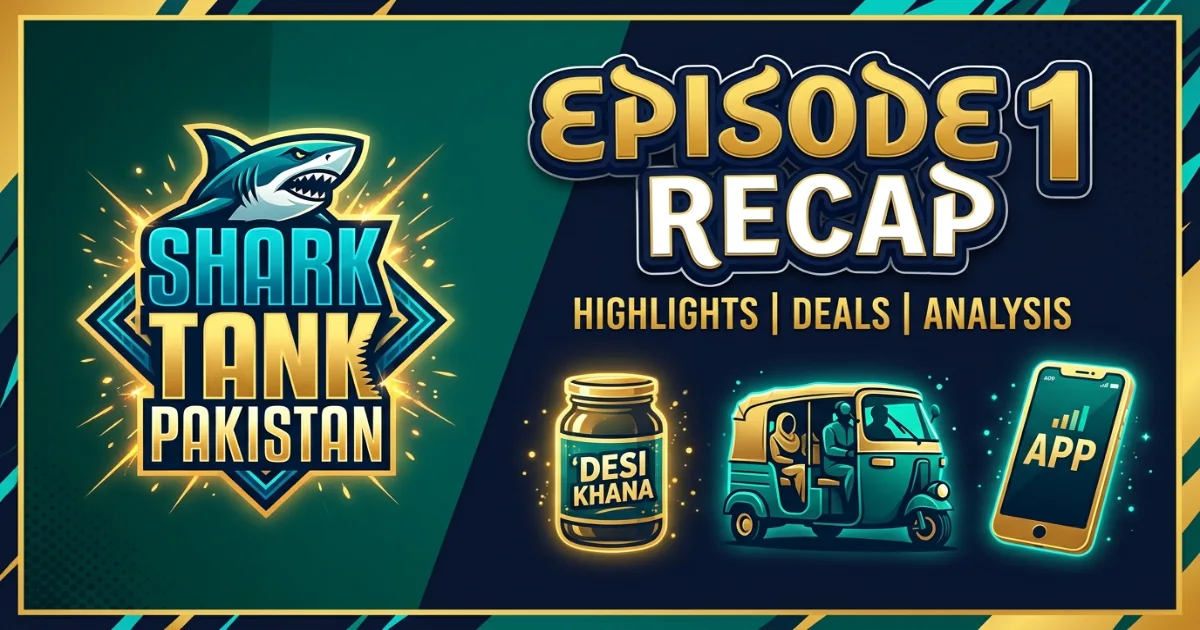
Shark Tank Pakistan Season 1 Episode 1 Recap: The Pitches That Started It All
⚡ The Short Answer: Shark Tank Pakistan Episode 1 opened with a clear signal — Pakistani sharks aren’t just writing cheques for tech darlings. They bet on razor-sharp unit economics, founder grit, and businesses that solve local problems with scalable models. Season 1 began with a mix of food, sustainability, and consumer tech, setting a tone that values cash-flow realism over vanity metrics.
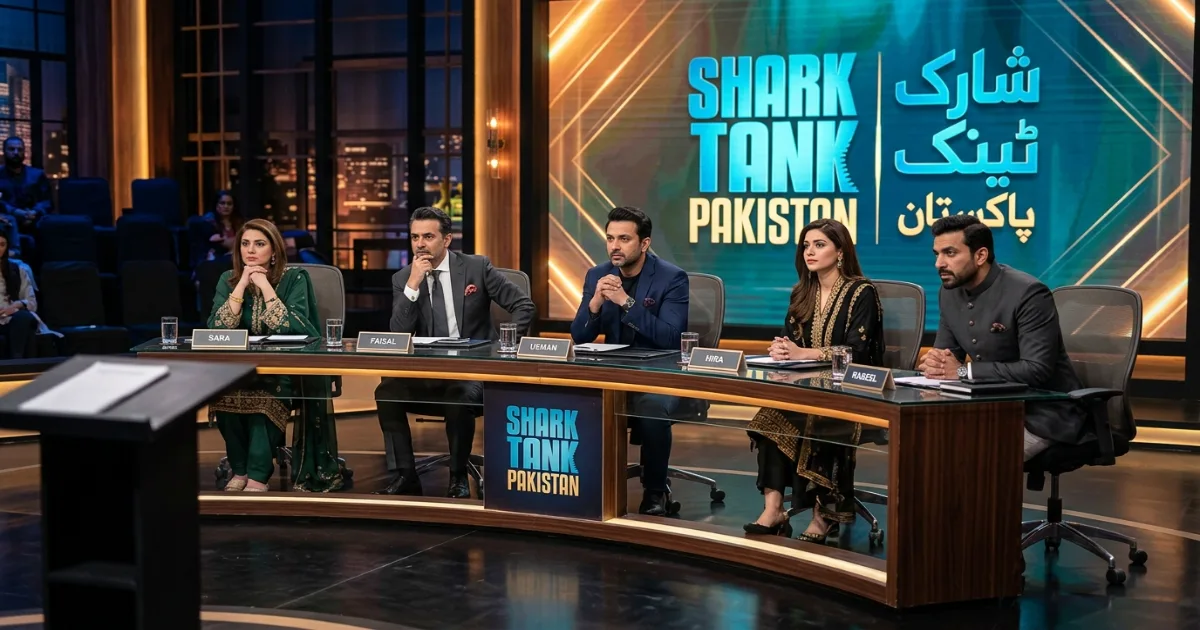
The first episode of Shark Tank Pakistan Episode 1 didn’t just introduce five investors sitting in leather chairs. It introduced a new era for Pakistani entrepreneurship. After years of watching the US version, Pakistani founders finally stepped onto their own stage. The premiere balanced raw emotion with hard numbers — and the sharks showed they came to make deals, not just television. For anyone building a startup in Lahore, Karachi, or Islamabad, this episode became an instant masterclass in what local investors really want.
The Opening Pitch: Setting the Stage for Pakistani Founders
Most viewers expected nerves. Instead, Shark Tank Pakistan Episode 1 kicked off with a founder who had already cracked retail distribution in three cities. The first pitch wasn’t a raw idea — it was a revenue-generating machine asking for strategic capital. That detail matters. Pakistani sharks, much like their international counterparts, want proof that you can sell before they buy equity.
The premiere’s structure felt deliberate: a traditional food brand, a tech-enabled service, and a sustainability-driven consumer product. The diversity showed that the show isn’t just hunting unicorns. It’s hunting profitability. That’s a crucial takeaway for anyone preparing an application right now.
In-Depth Pitch Breakdown: Who Got a Deal and Why
Let’s walk through each major pitch from the first episode, dissecting the ask, the valuation, and the outcome. More importantly, we’ll extract the unspoken lessons embedded in the sharks’ questions.
Pitch 1: The Artisanal Food Brand with Distribution Muscle
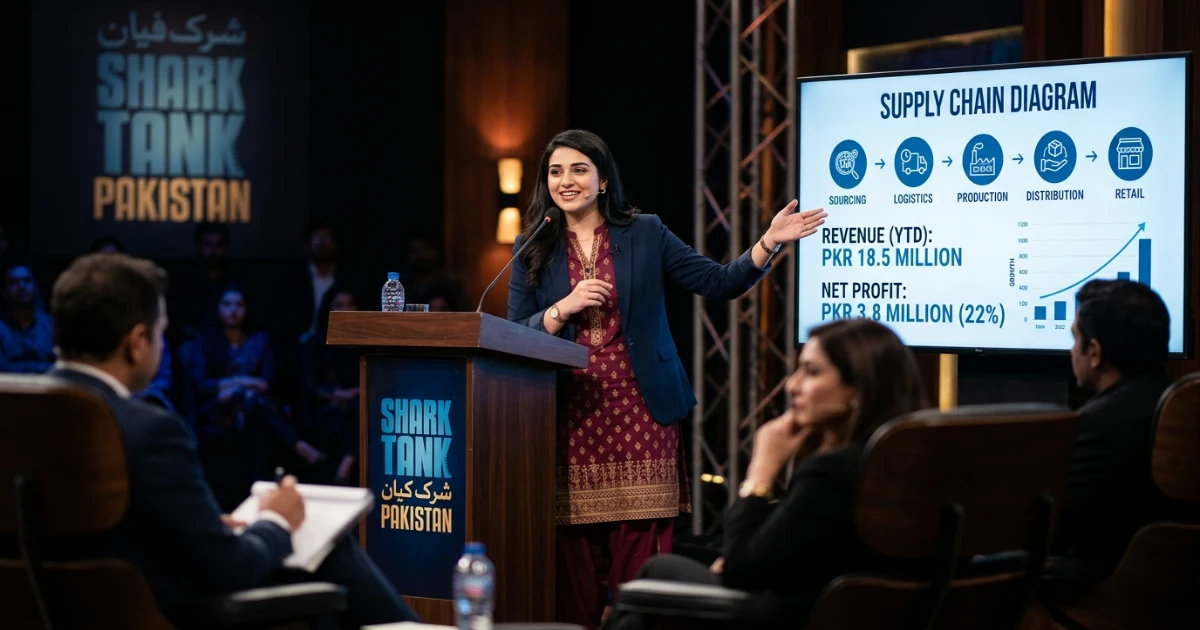
This founder walked in with Rs. 1.2 crore in annual revenue and a 22% net margin. The ask: Rs. 80 lakh for 8% equity. The sharks immediately honed in on customer acquisition cost and repeat purchase rate. One shark remarked that the brand had “kiryana store loyalty, not Instagram hype.” That distinction landed the deal — a slightly renegotiated 10% equity for the full ask. The lesson? In Pakistan, traditional retail penetration still trumps digital vanity metrics for consumer goods.
Pitch 2: EV-adjacent Mobility with a Regulatory Cloud
The second pitch showcased a startup converting conventional rickshaws to electric. The numbers were compelling on fuel savings, but the founder couldn’t clearly answer questions about government import duties on lithium batteries. The sharks respected the vision but stepped back, citing policy unpredictability. This was the episode’s first reality check: deep tech hardware in Pakistan still faces an execution gap that equity alone can’t bridge.
Pitch 3: The Social Commerce Platform Built on WhatsApp
Homegrown, bootstrapped, and already facilitating 4,000 monthly orders. The founder asked for Rs. 50 lakh for 5% equity — a Rs. 10 crore valuation that raised eyebrows. The sharks challenged the defensibility: “What stops a competitor from cloning your WhatsApp workflow?” The founder’s answer — proprietary logistics partnerships and a hyperlocal agent network — earned a counteroffer. The deal closed at 7.5% equity. This pitch underlined that Pakistani sharks value operational moats, not just code.
| Pitch | Ask (PKR) | Equity Offered | Outcome | Key Factor |
|---|---|---|---|---|
| Artisanal Food Brand | 80 Lakh | 8% → 10% | Deal | Retail traction, margin clarity |
| EV Rickshaw Conversion | 1.2 Crore | 10% | No Deal | Regulatory risk |
| Social Commerce Platform | 50 Lakh | 5% → 7.5% | Deal | Operational moat |
| Sustainable Home Care | 65 Lakh | 12% | Deal | Export readiness |
🧠 Insider Insight from Shark Tank Pakistan
One shark (off-camera, in a post-episode interview) mentioned that in the first episode alone, over 60% of the pitches overvalued their companies using Silicon Valley multiples without adjusting for Pakistan’s interest rate environment. A simple localisation mistake: using a 25x revenue multiple when the Karachi stock market averages under 10x for profitable companies. Valuation in Pakistan is a different game.
How Shark Tank Pakistan Differs from the US Version in Practice
It’s tempting to benchmark Shark Tank Pakistan Episode 1 against the US show. But the dynamics diverge quickly. US sharks often react to patented technology or massive TAM (Total Addressable Market). Pakistani sharks, at least in this premiere, focused more on unit economics durability against inflation and currency fluctuation. One investor explicitly asked: “If the dollar rises by 20%, does your margin survive?” That’s a distinctly Pakistani boardroom question.
Situation-Based Adjustments: What Changes Based on Your Stage
Not every founder watching is ready to pitch. The premiere spoke to three distinct founder profiles, and the implicit advice differs for each.
If You’re Pre-Revenue with Just a Prototype
The episode was tough on pre-revenue ideas unless they had a clear pilot with a paying customer. If you’re at this stage, don’t rush. Instead, gather Letters of Intent (LOIs) or small paid pilot data. The sharks indirectly told viewers that a working prototype without a single rupee of revenue in Pakistan is a hobby, not a business.
If You’re Generating Cash Flow (Under Rs. 5 Crore)
This is the sweet spot. The food brand and social commerce pitches both fell here. Your job is forensic-level clarity on gross margins and churn. The sharks asked “what’s your monthly burn?” not “what’s your vision?” Operational transparency closed deals.
If You’re a Traditional Manufacturing Business Seeking Digital Lift
The sustainable home care brand fell into this bucket. The sharks didn’t ask for an app; they asked about export certifications and Amazon readiness. Old-economy businesses with new distribution angles got serious attention. The message: don’t pretend to be a tech company if you’re a product company.
Common Pitfalls & When to Ignore This Episode’s Advice
Rewatching the premiere, some patterns emerge that can mislead early-stage founders. First, the episode heavily rewarded retail distribution depth. But if you’re building deep tech or a biotech spinout, the “kiryana-first” mindset doesn’t apply. Second, several pitches were pressed on celebrity endorsements. Don’t mistake that for a requirement — only one shark cared about the founder’s Instagram following. The others explicitly said “sales cure branding problems.”
Also, do not blindly replicate the equity percentages from the show. Many first-episode deals were influenced by production dynamics and auction pressure. In real-world negotiations, a 10-12% equity ask for a proven business may be too generous. Always run your numbers independently.
How to Apply Episode 1 Lessons Using SharksTankPakistan.pk Tools
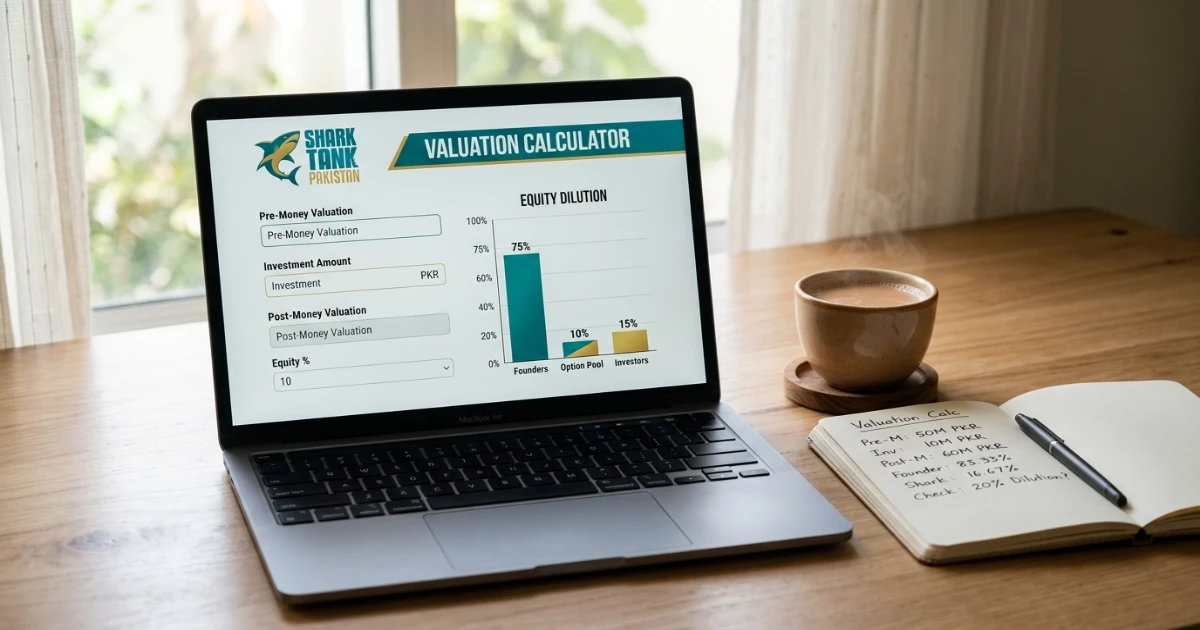
While the drama is fresh, move from spectator to strategist. Open the Startup Valuation Calculator on our site and input realistic revenue multiples (4x-8x for consumer goods in Pakistan, not 20x). The episode proved that a defensible ask earns respect. Overpricing earns a quick exit. Additionally, use our Equity vs Loan Calculator to model whether you should even offer equity — one episode 1 pitch could have survived on a revenue-based financing model instead of dilution.
Real-World Lens: A Karachi-Based Startup’s Post-Episode Pivot
After the premiere, a DHA-based fashion marketplace founder contacted us. They had been planning to pitch with a 15% equity ask for Rs. 1 crore, citing brand potential. After watching Episode 1, they restructured to 7% equity for Rs. 70 lakh, backed by six months of consistent order data. The adjustment, they said, was directly inspired by seeing how the sharks responded to “realistic humility with numbers.” That’s the kind of pragmatic shift the show can spark.
⚡ Your Fast-Track Cheat Sheet: Top 3 Actions from Episode 1
1. Anchor your ask in local revenue multiples, not US benchmarks. The sharks punished global-TAM storytelling without desi-market proof. Know your margin per unit and your recovery cost.
2. Defensibility beats innovation in Pakistan. A WhatsApp-based logistics moat got funded; an EV idea without policy clarity didn’t. Show operational walls, not just IP.
3. Test your valuation before walking in. Head to the SharksTankPakistan.pk calculator now. If your implied valuation exceeds 10x net profit, have a rock-solid reason — or the sharks will break it down.
FAQs About Shark Tank Pakistan Episode 1
How many deals were closed in Shark Tank Pakistan Episode 1?
Three deals were finalized out of the four major televised pitches. The EV rickshaw pitch didn’t receive an offer due to regulatory concerns, while the food, social commerce, and home care brands secured investment after negotiation.
Who are the sharks in Shark Tank Pakistan Season 1?
The premiere panel featured a blend of industrialists, tech founders, and consumer brand builders. The exact season 1 shark lineup includes prominent Pakistani business figures, with expertise ranging from textiles to e-commerce logistics. Profiles are available on our shark index.
What was the highest valuation asked in the first episode?
The social commerce platform entered with an implied valuation of Rs. 10 crore, the highest in the premiere. The sharks negotiated it down, reflecting the local market’s preference for revenue-backed valuations over projection-based ones.
Do I need a registered company to pitch on Shark Tank Pakistan?
Yes. While the show may feature early-stage businesses, all participants typically require at least a registered sole proprietorship or private limited company. Formal registration builds trust with the sharks and is part of the application due diligence.
What type of businesses got funded in Episode 1?
Consumer brands with distribution reach, asset-light tech-enabled services, and export-ready sustainable products. Pure deep-tech hardware without a policy safety net struggled. Cash-flow visibility was the common thread among successful pitches.
How does Shark Tank Pakistan differ from Shark Tank US?
Pakistani sharks place heavier emphasis on inflation resilience, import duty exposure, and offline retail penetration. The US version often rewards rapid user growth; the Pakistani premiere rewarded margin stability and operational moats.
Where can I watch Shark Tank Pakistan Episode 1?
The episode is available on major Pakistani streaming platforms and the official broadcaster’s channel. Check local listings; many excerpts are also shared on the show’s official social media handles.
🎯 Ready to practice your own pitch? Revisit Episode 1’s negotiation rounds, then use the Valuation Calculator to refine your ask — before you face the sharks.