Practice Your Pitch: A Proven 7-Day Plan for Pakistani Founders
⚡ The Short Answer: To practice your pitch effectively, follow a proven 7-day drill plan that improves your story, financial confidence, objection handling, body language, timing, and live investor readiness. For Pakistani founders, structured daily rehearsal is far more powerful than repeating the full pitch without feedback.
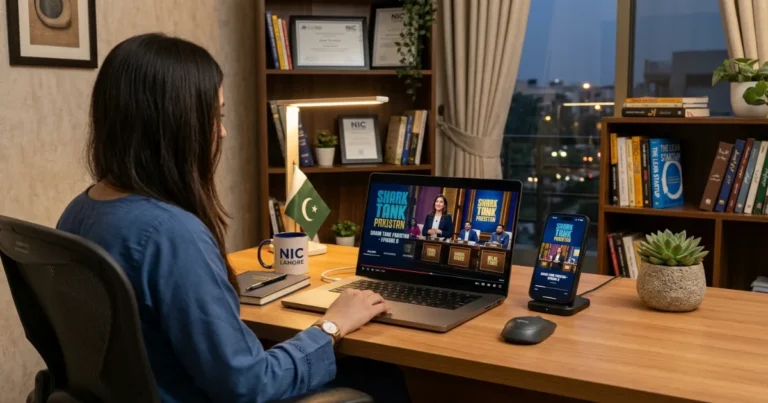
You’ve seen the moment on Shark Tank Pakistan: a founder walks onto the carpet, the lights hit, and their first few words tremble. The sharks lean forward. The pitch slides are beautiful, but the delivery crumbles — not from lack of knowledge, but from lack of structured practice. This moment happens in boardrooms across Lahore and Karachi every week, not just on television. The deck was built. The numbers were crunched. But the founder never did a single drill that simulated a real investor’s eyes on them.
The truth is, most Pakistani entrepreneurs spend 80% of their prep time on the deck and 20% on practising aloud. They mumble through a few run-throughs in front of a mirror, call it done, and then wonder why the investor’s questions made them freeze. A pitch is not a document; it’s a live performance. And like any performance, it needs isolated skill drills — not just full run-throughs. That’s exactly what this 7-day plan delivers.

Why You Should Practice Your Pitch with Structured Drills
There’s a specific pattern I see in co-working spaces from Islamabad to Hyderabad. A founder opens their laptop, clicks through the slides silently a few times, then stands up and delivers the pitch in one rushed burst. They focus on remembering the order of slides, not on communicating the logic. If they stumble, they start over from the beginning. This is the equivalent of a cricketer only ever playing full matches and never doing net sessions for a specific weak shot. You don’t fix a cover drive by replaying the whole innings; you fix it by hitting 200 balls in that exact zone. Pitch practice works the same way.
Moreover, Pakistani founders often face cultural hurdles that make live practice uncomfortable. Asking a friend to pretend to be a skeptical investor can feel awkward. Recording yourself and watching it back can feel self-indulgent. But if you bypass these discomforts, you walk into the real pitch without having built the neural pathways that let you answer a question while simultaneously managing your posture, tone, and eye contact. The 7-day plan breaks these skills into digestible, culturally doable actions that don’t require a professional coach or a fancy setup.
Practice Your Pitch: The Proven 7-Day Drill Plan
Day 1: Anchor the Narrative Spine
Don’t start by designing slides or writing a script. Start by writing down the 5 to 7 story beats that must land, in sequence, no matter what. For a startup pitch, this spine usually runs: Problem → Solution → Traction → Market Size → Business Model → Team → Ask. Write each beat as a single, punchy sentence. Not a paragraph. Not a bulleted list. One sentence that captures the essential point an investor must remember. Under each sentence, write one proof point — a number, a quote, a demo result.
Day 1 Drill: Using only your spine sheet, stand up and talk through the entire pitch three times. Don’t time yourself. Don’t record. Just speak naturally from each beat, expanding minimally. The goal is to internalize the flow so deeply that you never wonder “what slide comes next?” Notice which transitions feel clunky. Those are where your logic has holes. Fix the spine before you go anywhere near a deck.
Day 2: Rapid-Fire Financial Fluency
Pakistani investors, whether sharks on TV or angels in a private meeting, will interrupt your polished narrative with direct financial questions. “What’s your gross margin?” “How much runway does this round give you?” “What’s your customer acquisition cost?” If your brain has to search for these numbers while you’re simultaneously managing stage fright, you’ll stutter, ramble, or guess. That kills credibility instantly. Day 2 isolates number retrieval under pressure.
Write down every financial metric an investor might ask about — revenue, growth rate, margins, unit economics, burn rate, use-of-funds split, valuation logic. Now hand the list to a friend, sibling, or co-founder. Have them fire questions at you randomly while you’re standing, just as you would be in a pitch. No warm-up. No pauses allowed. Answer immediately, then they throw the next one.
Day 2 Drill: The “Volley Drill.” Your partner shoots a financial question. You answer in one or two sentences. As soon as you finish, they shoot another. Keep going for 3 minutes straight. If you fumble, don’t stop; just correct and continue. The aim is to train your brain to access numbers reflexively, not through slow, deliberate recall.
Day 3: Objection Mapping and Handling
Investors push back not because they dislike you, but because they want to see if your thinking has depth. If you react defensively or get rattled, it signals that you haven’t considered the downsides of your business. Day 3 makes you walk into the pitch already having faced the toughest questions in rehearsal.
Take 10 blank notecards. On each, write the most uncomfortable question you could possibly be asked. Examples: “Your market is tiny — how will you scale?” or “You have no tech co-founder, so what’s your plan?” or “Why would a customer switch from the established competitor?” Write questions that actually sting.
Day 3 Drill: Shuffle the cards. Draw one, read it aloud, and answer immediately. Record your answer on your phone. Listen back and check: Did you sound defensive? Did you provide data or just opinion? Did you acknowledge the validity of the question before answering? Repeat until you can answer all 10 cards with a calm, curious tone — as if you genuinely appreciate the investor’s skepticism.

Day 4: Body Language and Vocal Tone via Video
After three days of verbal and logical drills, it’s time to face the camera. Most founders dread this, but it’s the only way to catch the subconscious habits that investors notice and judge: fidgeting, swaying, filler words like “um” and “basically,” looking at the ceiling while thinking, and the uniquely Pakistani tendency to nod excessively when making a point — which can read as uncertainty rather than emphasis.
Set up your phone at eye level. Stand up. Deliver your full pitch from the spine, including the financial data points you drilled on Day 2. Do not stop if you make a mistake; push through exactly as you’d have to in the real pitch.
Day 4 Drill: Watch the video twice. First, with the sound off, observe your posture, hands, and facial expressions. Identify two distracting physical habits. Second, with sound on, count filler words and notice where your voice wavers or speeds up. Choose the single most fixable issue. Record the pitch again focusing only on eliminating that one issue. Don’t try to fix everything at once.
Day 5: Live Mock with a Skeptical Human
You’ve drilled alone for four days. Now you need the chemical stress that only comes from another person’s presence. Not a supportive friend who’ll smile and nod — you need someone briefed to be tough. Preferably a mentor, a fellow founder from a different industry, or a senior professional who can ask sharp questions without softening the blow.
Set up exactly as you would for a real investor meeting. Stand. Present. Then sit down and let them question you for at least 10 minutes. Do not defend yourself afterward. Do not explain what you “meant to say.” The feedback isn’t their opinion; it’s your own recording of the session, which you’ll review alone later. Pay special attention to the moments where your voice changed — where you got defensive, where you hesitated, where you rambled. Those are your remaining weak points.
Day 5 Drill: After the mock, ask one specific question: “At what point in the pitch did I seem least confident?” Don’t ask for general feedback. Pinpoint the moment. That becomes your focus for Day 6 refinement.
Day 6: Cut, Tighten, and Time-Box
The biggest mistake founders make on timing is underestimating how long the pitch actually runs when they’re nervous. A practice run that takes 5 minutes in your bedroom can easily become 7 minutes under the lights — and if you’re facing Shark Tank Pakistan’s strict time limits, going over can mean getting cut off mid-sentence. Day 6 is about precision.
Return to your anchor sheet. For each beat, ask: “Does the investor absolutely need this information to make a decision?” If not, cut it. Then do the drill that really hurts: set a timer for your target pitch length (3 minutes for Shark Tank Pakistan, 5 minutes for an angel meeting, 7 minutes for a VC). Start the pitch.
If the timer beeps before you’re done, do not speed up next time — remove content. Clarity at 3 minutes beats a rushed 4 minutes every single time.
Day 6 Drill: Use the SharkTankPakistan.pk Pitch Checklist as your external scoring sheet. After each timed run, check off which essential elements you delivered within the time limit. The checklist tells you what investors are actually listening for — not what feels good to you.

Day 7: Full Dress Rehearsal with Cold Start
The final day simulates the actual pitching environment as closely as possible. Wear the clothes you’ll wear. Stand in a room similar to where you’ll present. If it’s a stage pitch, use a clicker and a large screen. If it’s a boardroom, sit or stand exactly as you will. Walk into the room fresh, with no warm-up, no notes review — exactly as you’ll do on the day.
This “cold start” test reveals whether the previous six days have built true readiness or just a predictable sequence that falls apart when conditions change.
Day 7 Drill: Do three complete runs with a 20-minute gap between each. The first run will feel shaky — that’s normal. The second will feel smoother. The third will feel like muscle memory. If you can deliver a solid pitch from a cold start on run three, you’re ready. If you can’t, you’ve identified exactly which beat needs one more focused drill.
Practice Your Pitch Methods Compared: Skills Each Drill Builds
| Practice Method | Primary Skill Built | Limitation |
|---|---|---|
| Mirror rehearsal | Facial expression awareness | No external feedback; feels unnatural |
| Full run-throughs (no drills) | Slide order memory | Reinforces existing weak spots |
| Financial volley drills (Day 2) | Rapid number retrieval under pressure | Doesn’t build narrative flow |
| Objection cards (Day 3) | Calm, structured response to pushback | Requires honest self-review |
| Video self-review (Day 4) | Body language and vocal tone control | Uncomfortable; easy to skip |
| Live mock with skeptic (Day 5) | Performance under social pressure | Needs a willing, honest partner |
| Timed tightrope (Day 6) | Concision and content prioritization | Can initially cause rushing |
| Full dress with cold start (Day 7) | End-to-end readiness, adaptability | Time-intensive; requires realistic setup |
Situation-Based Adjustments
If You’re Pitching on Shark Tank Pakistan (TV Stage)
Your practice must account for cameras, bright lights, and rapid-fire interruptions. On Day 5, ask your mock partner to deliberately cut you off mid-sentence — just like a shark would. Practice recovering your thread without looking flustered. On Day 7, if possible, rehearse in a room with strong overhead lights and someone holding a phone camera directly in your eyeline. The sensory overload of TV is real; pre-exposure reduces its impact.
If You’re Pitching to Angel Investors (Private Meeting)
Angels in Pakistan often sit across a small table and want a conversation, not a presentation. Adjust Day 5 so the mock is seated and conversational, not a standing performance. On Day 2, add personal-background questions about your motivation and resilience — angels invest in the founder as much as the business. Day 6 timing should target 5–7 minutes, leaving ample room for discussion.
If You’re a Solo Founder Without a Co-Founder
Find a partner for Days 2 and 5 even if it means buying a colleague coffee in exchange. If truly no one is available, use voice recording apps that play back random questions you pre-recorded. It’s not as effective as a human, but it still forces retrieval under an unpredictable stimulus. For live mock, join an online founder community and do a video call mock.
If You’re Pre-Revenue (Idea Stage)
Your pitch will focus on market insight and founder capability rather than traction. On Day 2, replace revenue metrics with pilot data, waitlist numbers, or user research depth. On Day 3, anticipate the “why hasn’t this been done before?” question heavily. Your credibility rests on demonstrating obsessive understanding of the problem, not on fabricated numbers.
Common Pitfalls to Avoid (And When This Plan Might Not Fit)
Pitfall: Practising only the monologue, never the Q&A. Many founders run through their slides ten times but never simulate a single investor question. The pitch gets smoother, but the Q&A remains a disaster. If you have limited time, flip the ratio: spend 40% on the monologue and 60% on Q&A drilling. The decision often happens after the slides are done.
Pitfall: Over-memorizing and sounding robotic. The anchor sheet is a guide, not a script. If you sound exactly the same every time, you’ve memorized words, not a story. Investors value flexible, conversational delivery. If your Day 6 timed run sounds stiff, go back to Day 1’s spine and force yourself to use different phrasing on each run.
When to ignore the cold-start rule (Day 7): If your pitch relies on complex demo equipment that needs setup, you’ll get a few minutes of prep time before the real presentation. In that case, use the built-in setup minutes to mentally warm up. The cold start drill then becomes a test of whether you can center yourself quickly, not whether you can walk in completely cold.
When to skip a day: If you’ve already done extensive video review (Day 4) in a previous coaching session, you might only need Days 2, 3, and 5. The plan is a template, not a prison. Adapt to your gaps.
Real-World Example: From Shaky to Solid in One Week
A founder from Peshawar who built a logistics app for local artisans applied for Shark Tank Pakistan and got a callback. He had never pitched to anyone outside his family. His first mock (pre-plan) was a 9-minute ramble with no clear ask, punctuated by nervous laughter. He committed to this exact 7-day plan. On Day 4, his video review revealed he touched his face 22 times in 5 minutes — a habit he was completely unaware of. By Day 7, his pitch was 3 minutes 40 seconds,
the ask was crystal clear, and when the mock investor asked “What’s your churn rate?” he answered in one breath with the exact percentage and an explanation of how he’d reduce it. He later said the drills were tedious but that when the actual shark asked him a tough question, his drilled answer “just came out of his mouth like he’d said it a hundred times.” He had.
FAQs: How to Practice Your Pitch Before Meeting Investors
How many times should I practice my startup pitch before the real meeting?
It’s not about total run-throughs. Do at least 5 hours of isolated skill drills (financial volley, objection cards, video review) and 3 full dress rehearsals. Quality of practice matters far more than quantity. The 7-day plan balances both.
Can I practice my pitch if I don’t have a co-founder or partner?
Yes. Use a voice recorder for self-generated Q&A drills. Record your objections on Day 3 and play them back randomly. For Day 5, schedule a video call with a mentor or another founder. The human element is important, but not impossible to arrange even solo.
How do I know if my pitch is too long?
Time it. For Shark Tank Pakistan, target under 3 minutes. For angel meetings, 5 minutes. If you’re over, don’t speak faster — cut content. Use the SharkTankPakistan.pk Pitch Checklist to identify which essential points must stay and which are optional.
What’s the biggest practice mistake Pakistani founders make?
Spending all rehearsal time on the slides and almost none on Q&A simulation. The investment decision usually solidifies during the question period. Drill answering financial and objection questions under timed pressure just as rigorously as you drill the presentation.
Should I memorize my pitch word for word?
No. Memorize the narrative spine and key numbers. The delivery should feel conversational. If you memorize every word, you’ll sound robotic, and if you forget one line, the whole structure might collapse. Anchor to beats, not scripts.
How can I manage nerves during the actual pitch?
Nerves don’t disappear, but they become manageable when your body has performed the actions (standing, speaking, answering) so many times that they feel automatic. The 7-day plan builds that muscle memory. Also, practise a 30-second breathing reset that you can use right before you walk in.
What if I’ve already pitched and failed — can this plan still help?
Absolutely. In fact, after a failed pitch you now know exactly which questions tripped you up. Use that knowledge to customize Day 3’s objection cards. A previous “no” is the best diagnostic tool for targeted practice.
✅ Your Fast-Track Cheat Sheet: Top 3 Actions
- Build an anchor sheet, not a script. Map 5–7 narrative beats with one proof point each. Practice from the beats, not memorized paragraphs. When pressure hits, you’ll remember the next beat, not the next word.
- Isolate financial Q&A and objections as separate daily drills. Don’t blend these into full run-throughs. Use rapid-fire volley drills and notecard objection shuffling until your answers surface automatically, even when your heart is pounding.
- End with a cold-start dress rehearsal. Walk in with no warm-up. If you can deliver a crisp pitch and handle questions from a completely cold start, you’re genuinely ready. If not, you know exactly where to drill once more.