
Social Commerce in Pakistan: How to Sell on Facebook, Instagram & WhatsApp
⚡ The Short Answer: Social commerce Pakistan is the fastest-growing retail channel in the country right now — and you don’t need a website, a big budget, or even a registered business to start. The winning formula is simple: build trust through WhatsApp, showcase products on Instagram, and convert through Facebook Shops and groups, all while delivering a seamless cash-on-delivery or Easypaisa/JazzCash checkout experience that feels personal and safe.
Walk through any Pakistani bazaar and you’ll see commerce humming. But scroll through your phone and you’ll find an even bigger marketplace — one where a mother in Sialkot sells handmade baby clothes via Instagram Stories, a spice seller from Karachi processes bulk orders through a WhatsApp broadcast list, and a sneaker reseller in Lahore runs a 50,000-member Facebook group that shifts inventory faster than a physical store. This is social commerce Pakistan — and it’s already generating billions of rupees in monthly transactions.
For aspiring entrepreneurs who watch Shark Tank Pakistan and think “I want to pitch a retail business but I don’t have a shop,” social commerce is your answer. Many of the consumer brands you see on the show began exactly this way: as an Instagram page, a WhatsApp catalogue, or a Facebook community that hit critical mass. The barrier to entry is lower than ever, but the competition is real. You need a strategy that understands the cultural nuances of Pakistani shoppers, the trust dynamics of digital payments, and the specific tools each platform offers. This guide gives you exactly that.

Why Social Commerce in Pakistan Is Exploding Right Now
Pakistan has over 70 million Facebook users, 25 million Instagram users, and WhatsApp is practically the country’s operating system. But what’s driving the social commerce Pakistan boom isn’t just user numbers — it’s three structural shifts that make selling on these platforms more natural than building an e-commerce website.
1. Cash-on-Delivery Still Rules — and Social Platforms Handle It Better
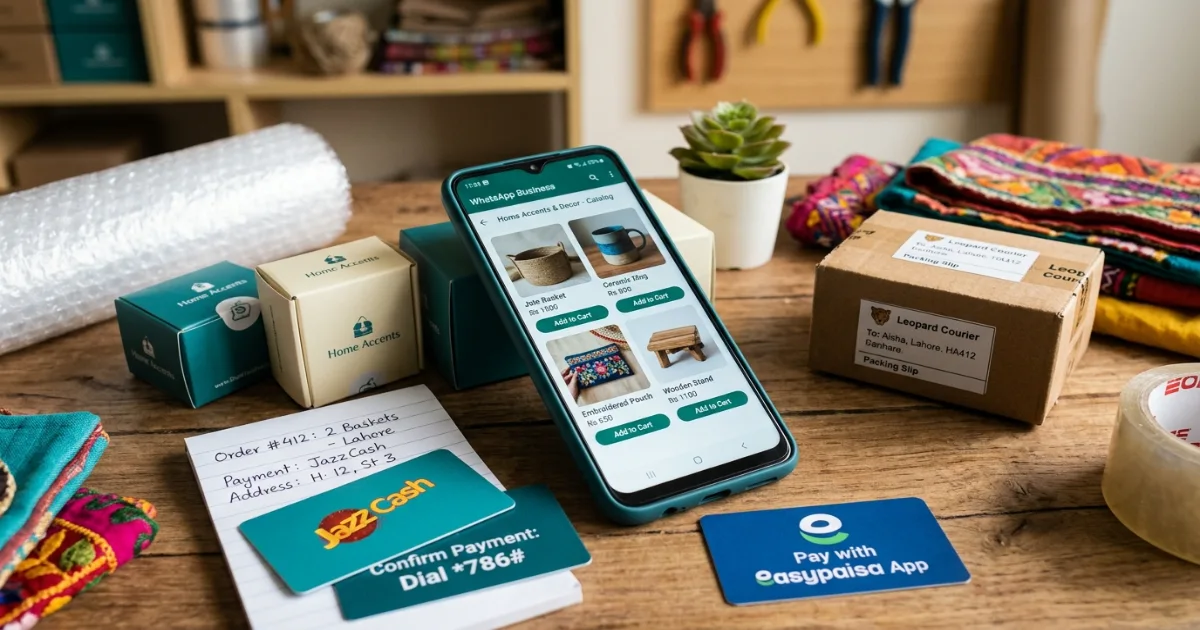
Over 80% of e-commerce transactions in Pakistan are still cash-on-delivery. Formal online stores struggle with COD because of high return rates and cash handling logistics. But a seller on Instagram or Facebook can negotiate payment terms directly with a customer in DMs, accept a small advance via JazzCash, and dispatch via a trusted local courier. The personal conversation builds trust that a checkout page never could.
2. Urdu and Vernacular Content Convert Better Than English
E-commerce websites are predominantly in English, alienating a huge segment of buyers. Social commerce thrives in Urdu, Punjabi, Pashto — whatever language your customer speaks. A video showing a product with a voiceover in colloquial Urdu, posted as a Facebook Reel or Instagram Story, connects emotionally and drives sales in ways a polished English product page cannot.
3. The Trust Economy Lives on WhatsApp
In Pakistan, people don’t buy from strangers — they buy from someone they’ve spoken to, seen a video from, or whose number they’ve saved. WhatsApp is the ultimate trust-building tool. A voice note answering a query, a video showing the product being packed, a quick call to confirm the delivery address — these micro-interactions create loyalty that no algorithm can replicate. That’s why many of the most successful social commerce businesses in Pakistan don’t even have a website; their entire business runs on a WhatsApp chat.
💡 Insider Insight from Shark Tank Pakistan: Several sharks have publicly mentioned that they look for “WhatsApp-native” businesses — those that can acquire, convert, and retain customers entirely through chat. One shark noted, “If a brand can scale on WhatsApp in Pakistan, it can scale anywhere. The trust mechanics they build are far deeper than any e-commerce funnel.”
Platform-by-Platform Playbook: How to Sell on Facebook, Instagram & WhatsApp
Facebook: The Mass-Market Acquisition Engine
Facebook is your top-of-funnel powerhouse. Its strength lies in Facebook Groups and Facebook Shops. Groups like “Karachi Women’s Shopping Market” or “Lahore Buy & Sell” have hundreds of thousands of members actively looking to buy. Here’s how to use Facebook effectively:
- Join 5–10 relevant buying/selling groups in your city or product category. Don’t spam; contribute to conversations, build a reputation, and occasionally post your products with clear pricing and delivery details.
- Set up a Facebook Shop connected to your business page. It’s free and integrates with Instagram. You can list products with prices, accept orders via Messenger, and even integrate payment gateways if you register as a business.
- Run hyper-local Facebook ads targeting people within 10–20 km of your location. A daily budget of Rs 300–500 can reach thousands of local buyers. Test multiple ad creatives — especially short video demos with Urdu narration.
Instagram: The Visual Storefront and Brand Builder
Instagram is where your brand comes to life. Pakistani shoppers use Instagram to discover products, especially in fashion, beauty, home decor, and food. The platform’s visual nature rewards high-quality imagery and consistent storytelling.
- Optimize your bio: Use a clear description in Urdu or English, a WhatsApp link, and a call-to-action like “DM to order” or “Link to catalogue.”
- Post daily Stories: Show behind-the-scenes packing, customer testimonials, new arrivals. Stories build urgency and personal connection. Use polls and questions to engage.
- Leverage Instagram Shopping tags: Once you set up a Facebook Shop, you can tag products in posts and Stories, allowing customers to tap directly to learn more or message you.
- Collaborate with nano-influencers: Pakistani micro-influencers with 2,000–10,000 followers often charge Rs 1,000–5,000 per post and can drive highly targeted sales.
WhatsApp: The Conversion and Relationship Engine
WhatsApp is where the sale actually happens. It’s not a discovery platform — people come to you from Facebook or Instagram, or via a forwarded contact. Once they’re in your WhatsApp chat, your job is to close and keep them.
- Use WhatsApp Business app: It’s free and offers a catalogue feature, quick replies, and labels to organize customers by status (new lead, pending payment, shipped).
- Build a broadcast list: Send new arrival alerts and offers to a saved list of customers who’ve opted in. Don’t over-message — once or twice a week is enough.
- Close with a human touch: After a customer receives their order, send a voice note asking if they’re happy. Offer a small discount on their next purchase. This level of personal care is impossible at scale for big brands, and it’s your competitive advantage.
| Platform | Best For | Key Tool | Conversion Style | Cost |
|---|---|---|---|---|
| Mass reach, local discovery | Groups, Shops, hyper-local ads | Link to WhatsApp or Messenger | Free to join groups; ads from Rs 300/day | |
| Visual branding, youth/urban | Stories, Shopping tags, Reels | DM to order, swipe-up to WhatsApp | Free organic; influencer collabs Rs 1k–5k/post | |
| Trust building, closing, repeat sales | Catalogue, broadcasts, voice notes | Direct chat → payment → delivery | Free (WhatsApp Business) |
Situation-Based Adjustments: How Your Approach Changes
If You’re a Home-Based Seller with No Inventory Budget
Start with pre-orders. Post a product image with a delivery timeline (e.g., “Books open until Friday, delivery in 7 days”). Collect payments or advances via Easypaisa/JazzCash, buy materials after securing orders, and fulfil. This eliminates inventory risk. Many women-led social commerce businesses in Pakistan have built six-figure monthly revenues using this exact model.
If You’re Scaling a Registered Brand and Eyeing Shark Tank Pakistan
Move beyond manual DMs. Integrate a payment gateway with your Facebook Shop and use the WhatsApp Business API for automated order confirmations and tracking updates. Track your customer acquisition cost (CAC) per platform and your repeat purchase rate. When you pitch, you’ll need to show that your social commerce isn’t just a hobby — it’s a data-driven, scalable channel.
If You’re in a Tier-2 or Tier-3 City
Facebook Groups are far more active in smaller cities where formal e-commerce penetration is lower. Build a hyper-local Facebook presence. Partner with local courier services for same-city delivery. Trust is even more relational here; customers often want to speak by phone before ordering. Be available and patient. Your lower operating costs mean you can underprice larger competitors while maintaining healthy margins.
Common Pitfalls & When to Ignore This Advice
Pitfall 1: Treating Social Commerce Like a One-Way Broadcast. The biggest mistake is posting products and waiting. Social commerce is a conversation. Reply to every comment and DM, even the ones that seem like time-wasters. A single engaged interaction can lead to a loyal customer who buys for years. Automated bots can handle FAQs, but never entirely replace human interaction — especially in the Pakistani market where personal rapport drives repeat sales.
Pitfall 2: Ignoring Delivery and Payment Friction. If your customer has to download a new app to pay, you’ve lost them. Accept JazzCash, Easypaisa, bank transfers, and COD. Partner with reliable courier services like TCS, Leopards, or local bike messengers. If a delivery goes wrong, apologize personally and reship at your cost. Word-of-mouth is brutal in Pakistan’s social commerce ecosystem — one bad delivery story can undo months of reputation-building.
Pitfall 3: Neglecting Visual Consistency. Your Instagram grid isn’t just photos — it’s your storefront window. Inconsistent lighting, blurry images, and cluttered backgrounds signal amateurism. Use your smartphone camera well; natural daylight and a clean, neutral background cost nothing but dramatically increase perceived product value. Even if you’re selling Rs 500 items, make them look like Rs 2,000 items.
When to Ignore This Advice: If you’re selling highly regulated products (pharmaceuticals, financial services), social commerce may not be the right primary channel due to compliance restrictions. Similarly, if you’re a B2B enterprise selling to large corporations, LinkedIn and formal sales processes will serve you better. This guide is optimized for consumer goods, fashion, food, accessories, home decor, and services that thrive on personal trust.
How SharkTankPakistan.pk Tools Help You Scale Your Social Commerce Business
Once your social commerce machine is generating consistent orders, you may want to raise capital or simply understand your business’s worth. The Startup Valuation Calculator on SharksTankPakistan.pk lets you input your monthly revenue, growth rate, and margins to see a realistic valuation — essential if you’re planning to pitch a shark. The Profit Margin Calculator helps you factor in all the hidden costs of social commerce (packaging, delivery, payment gateway fees, ad spend) so you know your true net profit per order, not just your top-line revenue.
🧠 Try It Yourself: Open the Valuation Calculator and plug in your monthly social commerce sales. You’ll see instantly how a few percentage points of margin improvement can change your valuation — and that insight will sharpen your pricing strategy across every platform.
❓ Frequently Asked Questions About Social Commerce in Pakistan
Do I need a registered business to start selling on Facebook and Instagram in Pakistan?
No. You can start as an individual using your personal accounts or a Facebook page. However, once you scale and want to integrate payment gateways, run official ads, or pitch investors, registering as a sole proprietor or private limited company becomes necessary. Early-stage selling is informal and perfectly legal.
What’s the best payment method for social commerce in Pakistan?
Cash-on-delivery is still the most trusted, but it carries return risks. A hybrid works best: accept a small advance (e.g., Rs 200–500) via JazzCash or Easypaisa to confirm serious intent, then COD for the balance. This reduces fake orders and covers your initial shipping cost.
How can I build trust with customers who’ve never bought from me?
Share real customer testimonials as screenshots or voice notes. Post unboxing videos. Offer a “pay after inspection” option for first-time buyers in your city. Join respected local Facebook groups and contribute helpful advice before selling. A personal video introducing yourself also goes a long way.
Is it possible to scale a social commerce business without a website?
Yes, many successful Pakistani brands operate entirely on WhatsApp and Instagram. But scaling beyond a certain point (Rs 500k+ monthly revenue) becomes operationally messy without some form of centralized order management. At that stage, consider a lightweight Shopify store or an order sheet integrated with WhatsApp API, even if your main front-end remains social media.
How do I handle returns and complaints in social commerce?
Respond quickly and personally. A phone call or voice note can defuse anger faster than text. Offer a replacement or refund without arguing, even if you suspect the customer is wrong — the long-term reputation cost of a negative post in a Facebook group far outweighs the short-term loss. Set a clear return policy and communicate it before purchase.
What types of products sell best through social commerce in Pakistan?
Fashion (especially women’s clothing, unstitched fabric, and accessories), beauty products, home decor, handmade crafts, food (baked goods, spice mixes, frozen items), and children’s items. Anything visual, giftable, or personal performs well. High-ticket electronics are harder due to trust gaps.
Can I use my personal Facebook profile for selling, or do I need a separate page?
You can start with your personal profile, especially in groups, but a dedicated business page separates your personal life and gives you access to Facebook Shops, ads, and analytics. For Instagram, a business or creator account unlocks Insights and Shopping features. Transition to a professional page as soon as possible.
🚀 Your Fast-Track Cheat Sheet: Top 3 Actions to Take
- Set up your WhatsApp Business account and catalogue today. Take 10 product photos in natural light, add prices, and create a broadcast list from your contacts who’ve expressed interest. This becomes your minimum viable storefront.
- Join 5 local Facebook buy/sell groups and observe for one week. Note which posts get engagement, how sellers respond to queries, and where the gaps are. Then make your first post — with clear pricing, location, and a call-to-action to WhatsApp.
- Use the SharkTankPakistan.pk Profit Margin Calculator on your first 20 orders. Track every expense and see your real earnings. Adjust your pricing or sourcing immediately. A profitable social commerce business starts with knowing your numbers, not just your sales.