Best Business Ideas for Students Pakistan: Start Earning While You Learn
Quick Answer: The most realistic business ideas for students in Pakistan revolve around low-investment digital services—freelancing, social media management, content writing, online tutoring, and e-commerce reselling—many requiring less than PKR 5,000 to start. Flexibility around class schedules and the ability to earn in dollars or PKR make them ideal paths to financial independence before graduation.
Every semester, thousands of Pakistani students sit in university canteens discussing the same thing: inflation is eating up pocket money, the job market is unpredictable, and deep down they know waiting for a degree certificate to start earning feels outdated. You’ve probably seen clips from Shark Tank Pakistan where 22-year-olds walk in with businesses that started in their hostel rooms. That spark is real. But the gap between “I want to start something” and actually launching is filled with confusion about what works here, right now, with the resources you actually have.
This guide is built specifically for Pakistani students—whether you’re in a university hostel in Lahore, a commuting student in Karachi, or attending online classes from a small town in Khyber Pakhtunkhwa. We’re going to walk through practical business ideas for students Pakistan that don’t require huge capital, family connections, or a full-time break from studies. Every idea I’ll share has been validated by real student founders, some of whom eventually pitched on Shark Tank Pakistan.
Why Starting a Business as a Student in Pakistan Is Smarter Than Ever
Let’s address the elephant in the room: the Pakistani rupee’s volatility, 30%+ inflation on daily essentials, and a youth unemployment rate that hovers uncomfortably high. The traditional path—get a degree, pray for a decent 9-to-5—is no longer a safety net. At the same time, Pakistan’s internet penetration has crossed 54%, freelancing platforms are accessible, and digital payment gateways like JazzCash and Easypaisa make receiving money incredibly simple.
Shark Tank Pakistan itself has amplified a crucial mindset shift: you don’t need to be a 40-year-old industrialist. A student with a smartphone and market awareness can build a brand. The Sharks have invested in student-led edtech, D2C snack brands, and digital agencies. The ecosystem is saying: start now, not later. Plus, running a small business while studying teaches financial literacy, sales, and resilience—skills no classroom can match.
Top 15 Business Ideas for Students in Pakistan (Curated for Real Life)
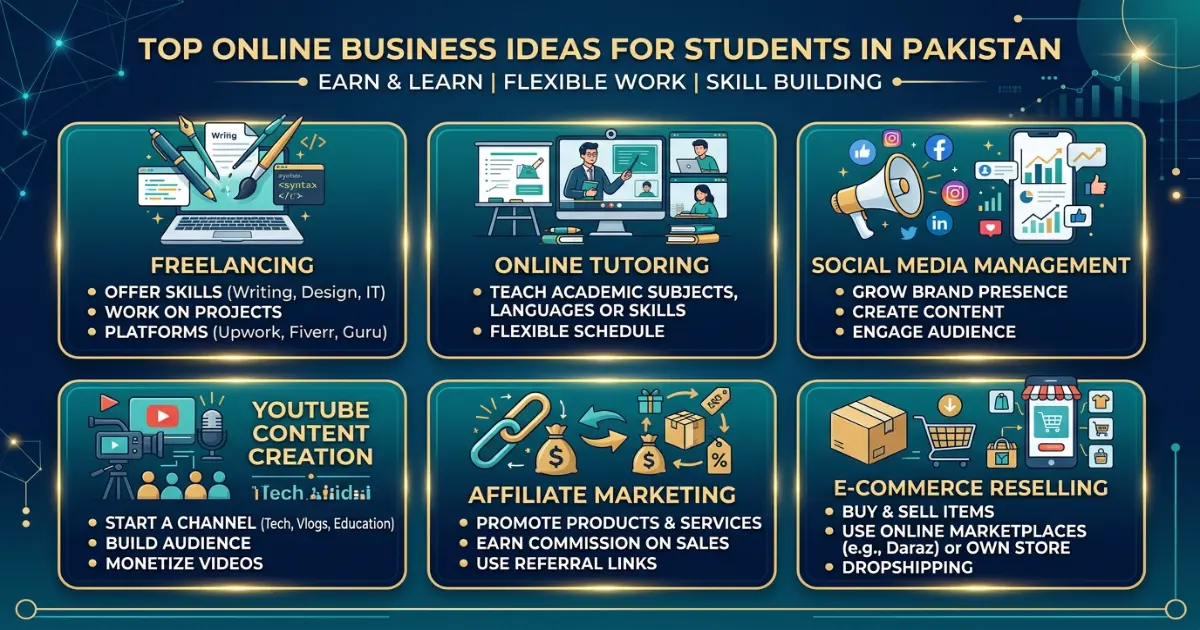
1. Freelancing on Upwork, Fiverr, or PeoplePerHour
Freelancing remains the most accessible launchpad. You can offer skills like content writing, graphic design, video editing, data entry, or even virtual assistance. Pakistani freelancers are globally competitive because our cost structure allows competitive pricing while still earning well above local stipend levels. Start by creating a compelling profile; the first client takes patience, but many student freelancers cross PKR 50,000/month within 6 months.
2. Social Media Management for Local Businesses
Small restaurants, clinics, and real estate agents across Pakistan desperately need help with Instagram and Facebook. As a student, you instinctively understand Reels, engagement, and visual storytelling better than most business owners. Pitch a package: manage two platforms, post thrice weekly, and reply to messages—starting at PKR 15,000 per client. Three clients and you’ve replaced a part-time job.
3. Online Tutoring and Academic Help
From O-levels to university subjects, Pakistani parents spend heavily on tuition. Shift that online. Offer Zoom-based classes in calculus, Urdu literature, or even SAT prep. With no travel costs, your hourly rate can be PKR 800–1,500 depending on the subject. Some student tutors have built mini academies with live Google Classroom setups.
4. Print-on-Demand and Custom Merch
Design T-shirts, mugs, or phone cases with culturally relevant slogans (think cricket humor, university memes) and integrate with a print-on-demand provider like Printify or a local Karachi-based printer. You never hold inventory; just market through Instagram. Initial investment: under PKR 3,000 for a domain and some sample designs.
5. YouTube Content Creation (Niche Focus)
Pick a niche that demands zero studio: daily vlogs of student life in Pakistan, honest gadget reviews in Urdu, or exam preparation hacks. Monetization via AdSense and once you hit 1,000 subscribers, watch hours can turn passion into a steady PKR 25,000–50,000/month with patience.
6. Affiliate Marketing Through Instagram and WhatsApp Groups
Join Daraz affiliate, Cheetay food partner, or brands offering commission on referrals. Build a small but trusted audience on social channels where Pakistani users actually engage—WhatsApp broadcasts and Instagram stories work wonders. No product creation needed.
7. Hostel-Based Food Delivery or Tiffin Service
Students living in hostels often crave home-cooked meals. If you enjoy cooking, start a weekend tiffin service offering daal chawal, biryani, or paratha rolls to fellow students. Promote via hostel WhatsApp groups. Margins are slender but cash flow is immediate and demand never fades.
8. Assignment and Resume Writing Services
Offer CV design, cover letter writing, and LinkedIn profile optimization. The job market forces fresh graduates to compete on documentation. A well-formatted resume paired with concise, impactful language can fetch PKR 1,000–2,000 per customer. Upskill through Canva and top-rated resume templates.
9. Photography and Event Coverage
Universities are full of events—debates, Qawwali nights, sports galas. If you own a decent DSLR or even a flagship smartphone, start covering events and selling digital albums. Expand into pre-wedding shoots on weekends. Friends’ referrals keep student photographers booked.
10. Digital Course Creation on Local Topics
Using platforms like Teachable or even a private YouTube channel, create short courses on skills that are in demand in Pakistan—Urdu typing for freelancers, Excel for commerce students, or simple coding. Once recorded, each sale is pure margin.
11. Mobile App Testing and UI/UX Reviews
International companies pay for feedback on apps and websites. Join platforms like UserTesting or Testbirds. The pay is modest in USD but adds up, and you need zero capital.
12. Handicrafts and Home Décor on Daraz
If you have access to traditional crafts (Kashmiri embroidery, camel bone work, blue pottery), curate small items and sell them on Daraz. A student in Multan I advised started with just 15 hand-painted terracotta planters and sold out in one month.
13. Fitness Coaching and Nutrition Plans
With the gym culture booming, certified or self-taught fitness enthusiasts offer individualized workout and diet plans online via WhatsApp. Charge a monthly subscription of PKR 2,000 for accountability calls and progress tracking.
14. Voice-Over and Dubbing Services
AI voice-overs are growing, but regional language content still needs human talent. If your Urdu pronunciation is clean and you can modulate tone, offer services on Fiverr targeting producers of audiobooks, ads, and explainer videos for the Pakistani market.
15. Local Delivery Aggregation for University Campuses
Partner with food outlets and stationary shops near campus. Collect orders via a simple Google Form and deliver in bulk. Charge a service fee of PKR 30–50 per order. One successful student group in Lahore scaled this to a small app before appearing on an investor round.
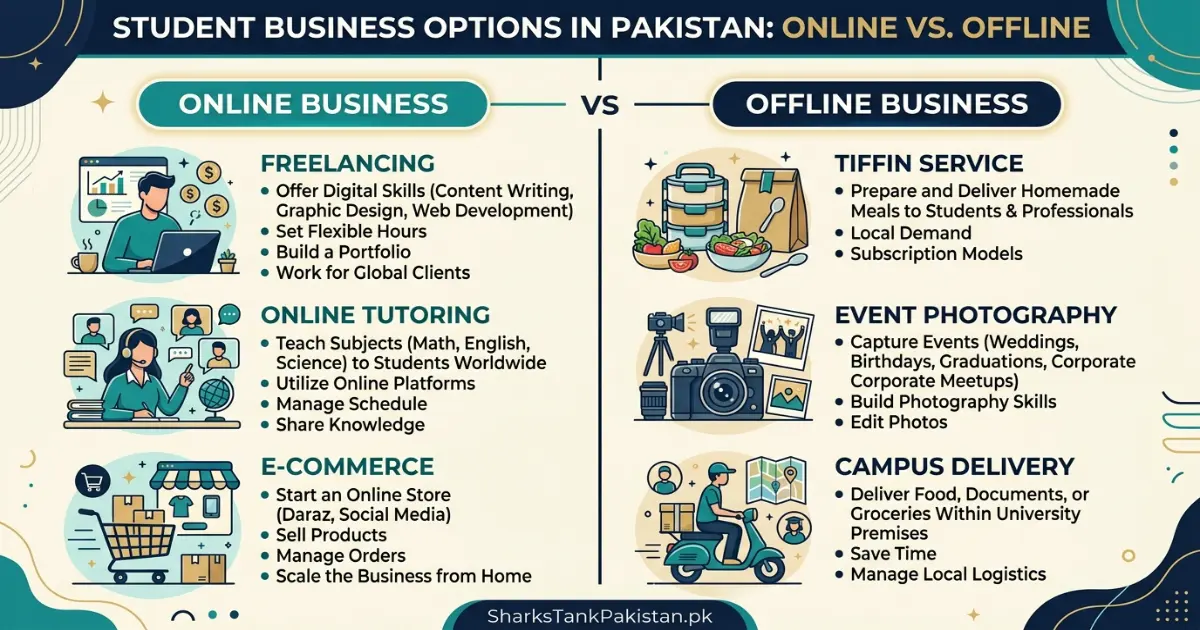
Online vs Offline Student Business Ideas: A Reality Check
Choosing between an online and offline business depends on your daily routine, risk appetite, and desired income stability. Here’s a direct comparison for the Pakistani context.
| Factor | Online Business (Freelancing, E-commerce, Content) | Offline Business (Tiffin Service, Tutoring in Person, Event Coverage) |
|---|---|---|
| Startup Cost | Very low — mostly internet, a laptop, and platform fees | Moderate — ingredients, transport, equipment (camera, kitchenware) |
| Flexibility | High — work anytime, from hostel or home | Lower — tied to physical presence and fixed schedules |
| Earning Ceiling | Unlimited — dollar-based income can multiply | Capped by hours and local purchasing power |
| Skill Barrier | Needs digital literacy, English/communication, platform knowledge | Relies more on interpersonal skills, local networking |
| Common Student Misstep | Quitting after first 3 rejections on freelancing platforms | Underpricing because “friends” expect discounts |
In Season 1 of Shark Tank Pakistan, a student duo from Peshawar pitched their online tutoring platform and got a deal from Shark Faisal. His first feedback? “I love that your break-even is less than the price of a biryani platter.” The lesson: keep your initial overhead absurdly low, whether online or offline. Run your idea as a side hustle for three months before asking for investment. Validate first, scale later.
Which Business Idea Matches Your Student Life? (Situation-Based Adjustments)
Not every idea fits every student’s reality. Here’s how to choose based on your circumstances.
If You Live in a University Hostel
Space and kitchen restrictions push you toward digital services. Freelancing, social media management, and online tutoring are your best bets. Use the hostel’s communal Wi-Fi and work during quiet hours. Avoid inventory-heavy businesses; even tiffin services might get messy without a proper setup. Start with what only needs a laptop and noise-cancelling headphones.
If You Commute from Home (Day Scholar)
You have more stability and storage. Pair online income with a small offline hustle—custom merchandise, packed snacks, or photography during university events. You can also build a local client base more easily because you’re partially integrated into a neighbourhood network.
If You’re in a Technical Degree (CS, Engineering)
Lean heavily into app development, coding tutorials, software freelancing, and even whiteboard animation for YouTube. Your coursework already sharpens relevant hard skills. Charge premium rates for specialized services like Python scripting or Arduino-based prototyping for small manufacturers.
If You’re in Business or Arts Stream
Natural strengths in communication and creativity make content writing, digital marketing, and design the most profitable. Also consider resume writing, event coverage, and custom merch where taste and vocabulary differentiate you.
If Your Family Expects You to Focus Solely on Grades
Pick a low-profile, remote-friendly idea like affiliate marketing or selling digital products that doesn’t require visible meetings or physical absence. Set clear boundaries: allocate 8 hours per week to the business, preferably on weekends, so academic performance never drops. Show your parents the first few thousand rupees earned—it often shifts their perspective faster than any argument.
How to Launch Your Student Business in 7 Days (A Practical Roadmap)
Instead of endless planning, follow this simple sequence to have your first paying customer by next week.
- Day 1 – Identify one skill or product: Don’t overthink. Pick the idea from the list above that aligns with your current skills and resources.
- Day 2 – Set up a digital presence: Create a freelancer profile on Fiverr or Upwork (if service-based) or an Instagram business account with a clean logo made in Canva.
- Day 3 – Price clearly and transparently: Research what competitors charge. For a Pakistani student starting out, consider PKR 1,000–2,000 for a basic service but never go below that—it devalues your work.
- Day 4 – Reach out to 10 potential clients: Use LinkedIn, university Facebook groups, or direct messages to local businesses. Personalize every message.
- Day 5 – Deliver a sample or pilot: Offer a small free trial (e.g., one social media post) in exchange for honest feedback or a testimonial.
- Day 6 – Secure your first paid task: Convert one trial into a paid micro-project. Use JazzCash or Easypaisa for easy payment collection if local.
- Day 7 – Ask for a referral: Happy first customer? Request they mention you in a student group. Word-of-mouth among Pakistani students is incredibly fast.
Common Mistakes Student Entrepreneurs in Pakistan Make (and Hard Lessons)
Having mentored dozens of students who later pitched on Shark Tank Pakistan, I’ve catalogued the five most frequent errors. Avoiding these from day one puts you ahead of 90% of your peers.
- 1. Waiting for the “perfect idea.” You don’t need a revolutionary concept. Start with something simple—a tiffin service, a freelance gig—and iterate. Many Shark Tank rejects held onto an unsellable prototype for two years instead of testing the market.
- 2. Pricing too low out of student guilt. “I’m just a student” is a mental block. Charge market rates. Undercutting by 70% attracts low-quality clients and exhausts you. Use the Equity vs Loan Calculator to understand the real value of your time.
- 3. Neglecting legal registration initially but scrambling later. As a student, you don’t need a private limited company to earn PKR 30,000/month. However, once you cross stable income or pitch to investors, consult the Business Registration Guide to avoid tax issues. Not knowing when to formalize has killed promising student projects.
- 4. IGNORING academic deadlines entirely. The business is meant to complement your studies, not destroy them. Set non-negotiable study blocks—if your CGPA dips below 2.5, it limits future scholarships and postgraduate options. Balance is not a weakness.
- 5. Copying a US or UK idea without localization. A drop-shipping store selling Halloween props will likely flop in Faisalabad. Adapt every idea to local festivals (Eid, Basant, cricket season) and language preferences. The best student businesses deeply understand cultural nuance.
When NOT to Start a Student Business (Yes, This Matters)
This entire guide encourages action, but I’d be irresponsible if I didn’t mention the exceptions. Do not launch a side hustle if you are in your final semester with a major thesis defense looming and your supervisor is strict. The mental load can cause both endeavors to suffer. If you’re battling serious health issues or family crises, give yourself grace—business will wait. Also, avoid capital-heavy models that push you into debt; never borrow from informal lenders (the infamous “committee” system with high markup) to fund a business. Only invest what you can lose without impact on your daily sustenance.
Real Student Success: From Karachi Classroom to Shark Tank Spotlight
Last year, a Karachi University student named Areeba started a small Instagram page selling exam prep planners—simple downloadable PDFs for O-level students. She invested zero rupees, used Canva for design, and promoted through student groups. Within eight months, she had over 2,000 paying customers and a monthly revenue of PKR 180,000. She walked into Shark Tank Pakistan Season 1 with a clear ask, a registered sole proprietorship, and a solid repeat purchase rate. The Sharks grilled her on customer acquisition cost and retention, but the core of her business was undeniable. She got a deal and scaled to include live tutoring. Her story isn’t magic; it’s method applied with consistency.
FAQs About Business Ideas for Students in Pakistan
- 1. Can I start a business in Pakistan while studying full-time?
- Yes, thousands do. Choose a flexible, low-investment idea like freelancing or social media management. Dedicate 8–12 hours per week and use university Wi‑Fi. Many student entrepreneurs manage both academics and income by sticking to a strict schedule.
- 2. Which business is best for students with no money?
- Freelancing, affiliate marketing, and social media management require almost zero upfront capital—just skills and a smartphone. Digital products like study planners or templates also cost nothing to create and can be sold repeatedly.
- 3. Is it legal for international students on a visa to run a side business in Pakistan?
- Rules vary by visa type. Typically, international students are permitted limited business activities, especially online. Always check with your sponsor and the immigration authority to ensure compliance—getting this wrong can jeopardise your stay.
- 4. How much can a Pakistani student realistically earn per month?
- Most student side hustles bring in PKR 15,000–50,000 monthly within 3–6 months. Exceptional freelancers touching international clients can cross PKR 100,000. Consistency matters more than skills at the start.
- 5. Do I need a business license for a small student-run Instagram shop?
- Not initially. Informal, small-scale operations usually don’t require registration. Once monthly revenue exceeds PKR 50,000–80,000 or you start pitching to investors, register as a sole proprietorship or private limited company.
- 6. What are the biggest challenges for student entrepreneurs in Pakistan?
- Time management, unreliable internet in some areas, parental pressure to focus only on studies, and underpricing are the top hurdles. Joining local startup communities on campus can provide support and accountability.
- 7. Can a student business qualify for Shark Tank Pakistan?
- Absolutely. The show has featured student-led businesses. You need a registered entity, clear revenue traction, and a defensible pitch. Start small, prove demand, and when you have a solid story, apply via the official application page.
- 8. Which skill is fastest to learn for earning as a student in Pakistan?
- Basic graphic design using Canva and social media caption writing can be learned in under two weeks. These skills immediately open freelancing gigs. Advanced skills like coding or video editing take longer but pay more long-term.
Your Fast-Track Cheat Sheet: Top 3 Actions to Take This Week
- Pick ONE idea today and test it with zero overthinking. Scan the list above, circle the one that matches your skills and schedule, and start an Instagram page or freelancer profile tonight. Progress beats perfection.
- Generate your first PKR 1,000 in revenue before telling friends. Proving to yourself that the business works silences self-doubt. Use that PKR 1,000 milestone as validation, then scale to PKR 10,000.
- Open the SharkTankPakistan.pk Startup Valuation Calculator and estimate where your side hustle could be in two years. Seeing potential numbers transforms a “hobby” into a serious goal—even if you never pitch on the show, you’ll think like a founder.