Biggest Shark Tank Pakistan Controversies: What Founders Should Learn Before Pitching
A balanced, source-aware breakdown of the biggest Shark Tank Pakistan controversies, deal follow-through concerns, due diligence disputes, editing complaints, and practical founder lessons.
Shark Tank Pakistan controversies mainly center on post-show deal follow-through, due diligence delays, valuation disagreements, founder-treatment debates, and concerns over how startup stories are edited for television. The most useful lesson for founders is simple: an on-air handshake is not the same as signed funding. Treat the show as exposure plus negotiation access, not guaranteed investment.
Reality TV and startup investing are a powerful mix. The show needs drama. Founders need capital. Sharks need strong businesses. Viewers want clear winners and losers. When those interests meet on national television, friction is almost guaranteed.
That is why Shark Tank Pakistan controversies should not be treated as gossip only. They reveal how Pakistan’s young startup ecosystem handles due diligence, valuation, media pressure, founder expectations, investor accountability, and the gap between a public pitch and a private investment process.
1. The biggest issue: on-air deals vs final investment
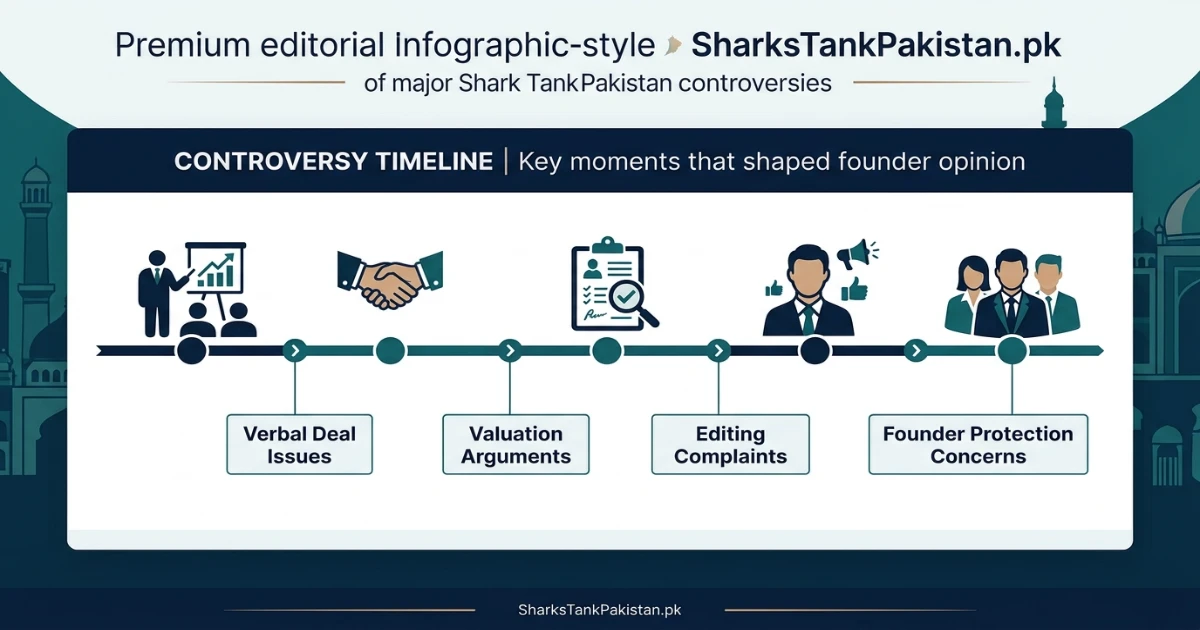
The most serious controversy is not a single angry moment on camera. It is the gap between the deal viewers see on screen and the investment that may or may not close later.
Multiple media reports and founder discussions have highlighted the same concern: some entrepreneurs left the tank with public momentum, but later faced a slower or incomplete post-show process. TechJuice reported one founder’s claim that a deal did not materialize after due diligence began and communication later stopped. Daily Pakistan also reported Ali Swati’s claim that only 4 out of 36 startups offered on-air deals actually secured investment after completing due diligence. Because these figures come from public claims and media reports, they should be presented as reported allegations, not official final statistics.
Publication-safe wording: Avoid saying “the show only closed X% of deals” as a confirmed fact unless you have official production data. Safer wording is: “Some founders and media reports have questioned post-show deal follow-through, including claims that only a small share of on-air offers turned into completed investments.”
2. Due diligence disputes: why deals can collapse after filming
In Shark Tank-style shows, the on-air agreement is usually a starting point. It is not the same as a fully signed investment contract. After filming, investors normally review financial statements, tax records, ownership documents, customer data, debt, legal exposure, intellectual property, and founder claims.
For Pakistani founders, this can become complicated quickly. Many early-stage businesses have strong sales but weak documentation. Some are not fully formalized with tax filings, SECP records, shareholder agreements, supplier contracts, or audited accounts. That does not automatically mean the founder is dishonest. It often means the business grew faster than its paperwork.
This is where many Shark Tank Pakistan controversies become founder lessons. A pitch can be impressive on camera, but if the supporting documents are not ready, the investor may renegotiate, delay, or walk away.
Founder lesson
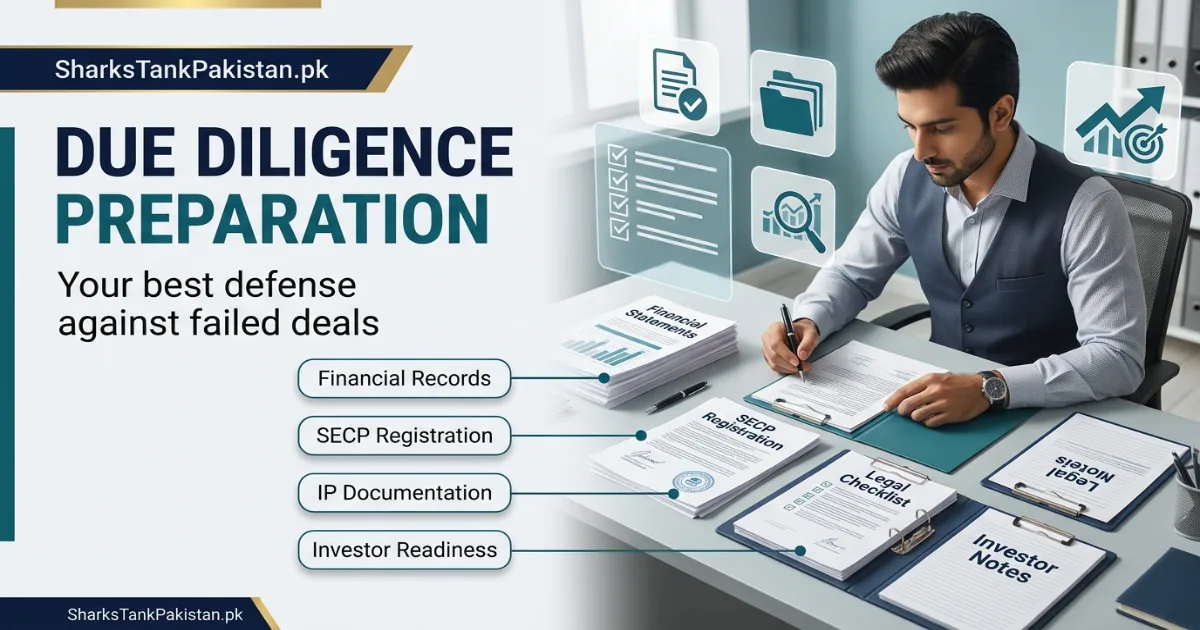
Before applying, prepare a clean data room with revenue proof, expense records, customer evidence, tax status, founder equity split, company registration, cap table, inventory details, and any IP or trademark documents. A founder who looks organized after filming has a much better chance of closing.
3. Valuation arguments and unrealistic expectations
Valuation has been one of the most debated parts of Shark Tank Pakistan. Some pitches attracted attention because founders asked for very large valuations, while investors questioned whether the revenue, margins, market size, or execution justified the number.
This is not unique to Pakistan. Every Shark Tank market has valuation tension. But in Pakistan, the issue feels sharper because the startup funding environment is smaller, documentation standards vary widely, and many traditional businesses still value profit and assets more than growth projections.
| Controversy area | What viewers see | What may happen after filming | Founder protection |
|---|---|---|---|
| On-air deal | Handshake, excitement, public announcement | Due diligence, document checks, possible renegotiation | Do not stop other funding conversations until contracts are signed |
| High valuation | Sharks challenge the founder’s numbers | Investor may request lower valuation or different terms | Prepare revenue, margin, CAC, retention, and market-size proof |
| Editing complaints | Short, dramatic pitch sequence | Longer context may not be shown to viewers | Keep your public story simple, factual, and easy to understand |
| Founder-treatment backlash | Harsh questions or viral clips | Social media debate can affect brand perception | Stay calm, answer with numbers, and avoid emotional overreaction |
4. Bias and fairness debates
Another sensitive area is the perception that certain types of founders receive more attention or more serious consideration than others. TechJuice reported allegations that the show favored entrepreneurs from elite academic or professional backgrounds while grassroots founders felt overlooked.
This is a serious claim, so it should be handled carefully. It is better to frame it as a debate around perception, access, and inclusivity rather than making direct accusations against specific sharks without strong evidence.
For readers, the practical takeaway is that a strong pitch should not depend only on personality or background. Founders should make the business easy to understand: what problem it solves, why customers pay, how the money is made, what the margins look like, and exactly how shark capital will accelerate growth.
5. Editing complaints: did TV drama change the story?
Editing is part of every reality TV format. A pitch that lasts much longer in the studio must be compressed for broadcast. That can create a problem: the version viewers see may not include the full negotiation, context, or founder explanation.
That does not automatically mean production acted unfairly. It does mean founders should understand that once filming ends, the final story is not fully in their control. This is one of the quieter but important Shark Tank Pakistan controversies: the difference between the full business conversation and the short entertainment version.
Founder tip: Build your pitch around three memorable facts: your customer problem, your strongest traction number, and your exact funding use. If those three points are clear, even a short edit is less likely to damage the business story.
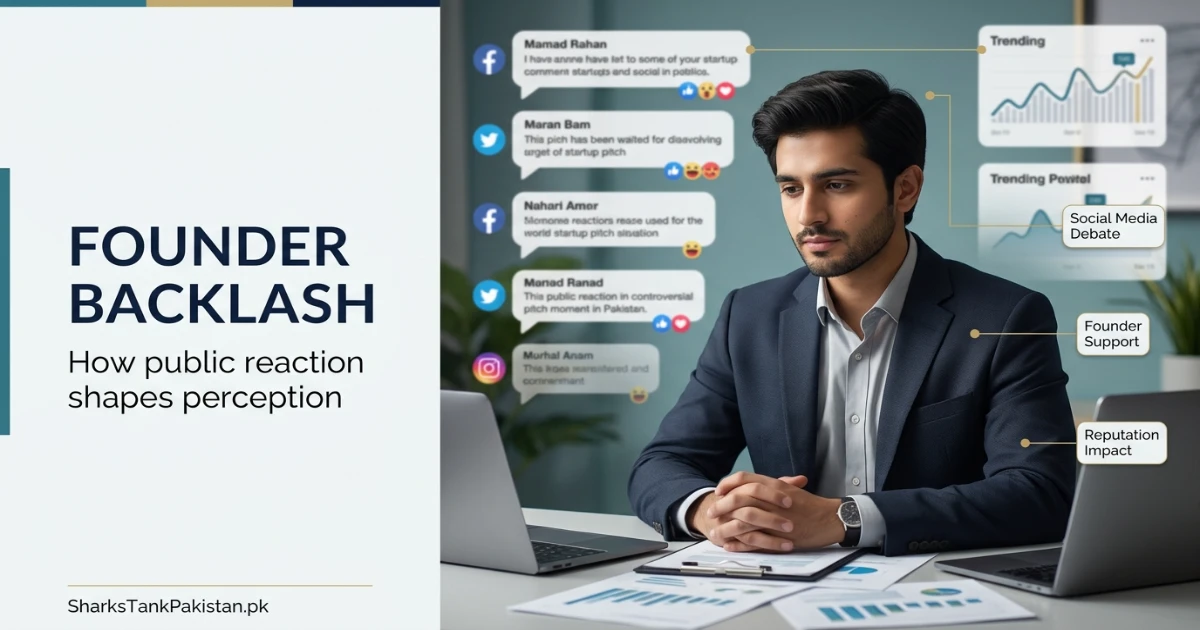
6. Social media backlash and investor accountability
After Season 1, public discussion around the show moved beyond entertainment. Founders, startup watchers, and viewers started asking harder questions: How many deals actually close? How long should due diligence take? Should founders get a clear deadline? Should investors explain why a deal failed? Should the production team publish a post-season deal update?
These questions are healthy for the ecosystem. A young startup market needs transparency. At the same time, founders also need to accept that investment is not guaranteed simply because the pitch looked good on screen.
7. What founders should do before applying
The best way to protect yourself is not to avoid the show. The best way is to enter with clean expectations and stronger documents.
Know revenue, gross margin, net margin, customer acquisition cost, repeat purchase rate, monthly growth, and founder salary.
Organize tax records, bank statements, incorporation papers, trademarks, supplier agreements, and any loan or debt details.
Do not pause other investor conversations until the shark deal is signed, funded, and legally complete.
8. Common myths about Shark Tank Pakistan controversies
Myth 1: “A failed post-show deal means the show is fake.”
Not always. Deals can fail for normal investment reasons: weak documentation, changed terms, legal risk, overvaluation, tax issues, founder disagreement, or poor strategic fit.
Myth 2: “If sharks ask harsh questions, they are disrespecting founders.”
Sometimes the tone can feel tough, but hard questions are part of investment. The real issue is whether the criticism is fair, business-focused, and consistent across founders.
Myth 3: “Exposure alone is enough.”
Exposure helps, but it is not a business model. Founders should be ready to convert traffic into sales, investor leads, email signups, retail partnerships, or distributor inquiries immediately after the episode airs.
9. A better system for Season 2 and beyond
If Shark Tank Pakistan wants to reduce controversy, the solution is not less drama. The solution is clearer expectations.
- Publish a post-season deal tracker: List which on-air deals closed, changed, or did not proceed.
- Set a due diligence timeline: Founders should know when they are free to pursue other investors without uncertainty.
- Use clearer disclaimers: Viewers should understand that on-air deals are subject to verification.
- Protect founder reputation: Avoid edits that make a founder look careless if important context was removed.
- Encourage documentation before filming: A pre-show readiness checklist would help both sharks and founders.
FAQs about Shark Tank Pakistan controversies
What is the biggest Shark Tank Pakistan controversy?
The biggest controversy is the reported gap between on-air deals and final completed investments. Media reports and founder comments have questioned how many televised offers actually closed after due diligence.
Are Shark Tank Pakistan deals legally binding on air?
On-air agreements should be treated as conditional verbal offers. Final investment depends on contracts, legal review, due diligence, and both sides agreeing to the final terms.
Why do Shark Tank Pakistan deals fail after filming?
Common reasons can include incomplete records, tax issues, unclear ownership, overvaluation, weak margins, investor concerns, changed terms, or a mismatch between the pitch and verified documents.
Is Shark Tank Pakistan bad for founders?
No. It can be valuable for visibility, investor access, sales, and credibility. The risk comes when founders assume that exposure or a verbal deal automatically equals guaranteed funding.
How can founders protect themselves before pitching?
Prepare financial records, tax documents, registration papers, proof of traction, customer data, IP documents, and a clear use-of-funds plan. Also, keep other fundraising options open until the investment is signed.
Should founders worry about editing?
They should be aware of it, not afraid of it. A clear pitch with simple numbers, strong customer proof, and calm answers is harder to misrepresent in a short edited segment.
This article separates confirmed show information from reported claims. Public allegations should be worded carefully unless official documents, production statements, or signed founder records are available.
Final takeaway
Shark Tank Pakistan controversies are not just TV drama. They are a reminder that founders need clean documents, realistic valuations, strong communication, and backup funding options. The show can open doors, but founders should treat the tank as the beginning of due diligence — not the end of fundraising.
- Do not present reported claims as confirmed facts without official proof.
- Do not stop investor conversations after an on-air handshake.
- Prepare your business documents before applying, not after filming.