Best E-commerce Business Models for Pakistani Startups in 2026
The Short Answer: In 2026, the most promising e-commerce business models Pakistan can nurture are Direct-to-Consumer (D2C) niche brands, social commerce storefronts, and B2B wholesale aggregators — but the real winner is whichever model you can operate efficiently with Pakistan’s unique logistics, cash-on-delivery dominance, and rapidly growing mobile-first consumer base.
If you’ve watched even a handful of Shark Tank Pakistan pitches, you already know: e-commerce founders walk into the Tank with fire in their eyes. And why not? Pakistan’s e-commerce market is projected to cross $7 billion by 2026, driven by 130 million broadband users, young demographics, and the explosion of Easypaisa, JazzCash, and Raast.
Yet for every success story that gets a deal, a dozen other online ventures stall — not because the idea was bad, but because they picked a business model that didn’t fit the local reality. This guide breaks down the most viable e-commerce business models Pakistan-based startups should consider right now, with a sharp focus on what actually works in cities like Lahore, Karachi, Faisalabad, and beyond.
12–14 minutes
Aspiring founders, e-commerce entrepreneurs, Shark Tank Pakistan applicants, and anyone evaluating online business ideas in Pakistan
SharkTankPakistan.pk Valuation Calculator, Equity & Loan Calculator, Pitch Structuring Guide
Beginner to Intermediate — no prior funding knowledge needed
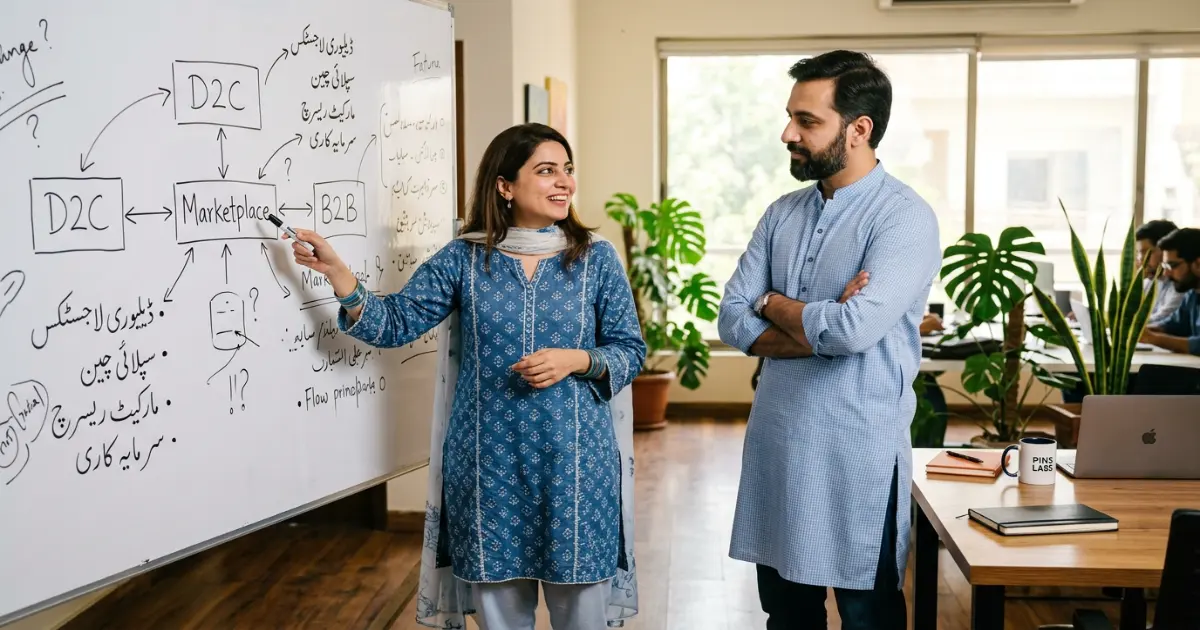
Why E-commerce Model Selection Matters More in Pakistan Than Elsewhere
Pakistan’s digital marketplace is not India or the US with reliable overnight shipping and high credit card penetration. Cash on delivery still accounts for nearly 80% of online transactions, return rates can spike when customers refuse parcels, and logistics outside major cities remain fragmented.
A workable e-commerce business model in this environment must tackle three things at once: trust building, payment collection, and last-mile delivery economics. That’s why some of the most celebrated international models — pure marketplaces without inventory control or low-margin dropshipping from AliExpress — often fail spectacularly when copy-pasted into Pakistan.
On the flip side, the challenges also create wide-open lanes. Consumers in tier-2 and tier-3 cities are hungry for quality products they can’t find locally. Social media usage is among the highest in the world. And the government’s digital Pakistan push is gradually improving payment infrastructure. The startups that align their model with these realities are the ones that end up sitting across from the Sharks, confidently asking for PKR 2 crore.
The Top 5 E-commerce Business Models for Pakistani Startups in 2026
Below are the models that currently dominate Shark Tank Pakistan pitches and the broader startup landscape — each with its own risk profile, capital requirement, and scaling path.
1. Direct-to-Consumer (D2C) Niche Brand
Own your product, own your customer data, own your margins. D2C brands in Pakistan are flourishing in categories like modest fashion, natural skincare, protein supplements, and artisanal home decor. You manufacture or source directly, sell through your own website and Instagram, and control the entire experience. This model screams “investable” on Shark Tank Pakistan because it creates brand equity and repeat purchase cycles. The catch: you’ll need inventory, a strong supply chain, and the ability to handle returns — but done right, gross margins can stay above 55%.
2. Social Commerce Storefront
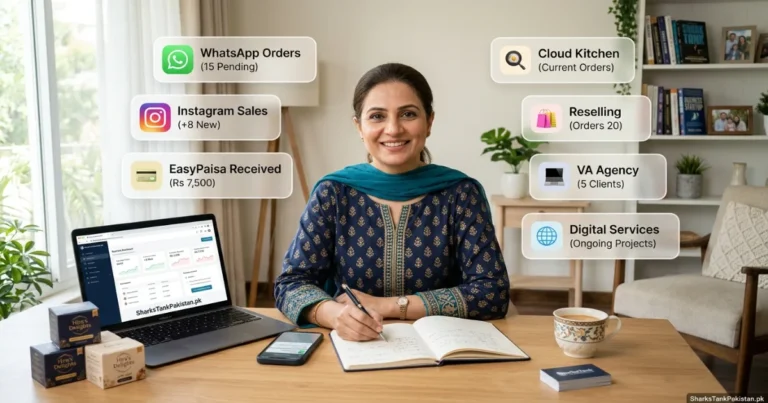
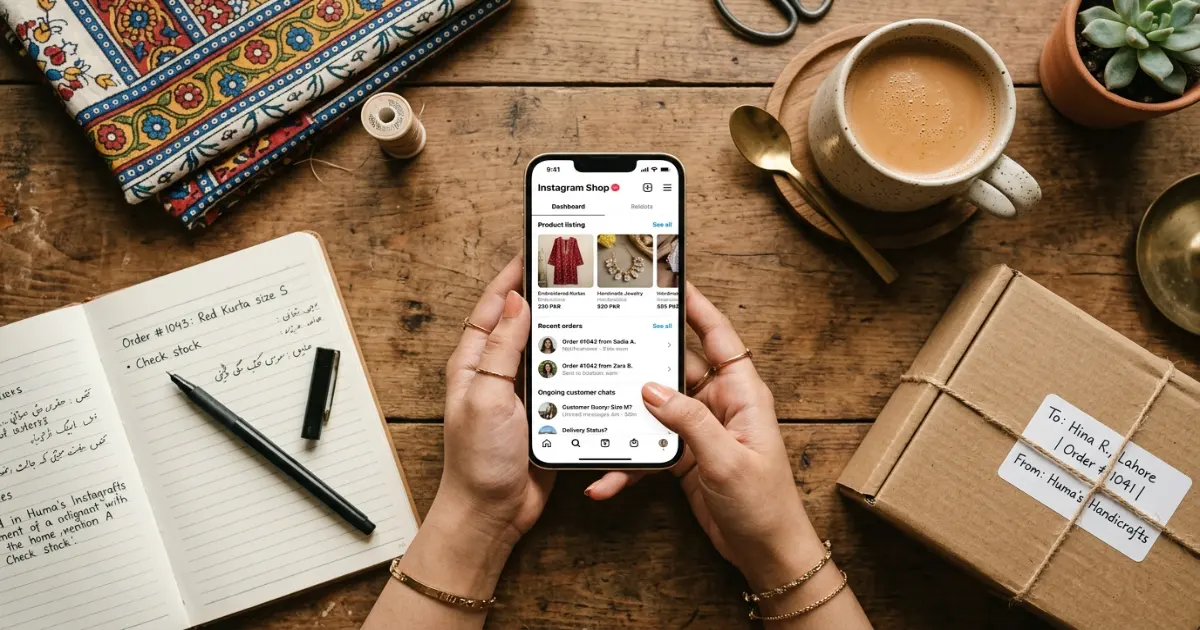
Pakistan’s social commerce market is worth billions, largely invisible to formal retail metrics. Thousands of home-based entrepreneurs sell clothing, jewelry, and food through Facebook Shops, Instagram DMs, and WhatsApp catalogs. For 2026, the model is evolving: tools like Markaz and Bazaar are making social commerce semi-formal with payment integrations and partial logistics. If you’re a first-time founder with less than PKR 5 lakh, this is your lowest-risk entry point. Sharks may not bite unless you show repeat customers and a plan to build a standalone platform eventually, but as a bootstrapping model, it’s unparalleled.
3. Marketplace Aggregator (Niche Vertical)
Instead of competing with Daraz, smart founders are building vertical marketplaces — think an online bazaar for handmade shoes from Multan, or a curated platform for halal-certified cosmetics. You don’t hold inventory; you connect sellers with buyers and take a commission (10-20%). The model is capital-light but demands strong technology and trust-building. Success hinges on solving the quality control issue and managing seller onboarding. Several Shark Tank Pakistan contestants have pitched aggregator models; the ones that got deals had already proven that both sides of the marketplace were sticky.
4. B2B Wholesale & Distribution Platform
This is the unglamorous side of e-commerce that Sharks love because it’s built on repeat orders and higher average transaction values. Startups like Dastgyr and Jugnu have paved the way: a digital platform that connects manufacturers or wholesalers directly with kiryana stores, pharmacies, or small retailers. Margins are thin (3-8%), but volumes are massive, and cash flow is predictable. If you have a logistics background or relationships in a specific supply chain — textiles, auto parts, stationery — this model can give you a legitimate advantage that’s hard for others to copy.
5. Subscription Box (Curated Discovery)
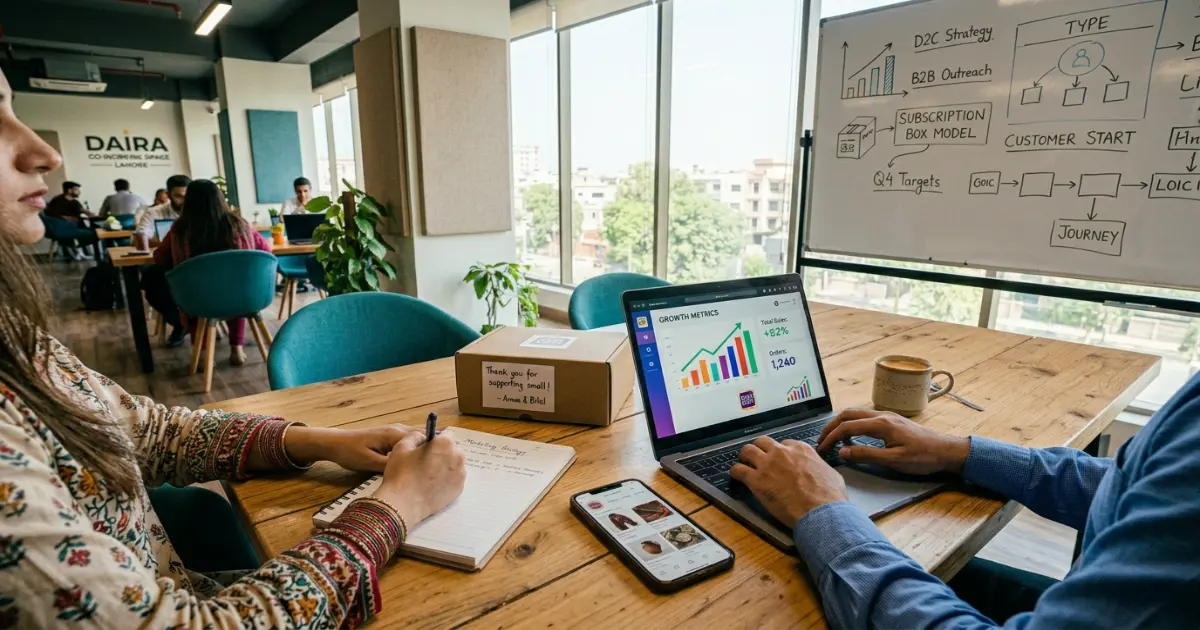
Subscription boxes are still nascent in Pakistan but growing fast in metro cities. Imagine a monthly “Healthy Snack Box” featuring local brands, or a “Children’s STEM Activity Kit” delivered every fortnight. The model thrives on curation and surprise. It requires deep understanding of a community, strong packaging, and meticulous cost management. For a Shark Tank Pakistan pitch, you’ll need to demonstrate that your churn rate is low and that each box brings in healthy contribution margins. Done right, subscription revenue can be valued at a premium — exactly what investors want to see.
📊 Data Point: COD Conversion Unlocks Real Valuation
In Shark Tank Pakistan, e-commerce founders who openly share their cash-on-delivery conversion rate — and how they’ve improved it — earn instant credibility. One D2C footwear founder revealed that by adding a 60-second confirmation call before dispatch, they brought COD rejection from 22% down to 8%. That number alone moved the Sharks, because it proved operational maturity. Every e-commerce model in Pakistan lives or dies by its COD handling process.
Quick Comparison: Which E-commerce Model Fits Your Goal?
| Model | Initial Capital | Inventory Risk | Tech Complexity | Scalability | Shark Tank Appeal |
|---|---|---|---|---|---|
| D2C Niche Brand | PKR 5–15 lakh | High | Medium (Shopify/WooCommerce) | High | Very High (brandable asset) |
| Social Commerce | Under PKR 3 lakh | Low to Moderate | Very Low | Moderate | Moderate (must show platform migration plan) |
| Niche Marketplace | PKR 10–30 lakh | None | High (custom or SaaS) | Very High | High (if liquidity proven) |
| B2B Wholesale Platform | PKR 20–50 lakh | None (asset-light) | Medium | Very High | High (loves recurring revenue) |
| Subscription Box | PKR 5–10 lakh | Moderate | Low to Medium | Moderate | High (if churn is low) |
Situation-Based Adjustments: Which Model When?
If you’re a first-time founder with limited capital (under PKR 10 lakh): Start with social commerce or a micro D2C brand built entirely on Instagram and WhatsApp. Focus on a single product category — like embroidered apparel or healthy meal prep — and reinvest every rupee into improving the unboxing experience. You don’t need a fancy website on day one; you need a repeatable sales process.
If you’ve already built a successful small business and want to raise on Shark Tank Pakistan: Transition toward a formalized D2C brand or a niche marketplace. Investors want to see a brand with defensible margins, not just a reselling hustle. Use the SharkTankPakistan.pk Valuation Calculator to see what kind of equity ask your current revenue can realistically command. If your model shows strong unit economics, even a PKR 50 lakh ask can seem modest.
If you come from a logistics or supply chain background: The B2B wholesale aggregator model is your strongest bet. Your industry contacts and understanding of warehousing will be your moat. But be prepared for a Shark to ask exactly how you’ll compete with well-funded players — your answer should be hyper-local focus and deeper relationships, not price war.
If your e-commerce idea is purely digital (e.g., digital prints, online courses): Your model will likely be treated as a service or info-product business rather than traditional e-commerce. The valuation principles shift, but the core logic remains: demonstrate scalable customer acquisition and high margins. The calculators on our site still apply — just use them with a revenue multiple appropriate for digital goods.
🧠 Why This Works: One thing I’ve noticed reviewing dozens of Shark Tank Pakistan pitches is that the Sharks rarely invest in “an e-commerce model” — they invest in founders who deeply understand why their specific model was chosen. If you can clearly articulate that you picked D2C because you wanted to own the post-purchase experience, or that you chose social commerce because your target audience of young women spends 4 hours a day on Instagram, you’ve already outclassed 80% of competitors.
Common Pitfalls & When to Ignore This Advice
No business model is a one-size-fits-all solution, and exactly where Pakistani founders stumble is in treating these frameworks as gospel. Here’s what to watch out for:
- Over-optimizing for the Shark Tank Pakistan pitch: Some founders force their business into a “D2C subscription” box because it sounds hot, even though their real strength lies in one-time B2B sales. Never twist your working model just to please a Shark; it will backfire during due diligence.
- Ignoring the COD working capital trap: Many new e-commerce ventures underestimate the cash cycle. If you ship COD, you’ll wait 7–14 days for settlement. If your model requires frequent inventory restocking, you can run out of cash even while “profitable” on paper. Plan your cash conversion cycle before you launch.
- Building a marketplace before solving trust: Pakistani buyers and sellers are cautious. Launching a marketplace without a robust review system, buyer protection, and active customer support will lead to low transaction volume. Sometimes it’s smarter to start as a managed D2C brand and then open up to third-party sellers later.
- Neglecting supply chain resilience: The 2025 floods and import restriction episodes taught us a brutal lesson: if your entire D2C model depends on imported raw materials that get stuck at customs, you’re vulnerable. Local sourcing, dual-supplier agreements, and keeping buffer stock are non-negotiable.
- Chasing a model you can’t afford to test: Subscription boxes require aggressive content marketing and sampling to acquire subscribers. If you don’t have the capital for 6 months of customer acquisition, don’t pick that model first. Validate with a simpler, cash-generating model, then expand.
When should you ignore the typical advice? If you have a unique distribution advantage — say, a family business with a nationwide retail network — you can adopt a hybrid model that no playbook covers. In that case, generic e-commerce rules don’t apply to you, but you still need the financial discipline to model the economics.
How to Use SharkTankPakistan.pk Tools to Pressure-Test Your Model
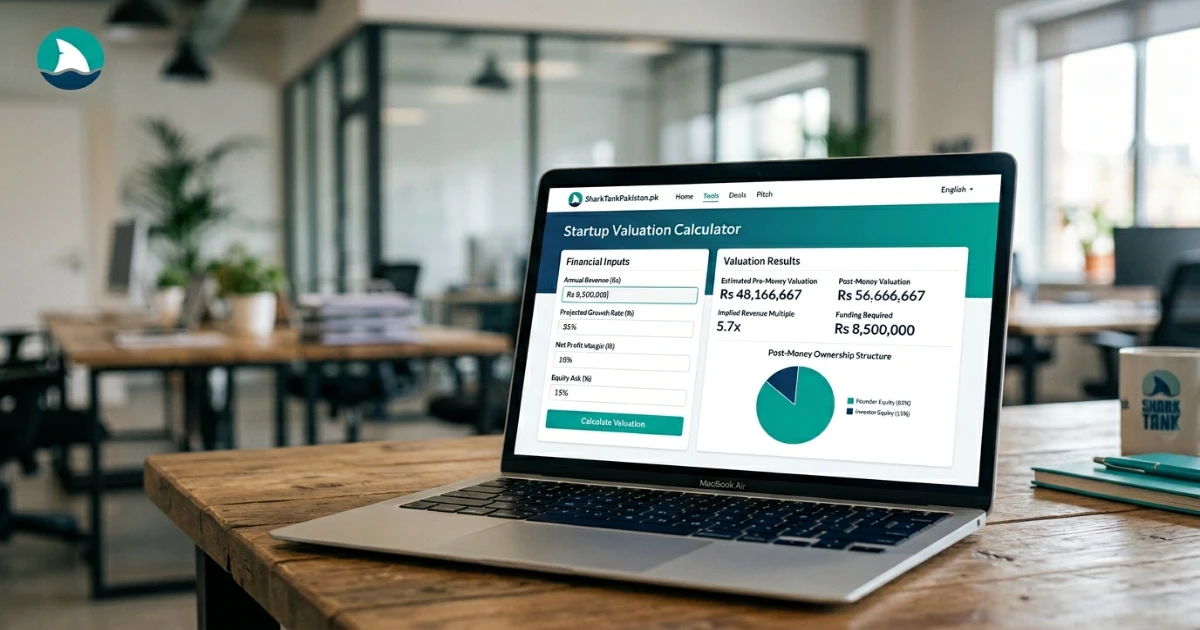
Whether you’re building a D2C brand or a wholesale platform, one truth holds: investors on Shark Tank Pakistan will dissect your numbers. You can prepare now by visiting the Startup Valuation Calculator and plugging in your projected first-year revenue, gross margin, and growth rate.
Notice how small changes in your model — like moving from 15% to 25% net margin — dramatically shift your valuation. That exercise alone often helps founders realize that a slightly different model (say, premium D2C instead of low-cost marketplace) can yield a far better fundraising outcome.
Also spend 10 minutes with the Equity & Loan Calculator. If a Shark offers PKR 1.5 crore for 18% equity versus a royalty deal, the calculator shows the long-term cost of each option. E-commerce founders frequently overvalue their company in the early stage; this tool grounds you in reality before you step onto the carpet.
Real-World Case: The E-commerce Pitch That Got a Deal
In one memorable Shark Tank Pakistan episode, a Lahore-based D2C modest fashion brand asked for PKR 1.2 crore at 10% equity. Their model was classic D2C: in-house design, small-batch manufacturing, direct Instagram and website sales. They were generating PKR 3 crore in annual revenue with 60% gross margins.
The Sharks pushed back on the valuation until the founder revealed that her repeat customer rate was 42%, and her cost per acquisition was just PKR 280 — numbers that convinced the Sharks the brand had pricing power. The deal closed at 15% equity, and the Shark’s first move was to negotiate bulk fabric sourcing, instantly improving unit economics. The lesson: your model’s proof points, not the model’s label, win the deal.
Frequently Asked Questions About E-commerce Models in Pakistan
Which e-commerce model is most profitable in Pakistan right now?
D2C niche brands with local sourcing typically show the highest margins (50–65%), followed by B2B wholesale platforms that earn through high transaction volumes. Profitability depends less on the model and more on your ability to control returns and payment collection.
Do I need a registered company to start an e-commerce business in Pakistan?
Legally, you can start as a sole proprietor, but for payment gateways, branded shipping, and especially for Shark Tank Pakistan, registering a private limited company is strongly recommended. It also protects personal assets.
How much investment is required for a D2C brand in Pakistan?
A lean D2C brand can launch with PKR 5–10 lakh covering initial inventory, basic photography, a Shopify store, and a small marketing budget. Scaling beyond PKR 1 crore annual revenue usually requires additional working capital for inventory.
What’s the best payment gateway for e-commerce startups in Pakistan?
Platforms like PayFast, Easypay, and JazzCash Merchant are popular. Many startups also integrate 1Link for bank transfers. The key is offering multiple options, including COD, to maximize conversion.
Can I start an e-commerce business without holding inventory?
Yes, through a marketplace aggregator model or print-on-demand. However, in Pakistan, quality control and delivery speed are harder to manage without some warehouse oversight, so many successful founders eventually move to a hybrid model.
What logistics partners work best for e-commerce startups in Pakistan?
TCS, Leopards, PostEx, and Rider are commonly used. For COD-heavy shipments, choose a partner that offers real-time rider tracking and digital proof of delivery to reduce returns and disputes.
How do I value an e-commerce business for a Shark Tank Pakistan pitch?
Investors usually look at revenue multiples (2–5x for early-stage, higher for high-growth) and gross merchandise value. Use the SharkTankPakistan.pk valuation calculator to test realistic scenarios and avoid overpricing your ask.
🚀 Your Fast-Track Cheat Sheet: 3 E-commerce Model Moves to Make Today
- 1. Pick the model that matches your cash reality, not just the trend. If you have PKR 5 lakh, don’t force a full-stack D2C brand — start with social commerce and grow into the model as revenue proves itself.
- 2. Obsess over COD conversion and cash cycle. Whatever model you choose, design a process that reduces delivery rejection and gets cash back into your account fast. That’s the hidden profit engine of Pakistani e-commerce.
- 3. Model your numbers before you pitch. The Sharks (and any smart investor) will look at unit economics first. Use the free calculators on SharkTankPakistan.pk to see if your proposed model can support the valuation you’re dreaming of.