Top 10 Funniest Moments from Shark Tank Pakistan Season 1
Quick Answer: The funny Shark Tank Pakistan moments that had audiences laughing out loud weren’t just random comedy—they revealed sharp cultural truths about Pakistani entrepreneurship. From a shark accidentally endorsing a product in Punjabi slang to a demo that set off the studio fire alarm, each hilarious slip-up hides a real pitch lesson about preparation, authenticity, and reading the room.
Shark Tank Pakistan Season 1 delivered more than nail-biting negotiations and tear-jerking founder stories. It also gifted us a goldmine of unintentional comedy—moments so perfectly absurd, so unmistakably Pakistani, that they’ve become instant classics in the startup community. Whether you’re a die-hard fan rewatching clips or an aspiring founder mining for what not to do, these funny Shark Tank Pakistan moments deserve their own spotlight.
But here’s what separates a forgettable blooper from a genuinely instructive laugh: behind every awkward pause, every shark one-liner, every product demo disaster, there’s a razor-sharp business insight waiting to be unpacked. We’ve counted down the top ten funniest moments from Season 1, and we’re serving them with a side of actionable pitch advice—because the best humor in the tank always teaches you something about how investors think, how culture shapes deals, and how to recover when things go sideways.
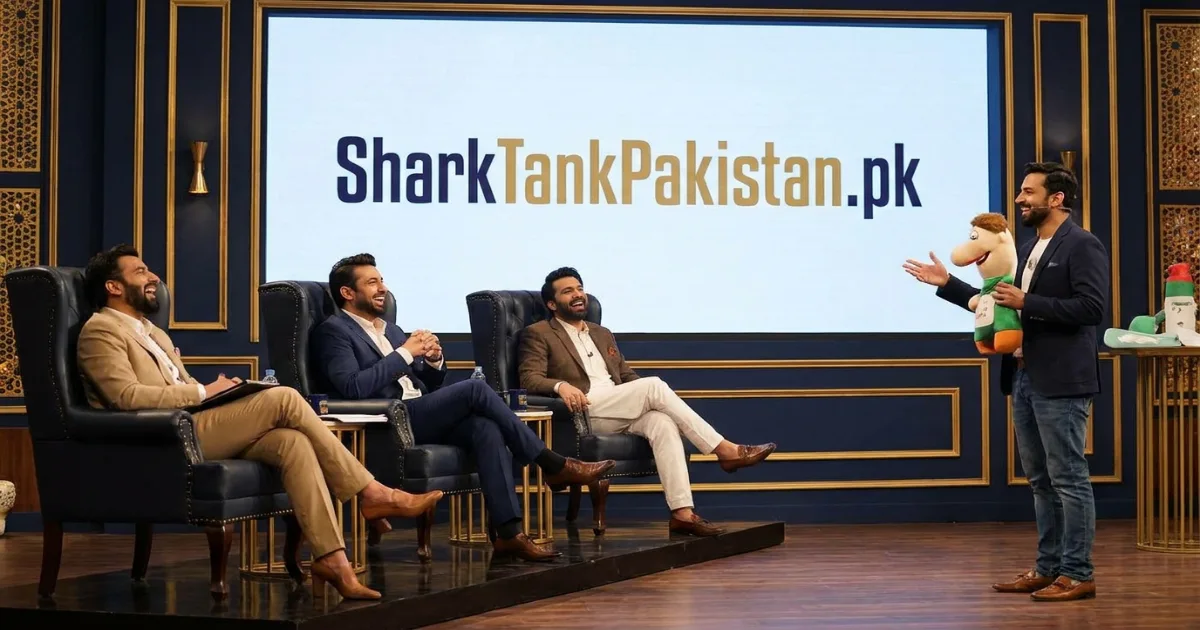
The Countdown: 10 Unforgettable Funny Shark Tank Pakistan Moments
#10 – The “Uncle, Aap Ne Tou Valuation Hee Ulti Kar Di” Valuation Fiasco
A young tech founder from Lahore walked in with an app that helped people locate the nearest public washroom. It was quirky but not outrageous—until he announced his pre-revenue company’s valuation: Rs. 80 crore. A stunned silence fell over the tank. Then one shark leaned forward, squinted, and said in thick Lahori Punjabi, “Uncle, aap ne tou valuation hee ulti kar di—yeh tou public washroom hai, airport nahi.” The entire set erupted. The founder’s poker face cracked. Even the camera crew audibly snickered.
Lesson for founders: Overvaluation is the fastest way to turn your pitch into a comedy sketch. When you throw out a number with no revenue anchor, you’re not projecting confidence—you’re inviting ridicule. Use the SharkTankPakistan.pk Valuation Calculator to ground your ask in reality before stepping into any investor meeting.
#9 – The Live Food Sampling That Backfired Spectacularly
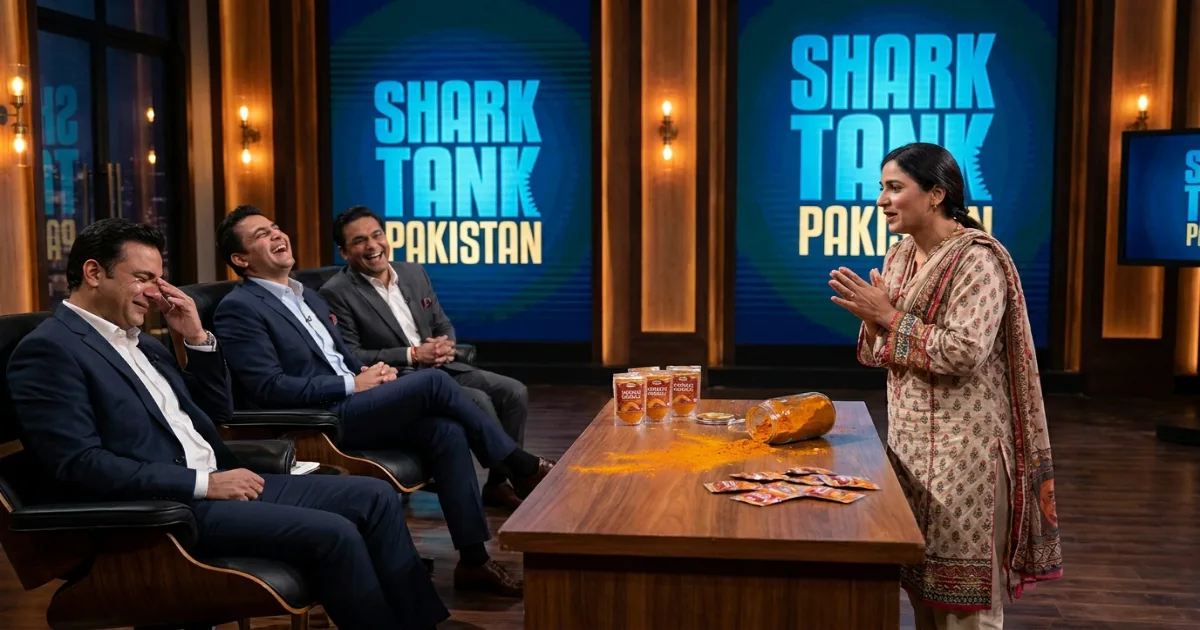
A spice-mix startup from Karachi insisted the sharks taste a new “atomic-level hot” chili blend straight from the packet. Two sharks politely declined. The third, known for his bravado, scooped a generous pinch and declared, “I’ve eaten mirchi all my life.” Five seconds later, he was gasping, eyes watering, reaching blindly for water. The pitcher panicked and knocked over the entire display. The resulting chaos—a red-faced shark, a shattered spice jar, and a founder apologizing profusely—looked less like a funding pitch and more like a lost episode of a prank show.
Lesson for founders: Live demos are high-risk, high-reward. If you’re going to do one, anticipate the worst-case scenario. The sharks didn’t remember the spice’s flavor; they remembered the disaster. Your product must shine under pressure—or you’ll be the punchline.
#8 – The Shark Who Accidentally Became a Brand Ambassador in Punjabi
A fabric softener entrepreneur was explaining how his product made clothes “so soft, a baby could sleep on them.” To illustrate, he tossed a sample blanket to the sharks. One shark, catching it, rubbed it against his cheek and murmured—not realizing his mic was hot—“Wah, sach mein makhhan jaisa hai yaar.” The phrase, caught on broadcast, became the unofficial slogan of the brand. The shark later invested, joking that he’d already done the voiceover work for free.
Lesson for founders: When a shark gives you an unscripted endorsement, don’t interrupt. Let the moment breathe. Authentic reactions are marketing gold—you can’t buy the kind of credibility that comes from a shark genuinely forgetting they’re on camera.
#7 – “Sir, Aap Ka Product Hai Ya Shaadi Ka Invitation?”
A stationery startup pitched custom wedding-card designs that incorporated augmented reality. The AR demo failed. Repeatedly. As the founder fumbled with her tablet, the sharks waited. Finally, one deadpanned, “Sir, aap ka product hai ya shaadi ka invitation? Kyunke abhi tak tou sirf rukawatain hain.” Even the founder laughed—and then, miraculously, the AR sprang to life. The delayed punchline saved the pitch, and she walked out with a deal.
Lesson for founders: Technical glitches happen. How you handle them defines your pitch. She didn’t panic; she acknowledged the irony, kept her composure, and let the moment become relatable. Investors want to back founders who don’t crumble when the first thing goes wrong.
#6 – The Awkward English-Urdu Cocktail That Confused Everyone
A pitch for an organic skincare line turned into a linguistic comedy when the founder, determined to sound “global,” kept switching mid-sentence between Urdu and heavily accented English, inventing phrases like “face-ki-wrinklation” and “glowification process.” The sharks exchanged bewildered glances until one asked, genuinely puzzled, “Bhai, aap ‘moisturization’ ko Urdu mein kya kehte hain?” The founder paused, then admitted, “Pata nahi.” The honesty broke the tension and got a laugh—and surprisingly, a small investment.
Lesson for founders: Use the language you’re comfortable with. A forced accent or mangled terminology doesn’t make you sound sophisticated—it makes you sound rehearsed and disconnected. The sharks rewarded authenticity over polish.
#5 – The Valuation “Negotiation” That Lasted Four Seconds
A pickup-and-drop laundry service founder asked for Rs. 1 crore for 5% equity. A shark immediately countered: “Main aapko 1 crore doonga—2% par.” The founder blinked. “Ji?” The shark repeated the offer. The founder, without missing a beat, said “Theek hai” and extended his hand. The room went silent. The other sharks burst out laughing. “Bhai, negotiation tou kar lo!” one pleaded. The deal closed at 2%—and the founder’s lightning-fast acceptance became one of the most replayed clips of the season.
Lesson for founders: Sometimes speed is a strategy. He knew his walk-away number and recognized a strong offer instantly. But for most founders, hasty acceptance leaves equity on the table. Understand your funding structure before you ever enter the tank.

#4 – The Entrepreneur Who Brought a Live Goat to the Tank
A halal meat delivery startup decided that the best way to illustrate their farm-to-table freshness was to bring a baby goat onto the set. The goat, unimpressed by the studio lights, promptly started nibbling on the edge of the sharks’ desk. One shark, a known animal lover, was delighted. Another, notably less enthused, muttered, “Yeh pitch hai ya Eid-ul-Azha ki rehearsal?” The goat then bleated directly into the founder’s microphone, drowning out his carefully prepared financial projections. He got a deal anyway—the shark who loved animals invested on the spot, calling it “the most honest pitch I’ve ever seen.”
Lesson for founders: Stunts can work, but only if they align with your brand’s core truth. The goat wasn’t random; it was the product. The authenticity cut through the noise—literally.
#3 – The Shark Who Tried to Pitch to the Entrepreneur
A footwear brand from Peshawar entered seeking Rs. 50 lakhs. Halfway through the founder’s presentation, one shark interrupted: “Ruko, ruko. Aap ne yeh sandal ka design khud banaya hai? Mujhe apni factory ke liye aise hi designer chahiye. Aap mere liye kaam karein ge?” The founder, momentarily confused, pointed out that he was there for investment, not a job offer. The tank dissolved into laughter as the shark tried to backtrack, realizing he’d flipped the entire premise of the show. The moment was so endearing that another shark offered to invest just to keep the founder independent.
Lesson for founders: If a shark tries to hire you instead of fund you, you’ve demonstrated exceptional skill. Recognize that as a massive compliment—but hold your ground on why your business deserves investment, not acquisition of your talent.
#2 – The Inadvertent “Royalty” Demand That Floored Everyone
A handmade soap entrepreneur, pitching with charming nervousness, asked for Rs. 30 lakhs. A shark offered Rs. 30 lakhs for 20% equity plus a royalty of Rs. 5 per soap sold until the investment was recouped. The founder listened, nodded, and then said earnestly, “Matlab aap soap bechne ka commission bhi lein ge, aur company ka hissa bhi? Yeh tou dukaan ki partnership jaisi baat hai.” The shark, slightly taken aback, chuckled and revised the terms on the spot. The founder’s innocent comparison to a corner-shop partnership defused the tension and actually improved his deal.
Lesson for founders: Sometimes, stating the obvious with naive clarity is the sharpest negotiation tool. He didn’t argue with jargon; he translated the offer into a simple, relatable analogy that made the royalty seem excessive.
#1 – The Pitch Where the Founder Forgot His Own Company Name
And the funniest moment of Season 1 belongs to a software founder from Islamabad who was so visibly nervous that when a shark asked, “Aap ki company ka naam kya hai?”, he froze. A full seven seconds passed. He glanced at his co-founder, who was equally blank. The silence stretched until the founder blurted out, “Main tou itna excited hoon ke apna naam bhi bhool gaya hoon—company ka tou baad ki baat hai.” The sharks roared. One wiped away tears of laughter.
Eventually he remembered—but the sheer humanity of the moment made it unforgettable. And yes, he got a deal, because the sharks said, “Jo banda itni honesty se apni galti maan sakta hai, woh business bhi sambhal lega.”
Lesson for founders: Nerves are universal. The difference between disaster and connection is how you recover. He didn’t pretend; he owned the moment with self-deprecating humor, and that vulnerability built more rapport than a flawless slide deck ever could.

How Shark Tank Pakistan Humor Differs from the US Version
The funny Shark Tank Pakistan moments carry a distinctly local flavour. They’re not just translated versions of American jokes—they’re rooted in Pakistani cultural nuance, language play, and the informal warmth that characterizes business relationships here.
| Element | Shark Tank Pakistan Humor | Shark Tank US Humor |
|---|---|---|
| Primary Language | Urdu, Punjabi, English code-switching; puns often bilingual | English; sarcasm and dry wit dominate |
| Cultural References | Joint family dynamics, shaadi logistics, desi food, cricket analogies | Pop culture, tech startups, garage-to-riches mythology |
| Shark Dynamics | Elder-younger banter, “uncle” teasing, affectionate ribbing | Competitive one-upmanship, rapid-fire insults |
| Founder-Shark Rapport | Informal, often familial; founders push back respectfully with humor | Formal pitch structure; humor usually shark-initiated |
| Physical Comedy | Live demos gone wrong, animals in the tank, food sampling chaos | Product demos, occasional prop humor, shark interactions with gadgets |
When Should You Use Humor in Your Own Pitch? (And When to Stay Serious)
Not every founder can pull off a goat-in-the-tank moment—nor should they try. Here’s how the comedic playbook shifts based on who you are and what you’re pitching.
If You’re a Naturally Funny Founder
Your humor is an asset, but it must serve the pitch, not distract from it. Use a light, self-aware joke to break the ice in the first 30 seconds, then pivot to substance. The sharks laugh with founders who are witty about their own struggles, not those who turn the entire presentation into a stand-up routine. Keep the balance at 90% business, 10% personality—and never crack jokes at the expense of your numbers.
If Humor Doesn’t Come Naturally to You
Do not, under any circumstances, try to force a scripted joke. The sharks can smell a rehearsed one-liner from across the room, and it’ll land with the thud of a dropped samosa. Instead, lean into authenticity. If you’re serious by nature, be serious—but warm. Smile when appropriate. Acknowledge the tension. Sometimes the funniest moments happen when a founder simply admits, “I’m terrified right now,” because it’s genuine and disarming. That’s its own kind of funny.
If Your Product Is Inherently Lighthearted
A board game, a dessert brand, a wedding planning service—these invite playfulness. The sharks expect it. Lean in with a fun demo or a clever prop, but keep it tight. Every second of “entertainment” must circle back to the business case. If you’re spending five minutes on a skit and thirty seconds on margins, you’ve lost the plot.
Common Mistakes That Turn a Pitch From Funny to Forgettable
For every viral funny Shark Tank Pakistan moment, there are a dozen unseen pitches where attempted humor crashed and burned. Here’s what to avoid.
- Mistake 1: Punching down or mocking competitors. Jokes at someone else’s expense—especially a competing local business—come across as petty. The sharks want confidence, not condescension.
- Mistake 2: Over-relying on a gimmick. If your entire pitch hinges on a costume, a viral dance, or a celebrity impersonation, you’re signaling that the business itself isn’t interesting enough. The sharks remember the stunt, not the startup.
- Mistake 3: Ignoring cultural sensitivities. A joke that plays well in a Karachi drawing room might fall flat—or cause offense—on national television. Avoid religious, political, or gender-based humor. It’s not worth the risk.
- Mistake 4: Not knowing when to stop. The best comic timing in the tank comes from founders who land one good laugh and then immediately redirect to business. Dragging the moment kills momentum.
What These Moments Tell Us About Pakistani Startup Culture
Behind the laughter, these moments reveal something important: Pakistan’s startup ecosystem is shedding its formality. The old model of stiff, suit-and-tie business pitches is giving way to something more human. Sharks and founders are negotiating in Urdu, cracking jokes about joint family pressures, and bonding over shared cultural touchstones. This isn’t unprofessional—it’s evolution. It means investors are backing people, not just slide decks. And the funny Shark Tank Pakistan moments that stick with us are often the ones where that humanity shines brightest.
For anyone applying to the next season, the lesson is clear: you don’t need to be a comedian. You need to be comfortable enough in your own skin that the real you—nervous, witty, passionate, whatever—comes through. The sharks will respond to that authenticity, whether it makes them laugh, cry, or reach for their checkbooks.
Frequently Asked Questions About Funny Shark Tank Pakistan Moments
Which Shark Tank Pakistan moment was the funniest of Season 1?
The moment a founder completely forgot his own company name out of nervousness topped our list. His honest, self-deprecating recovery—admitting he was so excited he forgot even his own name—had the sharks in tears and became an iconic reminder that vulnerability can win over investors.
Did any of the funny pitches actually get a deal?
Yes, several did. The founder who forgot his company name, the woman whose AR demo initially failed, and even the entrepreneur who brought a live goat all secured investment. The common thread was authenticity and the ability to recover gracefully from an awkward moment.
Is it a good idea to use humor in my Shark Tank Pakistan pitch?
It depends on your personality and product. If humor is natural to you, a light, well-timed joke can break the ice. If you force it, it backfires. The sharks value authenticity above performance—being genuinely likeable matters far more than being artificially funny.
How does Shark Tank Pakistan humor compare to Shark Tank India or US?
Shark Tank Pakistan’s humor is deeply rooted in local language, joint family jokes, and desi cultural references. It tends to be warmer and more familial than the rapid-fire sarcasm of Shark Tank US or the sometimes dramatic flair of Shark Tank India.
What was the most awkward funny moment of the season?
The four-second negotiation where a founder immediately accepted an offer without any counter sparked both laughter and disbelief. The sharks begged him to negotiate, but the deal was already done—a masterclass in knowing your bottom line, albeit an unintentionally hilarious one.
Can watching funny Shark Tank Pakistan moments help me prepare my own pitch?
Absolutely. Each funny moment contains a hidden lesson—about overvaluation, demo preparation, cultural awareness, and handling nerves. Studying what made sharks laugh (and why) gives you insight into their personalities and expectations, which is invaluable for pitch strategy.
Where can I watch full episodes of Shark Tank Pakistan Season 1?
Full episodes are typically available on the official Shark Tank Pakistan broadcasting channel’s YouTube and streaming platforms. For detailed pitch breakdowns, recaps, and founder updates, visit SharkTankPakistan.pk regularly.
⚡ Your Cheat Sheet: 3 Pitch Lessons Hidden Inside the Season’s Biggest Laughs
- Authenticity beats polish every single time. The founders who won deals after hilarious blunders did so because they stayed real—not because they delivered a flawless performance. Let your personality, nerves and all, be part of your pitch.
- Cultural fluency is a superpower. The sharks connect with founders who speak their language—literally and figuratively. A well-timed Urdu proverb or a relatable desi analogy can build rapport faster than any corporate jargon.
- Preparation includes planning for disaster. The spiciest funny moments were unplanned. Have a backup plan for your demo. Know your numbers so well that even if your brain freezes, muscle memory kicks in. And if all else fails, laugh at yourself before anyone else can—it’s the most disarming move in the book.