
Angel Investors in Pakistan: Where to Find Them and How to Pitch
💡 The Short Answer: Finding angel investors in Pakistan is less about cold emails and more about deliberate ecosystem presence. The most reliable path runs through formal angel networks like Lahore Angels Network and Karachi Angels, pitch competitions that investors actively scout, and — critically — warm introductions from founders who have already raised. The pitch itself must lead with traction, not ideas. Pakistani angels write checks between 2 million and 15 million PKR, and they are looking for founders who have already de-risked the business with their own effort. Show revenue, show customers, show momentum — then ask for the money.
There is a specific moment every Pakistani founder hits. The product is working. Early customers are paying. The numbers are small but the direction is clear — and growth requires capital that your savings, your family, and your credit card limit simply cannot stretch to cover. That moment is when you need angel investors in Pakistan. Not venture capital — you are too early for that. Not a bank loan — you do not have the collateral and the interest payments would crush a young business. Angel investment: smart, high-net-worth individuals who write personal checks into early-stage companies in exchange for equity.
The problem is that most Pakistani founders approach the search for angel investors exactly backward. They treat it like a job application — spray-and-pray emails, generic pitch decks, desperate LinkedIn messages. Then they wonder why nobody replies. The reality of the Pakistani angel ecosystem is smaller, more relationship-driven, and far more pattern-sensitive than most founders assume. This guide is built to show you how it actually works — where the angels are, how they think, what makes them say yes, and what makes them go silent.
The Reality of Angel Investing in Pakistan Right Now
Let us be honest about the landscape before we talk strategy. Pakistan does not have a Silicon Valley-scale angel ecosystem. The total number of active angel investors writing regular checks is concentrated — perhaps 80 to 120 genuinely active individuals across Lahore, Karachi, and Islamabad, with a smaller pool in emerging hubs like Faisalabad, Sialkot, and Peshawar. This is not a weakness. It means the angels who are active tend to be experienced businesspeople who have built and sold their own companies. They understand manufacturing, supply chains, retail, logistics, and the grinding realities of Pakistani commerce because they lived it.
What this also means: the ecosystem is small enough that your reputation precedes you. Angel investors in Pakistan talk to each other. A founder who behaves badly — inflates numbers, ghosts meetings, badmouths previous investors — becomes known faster than you would believe. Conversely, a founder who executes quietly, treats early backers with respect, and communicates transparently builds a reputation that opens doors without asking.
The average angel check in Pakistan ranges from 2 million to 15 million PKR, though syndicates — groups of angels pooling capital — can push that to 25 million or more for the right deal. Equity expectations cluster between 8% and 20%, depending on traction, defensibility, and how badly the investor wants in. Valuations for angel-stage Pakistani startups are rarely formula-driven. They are negotiation outcomes shaped by comparable deals in the network and the founder’s ability to create competitive tension.
Where to Actually Find Angel Investors in Pakistan
There are four genuine channels. Three work. One rarely does — and I will name it so you stop wasting time on it.
1. Formal Angel Networks
The most structured path. Lahore Angels Network and Karachi Angels are the two most established groups in the country. Both operate on a membership model — accredited investors pool deal flow, evaluate startups together, and invest individually or as syndicates. Applying to present at their pitch sessions is relatively straightforward. Visit their websites, follow their application instructions meticulously, and submit a concise deck. Do not send a 40-slide monstrosity. Ten to twelve slides maximum, with the first three answering: what you do, why customers pay you, and what traction you have.
Beyond the big two, sector-specific networks are emerging — agri-tech angels, fintech-focused groups, and diaspora-led syndicates that invest into Pakistani startups from the UAE, UK, and North America. The Pakistani diaspora is an under-discussed but increasingly important angel pool. Many successful Pakistani professionals abroad want to deploy capital back home but lack the on-ground network to find deals. Platforms like PakLaunch and diaspora investment circles are bridging this gap.
2. Pitch Competitions and Startup Events
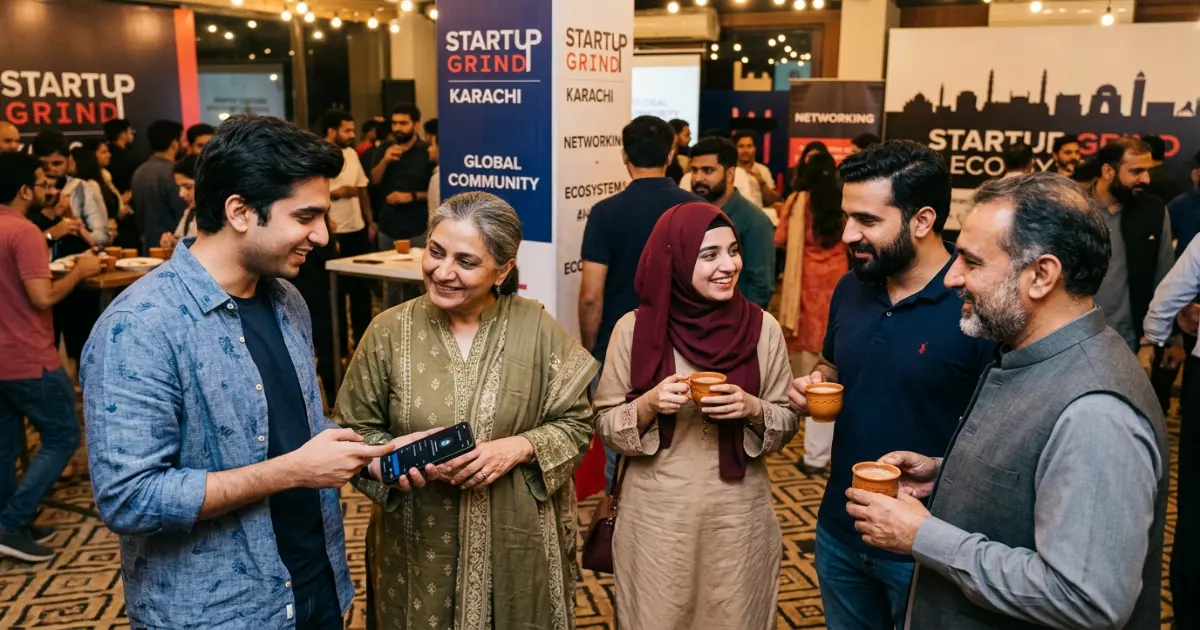
Angel investors show up to these. Not necessarily to invest on the spot — that is rare — but to scout. Competitions like Startup Grind Lahore, Techstars Startup Weekend events in Pakistani cities, National Incubation Center (NIC) demo days across Lahore, Karachi, Islamabad, Peshawar, and Quetta, and university-level entrepreneurship competitions all attract investors looking for deal flow.
The strategy here is not to win the competition. Winning is nice but irrelevant. The strategy is to deliver a pitch sharp enough that at least one investor approaches you afterward and says, “Let us schedule a proper conversation.” That is the real win. Treat every competition appearance as a lead-generation exercise, not a trophy hunt.
3. Warm Introductions Through the Founder Ecosystem
This is — by a significant margin — the channel that produces the most closed deals. Pakistani angels trust referrals from founders they have already backed. If you know a founder who has raised angel funding, ask for an introduction. Not a pitch. An introduction. The distinction matters. A warm intro that says “You should meet Fatima — she is building something interesting in logistics tech, and I think you would find the space worth understanding” opens a conversation. An intro that says “Please invest in my friend’s startup” closes one.
Build relationships with funded founders before you need an intro. Show up at their events. Comment thoughtfully on their LinkedIn posts. Send a note when they hit a milestone. Do the work of being a genuine member of the ecosystem, and introductions become natural by-products — not awkward asks.
4. Cold Outreach — and Why It Almost Never Works
I am including this so you hear it clearly: cold-emailing angel investors in Pakistan has a near-zero conversion rate. The volume is low, the trust barrier is high, and most angels receive enough deal flow through their networks that they have no incentive to take meetings with strangers. The one exception: if you have a genuinely remarkable traction metric — “We grew 40% month-over-month for six months with zero spend” — a cold LinkedIn message with that specific number in the first line occasionally works. But only occasionally. Build your strategy around the first three channels.
How Angel Investors in Pakistan Think
If you understand the psychology, you will pitch differently. Pakistani angel investors are not writing checks because they want to lose money on ten bets hoping one becomes a unicorn. That is the Silicon Valley model, and it does not apply here. Most Pakistani angels are businesspeople first — they built wealth in textiles, real estate, manufacturing, or services. They understand cash flow, margins, and operational discipline. They are backing you because they believe you can build a profitable, sustainable business that generates returns — not because they think you are the next Google.
This changes everything about how you pitch. They care less about your total addressable market slide and more about your unit economics. They want to know: for every rupee you spend, how many rupees come back? How long until you are profitable? What is your plan if you never raise another round? If your answers are fuzzy on these points, you lose them — even if your vision is inspiring.
There is also a trust dimension that external guides miss. Many Pakistani angels have experience with investments that went wrong because of governance failures — founders who misused funds, inflated numbers, or simply disappeared. Your pitch must quietly address the unspoken question: Why should I trust you with my money? Transparency about past failures, clarity about how funds will be used, and a visible commitment to reporting and accountability go further than any hockey-stick projection.
Watch how the Sharks on Shark Tank Pakistan react when a founder cannot clearly articulate what the investment will be spent on. It is the fastest way to lose credibility. Saying “marketing and team expansion” is not an answer. Saying “We will deploy 40% into hiring a senior sales lead within 60 days, 30% into a targeted Instagram and WhatsApp campaign for three months, and hold 30% as working capital buffer — here is the timeline” — that is an answer. Angel investors outside the show respond exactly the same way. Specificity signals competence.
Angel Investors vs. Venture Capital vs. Shark Tank Pakistan: Which Funding Route Fits You?
| Factor | Angel Investors | Venture Capital (VC) | Shark Tank Pakistan |
|---|---|---|---|
| Check Size | 2M – 15M PKR (up to 25M via syndicates) | 30M – 200M+ PKR | Varies widely; typically 5M – 50M PKR on-screen |
| Stage | Pre-seed, seed, early revenue | Series A and beyond; proven product-market fit | Any stage with a compelling narrative and some traction |
| Equity Expected | 8% – 20% | 15% – 30% per round | Often higher; 10% – 40% depending on negotiation |
| Involvement | Light to moderate; mentorship, network access | Board seat likely; strategic oversight | High-profile mentorship; media exposure included |
| Time to Close | 4 – 12 weeks | 3 – 9 months | Weeks to months (airing timeline adds complexity) |
| Best For | Founders needing smart capital + guidance without losing control | High-growth startups ready to scale aggressively | Consumer-facing brands that benefit from national TV exposure |
| Key Trade-Off | Smaller checks; limited follow-on capacity | High dilution; pressure for rapid growth | Public scrutiny; deal renegotiation risk post-show |
Building Your Pitch for Pakistani Angel Investors
A pitch that works in London or Dubai may not land in Lahore — and the differences are worth understanding. Pakistani angels, especially those who built traditional businesses, value clarity over cleverness. They have seen too many slick presentations from founders who could not execute. Your deck should feel rigorous, not flashy.
The problem slide matters more than the solution slide. Most founders race to describe their product. Angel investors want to understand the problem first — specifically, who has this problem, how acutely they feel it, and whether they are already paying for a partial fix. If you can say, “Here are 200 people who told us this problem costs them 8,000 PKR a month, and they currently use a WhatsApp workaround that barely functions,” you have their attention.
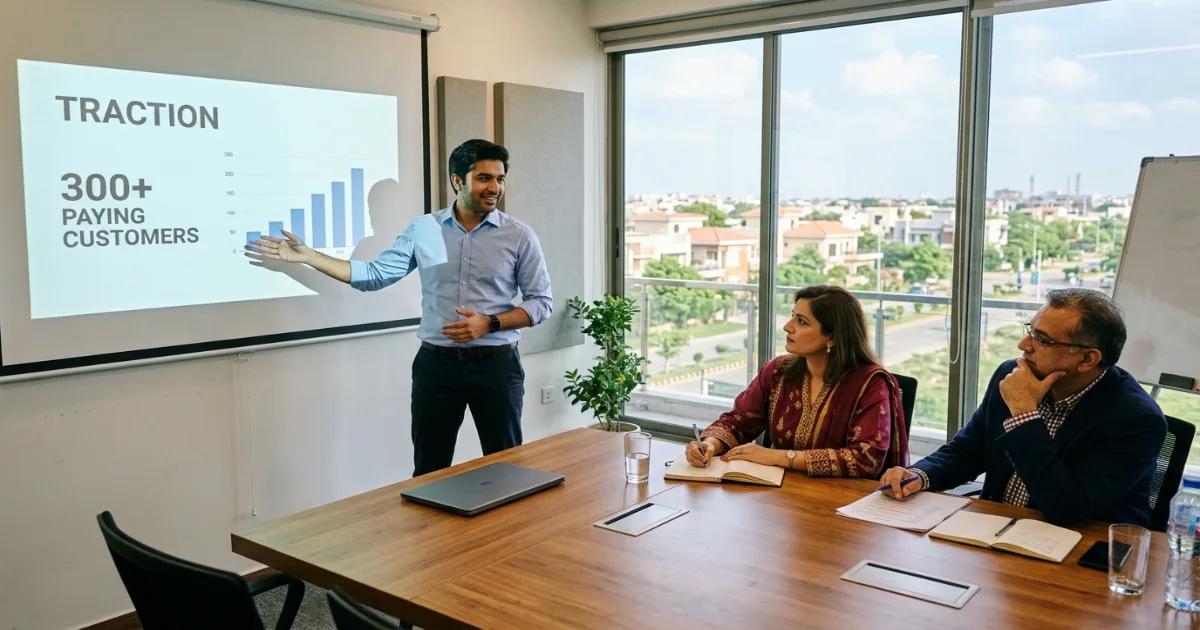
Traction trumps everything. Revenue, paying customers, repeat purchase rates, referral metrics — any signal that real humans value what you have built. Pakistani angels are pattern matchers. A founder who bootstrapped to 15 lakhs in annual revenue before asking for money communicates something profound: this person can build, sell, and survive. That founder gets funded.
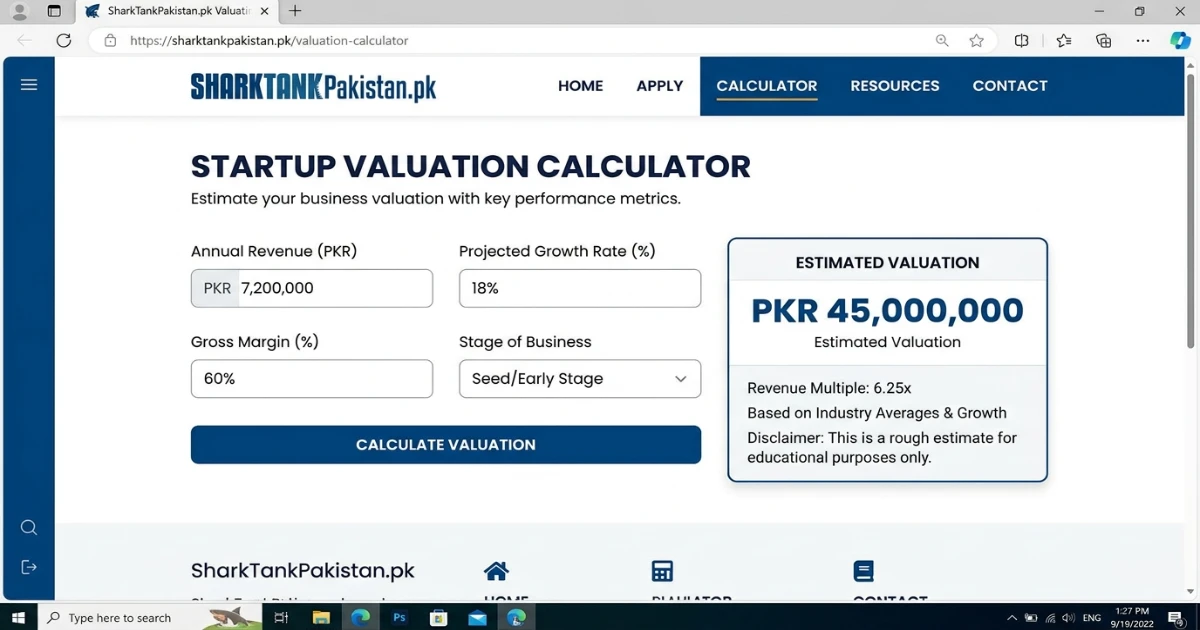
Know your numbers cold. Not approximately. Exactly. What is your gross margin? Your customer acquisition cost? Your monthly burn rate? The lifetime value of a customer? If an angel asks a financial question and you say “I will have to check and get back to you,” the meeting is effectively over. Use the SharkTankPakistan.pk Valuation Calculator before any pitch meeting so you walk in knowing what your business is worth — and can defend the number.
How the Strategy Changes Based on Your Stage
🌱 If You Are Pre-Revenue or Idea Stage
Let me be direct: raising angel investment at the idea stage in Pakistan is extremely difficult. Angels here are not in the business of funding experiments. If you have not generated revenue, you need a different currency — deep domain expertise, a founding team with a track record of building and selling a company, or a prototype with demonstrable user engagement even if it is not monetized yet.
In this position, your best move is to delay fundraising. Build something small that generates even modest revenue — 50,000 PKR a month from real customers changes the conversation entirely. It proves the market exists and that you can execute. If delaying is not an option, target angels who have direct industry experience in your space. A former textile exporter will understand a B2B fabric sourcing platform idea faster than a generalist investor ever will.
📈 If You Have Traction and Revenue
Now you are in a position of strength. Angels compete for deals with proven traction, not the other way around. Your pitch shifts from “here is what we could become” to “here is what we are already becoming — and your capital accelerates the timeline.” Frame the investment as fuel for a fire that is already lit, not as the match that will hopefully start one.
At this stage, you should also be thinking about whether to approach individual angels or pitch on Shark Tank Pakistan. The show offers something no private angel can: national visibility. But it demands a level of public scrutiny and performance that not every founder is ready for. Our guide on how to apply to Shark Tank Pakistan walks through the trade-offs in detail.

Common Mistakes That Kill Angel Investment Conversations
I have sat in on enough pitch meetings — and heard enough angel feedback — to identify the patterns that repeatedly sink deals. Here is what to avoid:
Overvaluing the business with no basis. Walking in and saying “We are worth 10 crore” when you have 15 lakhs in annual revenue and no proprietary technology is not confidence — it signals that you do not understand how valuation works. Use the Equity vs Loan Calculator to model realistic scenarios before you name a number.
Asking for too little — or too much. Asking for 5 million PKR when your burn rate suggests you need 12 million to hit your next milestone is a red flag. It tells investors you have not modeled your finances properly. Conversely, asking for 30 million at the angel stage without corresponding traction signals delusion. The ask must connect to a specific, believable milestone — “this amount gets us to X revenue in Y months.”
Hiding problems or past failures. Pakistani angels value honesty more than perfection. If a previous business failed, say so — and explain what you learned. A founder who has failed and can articulate why is more investable than one who has never been tested. Concealing information that later surfaces through back-channel references destroys trust permanently.
Not understanding the investor’s decision timeline. Angel investors have other commitments — businesses to run, families, board obligations. Pushing for an answer in 48 hours signals inexperience. A professional founder sets a reasonable timeline, provides all requested information promptly, and follows up once — not ten times.
📊 Data Point: According to deal data tracked across Pakistani angel networks in 2024–2025, founders who came to pitch meetings with a clear, pre-calculated valuation range and a specific use-of-funds breakdown closed deals at nearly 3x the rate of founders who arrived with only a vision and a vague ask. Preparation is literally the cheapest competitive advantage available to you.
How SharkTankPakistan.pk Tools Strengthen Your Angel Pitch
Before you walk into any angel meeting — or apply to Shark Tank Pakistan — you need command of three numbers: your valuation, your equity ask, and your runway projection. The tools on this site exist precisely so you do not guess.
Open the Valuation Calculator and input your actual financials. Experiment with different revenue multiples and growth assumptions. See how the number shifts. That exercise alone — spending 30 minutes stress-testing your valuation — puts you ahead of most founders who pitch with a number they pulled from a competitor’s Crunchbase profile.
Then run the Equity vs Loan Calculator. Model what giving away 10% versus 15% versus 20% equity actually costs you over a five-year horizon. Understand dilution. Angels respect founders who grasp the long-term implications of the deal they are negotiating — and they spot the ones who do not within the first five minutes.
Frequently Asked Questions About Angel Investors in Pakistan
How much equity do angel investors typically take in Pakistan?
Angel investors in Pakistan typically seek between 8% and 20% equity, depending on the startup’s stage, traction, and negotiating leverage. Early-stage, pre-revenue companies should expect to give up more — closer to 15%–20%. Founders with proven revenue and growth can often negotiate down to 10%–12%.
What is the minimum investment amount from angel investors in Pakistan?
Individual angel checks in Pakistan typically start around 2 million PKR and range up to 15 million PKR. Angel syndicates — groups pooling capital — can push investments to 25 million PKR or beyond for startups with strong traction.
Do I need a registered company to get angel investment in Pakistan?
Yes, you generally need a registered legal entity — typically a private limited company — before angel investors will write a check. Investors need a formal vehicle to hold equity. If you have not registered yet, our business registration guide walks through the process step by step.
Where can I find angel investors in Lahore?
The Lahore Angels Network is the primary formal channel in Lahore. Additionally, National Incubation Center (NIC) Lahore demo days, LUMS Center for Entrepreneurship events, and Startup Grind Lahore gatherings all attract active angel investors scouting for deals.
Can I pitch to angel investors without any revenue?
It is possible but extremely difficult in Pakistan. Most angels here prefer to see at least modest revenue or user traction before investing. Without revenue, you need compensating strengths — deep domain expertise, a founding team with exit experience, or a working prototype with demonstrable engagement.
What documents do I need to pitch angel investors in Pakistan?
At minimum: a 10–12 slide pitch deck, a financial model showing unit economics and projections, a cap table, and a clear use-of-funds statement. Having your legal registration documents, any IP filings, and a data room ready for due diligence accelerates closing.
How long does it take to close an angel investment round in Pakistan?
Expect 4 to 12 weeks from first meeting to funds in the bank. The timeline stretches if due diligence reveals issues, if legal documentation drags, or if the investor is part of a syndicate requiring consensus. Being organized and responsive shortens this considerably.
Is Shark Tank Pakistan a good alternative to finding private angel investors?
Yes — if your business benefits from mass consumer visibility and you are comfortable with public scrutiny. Shark Tank Pakistan offers national exposure that no private angel can match. However, the process is competitive, the equity expectations can be higher, and not all on-screen deals survive due diligence.
⚡ Your Fast-Track Cheat Sheet: Top 3 Actions to Take Today
- Calculate your valuation before anything else. Use the SharkTankPakistan.pk Valuation Calculator with your real numbers. A defensible valuation — even if modest — is the foundation of every credible investor conversation. If you cannot explain your number in one sentence, do not book the meeting yet.
- Build one relationship with a funded founder this month. Attend an ecosystem event, send a thoughtful message, or ask for a brief coffee. Do not ask for an introduction to their investor. Ask about their journey. The introduction will follow naturally — but only if you earn it.
- Get your traction story airtight. Revenue, customers, growth rate, repeat purchases — whatever your strongest metric is, make it the headline of your pitch. Pakistani angels invest in evidence, not ideas. If you do not have traction yet, make generating it your full-time priority before you spend another hour fundraising.