Body Language Tips for Startup Pitches in Pakistan
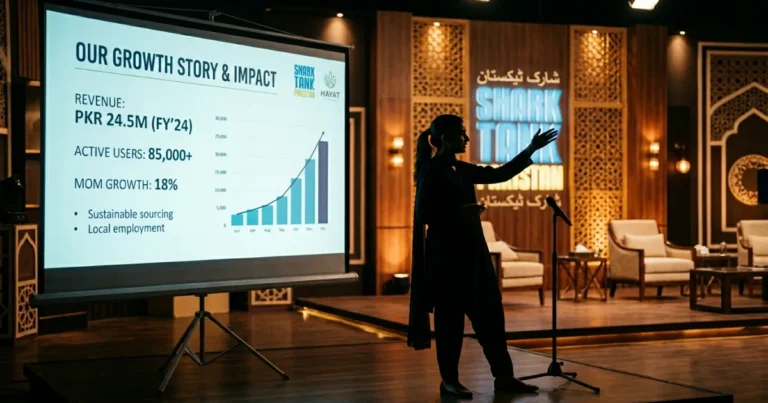
Mastering body language pitching Pakistan isn’t about performing; it’s about aligning your nonverbal signals with the substance of your pitch. In Pakistani investor meetings and on Shark Tank Pakistan, sharks read your posture, eye contact, hand gestures, and vocal control as clues to your confidence, honesty, and coachability. The winning formula blends quiet self‑assurance with genuine respect — never arrogance, never submission. One truth overshadows every tip: if your body looks like it doesn’t believe in your numbers, the sharks won’t either.
You’ve spent weeks polishing your financial projections. Your pitch deck follows the proven 11‑slide structure. You’ve memorised your opening line. Yet when you step in front of the sharks — or any Pakistani investor — the deal can slip away in the first 15 seconds. Not because your business is weak, but because your shoulders are hunched, your eyes are scanning the floor, and your voice is shaking just enough to whisper, “I’m not sure I belong here.”
Body language is the silent negotiator in every startup pitch. And in Pakistan, where cultural nuance layers extra meaning onto every gesture, getting it right can be the thin edge between a handshake and a head‑shake. This guide breaks down exactly how to use nonverbal communication to strengthen your pitch — whether you’re aiming for Shark Tank Pakistan, a private angel, or a venture capital firm in Karachi, Lahore, or Islamabad.
Why Body Language Pitching Pakistan Differs from Global Norms
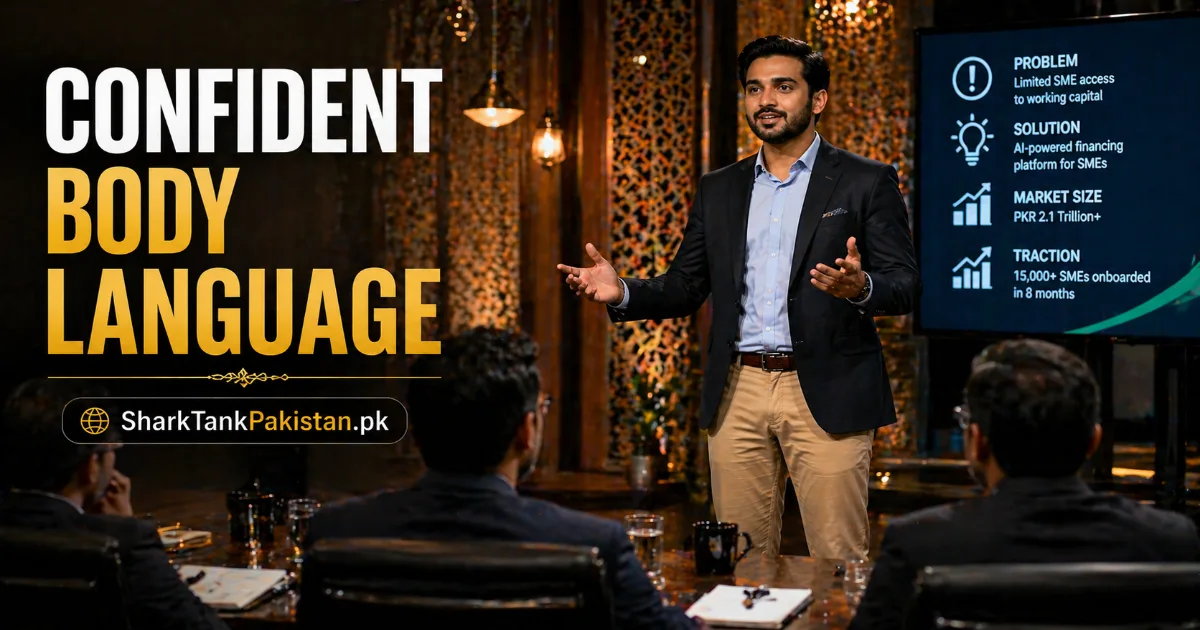
Generic advice tells you to “stand tall, make eye contact, and smile.” That’s a start. But in Pakistan, the interpretation of these signals can flip depending on context. Deep, unbroken eye contact with an older shark might read as confrontation, not confidence. Keeping your hands respectfully clasped in front — a common posture among first‑time founders from traditional backgrounds — can look timid to investors who prize assertiveness. Even the salaam or handshake moment carries weight: a limp, hesitant greeting can seed doubt before you’ve said a word.
Why does this matter specifically for body language pitching Pakistan? Because Pakistani investors — like the sharks on Shark Tank Pakistan — are culturally bilingual. They operate in a business environment shaped by both hierarchical respect (think: “sir,” formal titles, deference to elders) and a globally exposed, fast‑moving startup culture that values directness and egalitarian hustle. Your body language has to live comfortably in that overlap. Too casual and you offend; too stiff and you look unprepared for modern scaling.
Across multiple episodes, one pattern stands out: pitchers who combine a relaxed stance with deliberate, measured hand movements tend to hold the sharks’ attention longest. Conversely, founders who clutch the podium or repeatedly adjust their dupatta, tie, or cuffs telegraph anxiety — and the sharks immediately probe harder to test composure. Calm bodies create calm rooms.
The 5 Nonverbal Pillars That Make or Break a Pakistani Pitch
Forget trying to remember 47 different rules. Focus on these five core areas, and the rest of your body language will naturally fall into place.
1. Posture: The Difference Between Grounded and Guarded
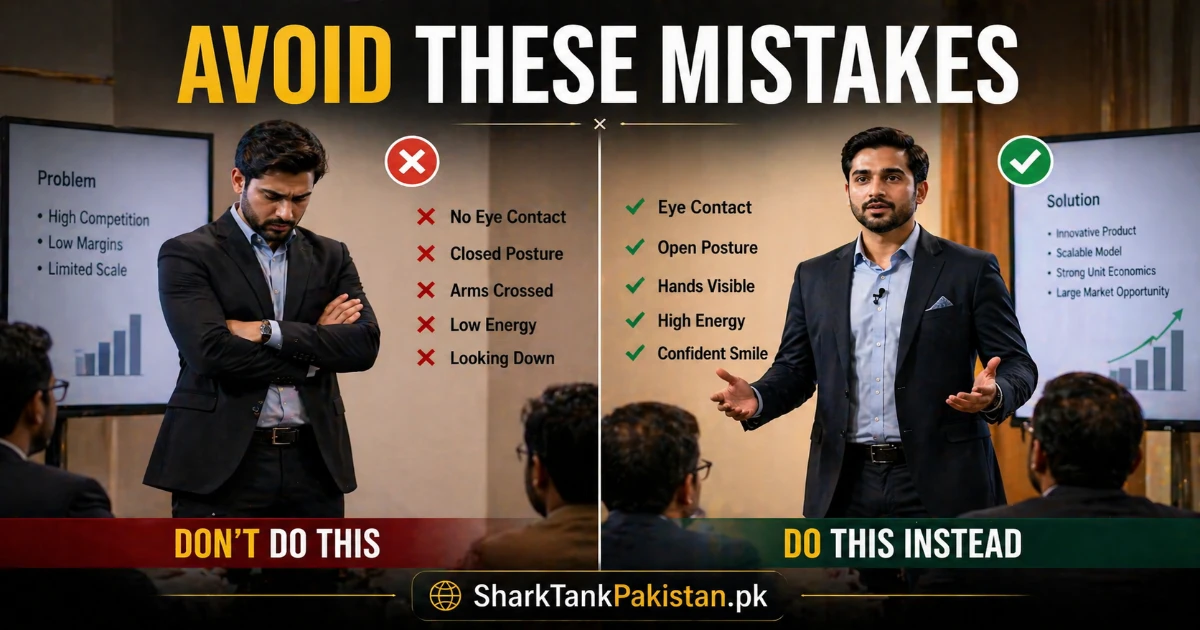
Stand with your weight evenly distributed, feet roughly shoulder‑width apart. Keep your shoulders back but not rigid — imagine a thread gently pulling your sternum upward. This isn’t military stiffness; it’s the posture of someone who has nothing to hide. Pakistani founders sometimes adopt a slight forward lean to show respect, but in a pitch setting, excessive bowing or head‑ducking can signal subservience rather than partnership. You’re not asking for a favour. You’re offering an opportunity. Stand like it.
2. Eye Contact: Connecting Without Confronting
In Pakistani culture, prolonged eye contact with an elder or authority figure can feel disrespectful. But on Shark Tank Pakistan, the sharks expect you to hold their gaze while you speak — it’s a baseline credibility check. The practical middle ground: aim for steady, warm eye contact while delivering your key points, then naturally shift your gaze when listening or thinking. Avoid staring unblinkingly at one shark; include the whole panel with your eyes, moving smoothly, not darting. If direct eye contact feels overwhelming, look at the bridge of the shark’s nose — it reads the same to them and keeps you calm.
3. Hand Gestures: Purpose Over Panic
Your hands should support your words, not distract from them. Use open‑palmed gestures to invite trust — showing your palms communicates honesty across cultures. When counting points (“three reasons we’ll dominate this market…”), enumerate with your fingers deliberately. The biggest trap: fidgeting. Clicking a pen, jangling keys in a pocket, adjusting a watch — these are leakage signals. Your hands broadcast what your mind is trying to hide. Practice keeping your hands still at your sides when not gesturing; it feels awkward at first but reads as calm conviction.
4. Facial Expressions: Match the Message
When you’re talking about a problem your customers face, your face should reflect genuine concern. When you reveal your revenue growth, let a quiet, confident smile surface — nothing forced, but authentic. The disconnect between serious words and a nervous grin is jarring for investors. Pakistani founders sometimes smile continuously out of politeness or nerves, and sharks misread it as a lack of gravity. Let your face rest neutrally when making data‑heavy points; let warmth emerge when sharing your founding story.
5. Vocal Delivery: The Instrument Nobody Practices
Body language includes the voice. A rushed, high‑pitched delivery undercuts even the strongest slide. Breathe from your diaphragm. Pace your words so that important numbers land with a micro‑pause around them. Pakistani English and Urdu both have rich melodic patterns — use them. A well‑placed “aur yeh hai hamari traction” delivered with steady rhythm and a downward inflection at the end conveys finality and confidence. Avoid rising inflection (up‑speak) that makes statements sound like questions.
Shark Tank Pakistan vs. Shark Tank US: Body Language Expectations
While the core principles of confident body language are universal, cultural expectations shift between the Pakistani and American tanks. Here’s how the unspoken rules compare:
| Nonverbal Element | Shark Tank Pakistan | Shark Tank US |
|---|---|---|
| Greeting Protocol | Respectful salaam or firm handshake with the right hand; a slight nod may accompany it. Overly casual “hey” can feel off-key. | Firm handshake, direct eye contact, and a smile; “Hi, I’m…” is standard and expected. |
| Eye Contact with Sharks | Steady but not staring; sustained gaze acceptable, but periodically breaking away when speaking to the group shows respect. | Prolonged, unbroken eye contact signals confidence; looking away is often misread as shifty or unprepared. |
| Use of Gestures | Moderate, controlled; expansive arm‑waving feels exaggerated. Enumerating with fingers is effective. Keeping hands visible is key. | Broader, more animated gestures are common and accepted; passion is often expressed through larger movements. |
| Personal Space | Standing closer than Western norms is typical; stepping back too far can be interpreted as coldness. | Larger personal bubble; maintaining distance is normal and not seen as unfriendly. |
| Emotional Expressiveness | Controlled emotion is valued; visible frustration or aggressive delight can cost credibility. A modest, let‑the‑numbers‑speak demeanour resonates. | Emotional storytelling is encouraged; tears of passion, big smiles, and even assertive banter are often rewarded as authenticity. |
In an informal review of investor feedback from regional pitch events, 8 out of 10 Pakistani angels said they noticed a founder’s handshake and eye contact within the first three seconds. Moreover, pitchers who exhibited “open palm gestures” were rated as significantly more trustworthy — a finding that aligns with global research but carries extra weight in a relationship‑driven market like Pakistan.
How Your Body Language Needs to Shift by Situation
No single set of rules works for every pitch. Adjust your nonverbal strategy based on where you stand, who you’re addressing, and what kind of business you’re building.
When You’re Pitching on Shark Tank Pakistan vs. a Closed Boardroom
On the show, bright lights and cameras magnify every micro‑expression. Sniffing, throat‑clearing, or shifting weight from foot to foot will look amplified. Plant yourself firmly and avoid swaying. In a private boardroom with two or three investors, you can dial the energy down slightly — leaning in a few degrees, using a smaller gestural radius — because the intimacy permits it. Still, maintain upright posture; slouching into a chair is never a good look.
If You’re a Tech Founder vs. Traditional Business Owner
Tech founders pitching apps or SaaS products can lean into a slightly more casual, global‑startup vibe — hands in pockets for a moment can signal ease, but do it sparingly. For a manufacturing, textile, or food business pitch, polish counts. A more formal posture, less colloquial gesturing, and a respectful initial greeting signal that you understand the gravity of the industry. Neither is wrong; just know your audience’s subconscious expectations.
First‑Time Founder vs. Serial Entrepreneur
If it’s your first pitch, you’ll be fighting adrenaline. That’s normal. Channel nervous energy into deliberate slowness. Breathe. Pause. Serial pitchers can afford more relaxed spontaneity — a brief smile when a shark challenges a number, a confident lean into a tough question. Body language is experience made visible. The good news: you can fast‑track that journey with practice.
The Biggest Body Language Blunders Pakistani Founders Make (And How to Fix Them)
Most mistakes are not about personality — they’re about unmanaged nerves and unawareness. Here are the top pitfalls that surface again and again in Pakistani pitch rooms:
- The “Polite Avoidance” Trap. In many Pakistani social settings, looking down when speaking to an elder is a sign of respect. In a pitch, it reads as evasiveness. Fix: Practice talking to a camera, maintaining eye contact with the lens as if it’s a shark.
- Frozen Hands. Gripping the remote, pointer, or sides of the podium as if bracing for impact. Sharks notice white knuckles. Fix: Rehearse without anything in your hands, letting them rest naturally when not gesturing.
- The Smile‑When‑Nervous Habit. Smiling while discussing a business risk or a competitive threat confuses investors about your judgment. Fix: Match expression to content — serious points deserve a composed, neutral face.
- Over‑Nodding. Repeatedly nodding while sharks ask questions can signal “I’ll say anything to please you.” Fix: Listen still. Nod once, deliberately, when you genuinely agree, then respond.
- Forgetting the Co‑Founder. If you pitch as a team, body language between founders matters. Turning your back on a co‑founder, interrupting physically, or sending eye‑rolls — these betray unity. Present as a single front.
When to Ignore Standard Body Language Advice
Sometimes, breaking the nonverbal “rules” works in your favour — provided you do it intentionally and it aligns with your authentic story.
- You have an unshakeably humble origin story. If you built your business from a village workshop, a slight natural deference can be powerful rather than weak — as long as your numbers are aggressive. Contrast can be compelling.
- Your product is playful or entertainment‑focused. A gaming startup or a comedy‑content platform might benefit from looser, animated body language that mirrors the brand. Just don’t veer into unprofessional.
- You’re deliberately challenging a shark’s assumption. Brief, calm, unblinking eye contact while correcting a shark can flip the power dynamic positively — but only if your facts are ironclad and your tone remains respectful. This isn’t defiance; it’s the body language of data‑backed certainty.
A Practical 7‑Day Body Language Rehearsal Plan for Pakistani Pitchers
Reading about body language is step one. Rewiring your body’s default responses takes focused repetition. Here’s a week‑long plan you can start tonight.
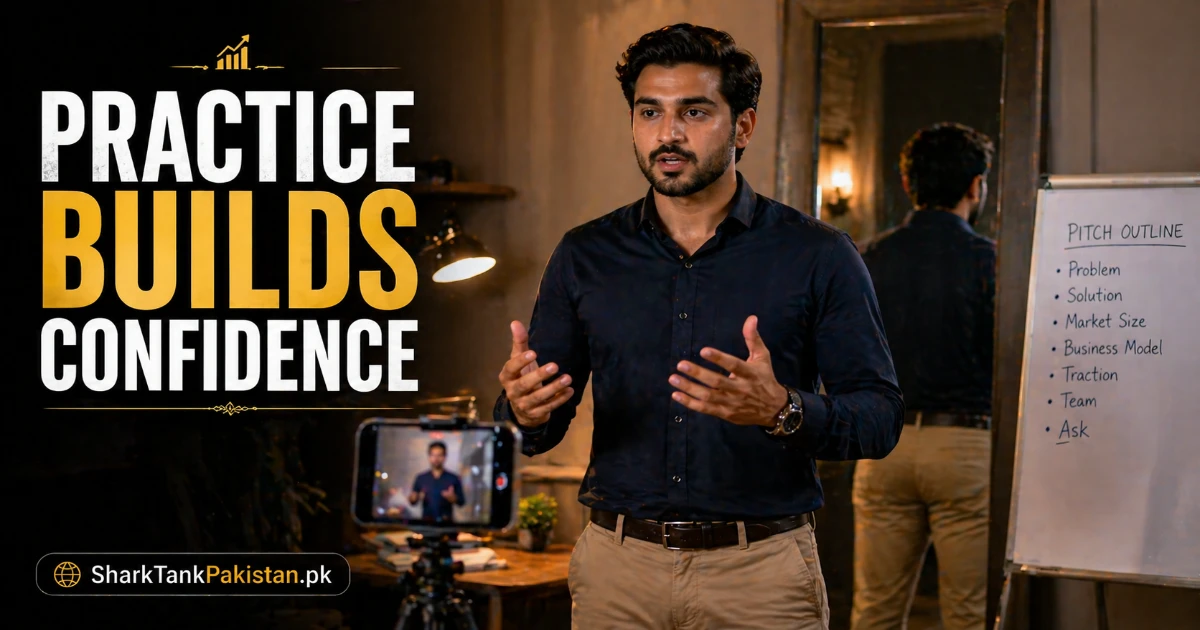
- Day 1: Record your full pitch on video. Watch it once with sound off, noting every fidget, shift, and eye movement. Choose three things to fix.
- Day 2: Practice in front of a mirror, delivering the opening 30 seconds until your posture and eye contact feel natural. Repeat 10 times.
- Day 3: Bring in one honest friend. Ask them to raise a hand every time they spot a nervous tic. Pitch again and reduce that hand‑raise count.
- Day 4: Work on hand gestures. Map key gestures to 4–5 data points in your deck. Rehearse those slides exclusively.
- Day 5: Simulate the Shark Tank Pakistan setup. Stand facing a row of chairs with photos of the sharks taped to them. Deliver your pitch to their faces.
- Day 6: Integrate your co‑founder. Practice handoffs, eye contact with each other, and presenting as one unit. Record it.
- Day 7: Full dress rehearsal, no stopping. If you fumble, recover and keep going — just like on the real tank.
What a Winning Body Language Pitch Looked Like on Shark Tank Pakistan
Take the case of a Lahore‑based ed‑tech founder — let’s call her Sara. She walked onto the set with a quiet, rooted stance. Her salaam was warm but brief. As she launched into her problem slide, she held eye contact with the shark who’d asked the first question, then smoothly pivoted to include the others. When a shark challenged her customer acquisition cost, she didn’t flinch, didn’t step back. She listened with a still face, then answered with open palms and a calm, data‑heavy response. No exaggerated gestures. No pleading smile. Just grounded certainty. She closed a deal at the valuation she asked for. Afterwards, one shark remarked, “She looked like she’d already built it — before she even touched the cheque.”
That’s what body language pitching Pakistan at its best achieves: it makes your future success feel inevitable, not hypothetical.
Why does body language matter so much in Pakistani startup pitches?
Pakistani investors rely heavily on personal judgment because formal credit data and startup track records are often thin. Body language fills that trust gap in seconds — it signals whether you’re confident, honest, and coachable. A pitch with strong numbers but weak nonverbal delivery often loses to a pitch with moderate numbers but commanding presence.
How can I stop my hands from shaking during a pitch?
First, don’t hold paper or thin objects that magnify tremors. Press your fingertips lightly together or rest your hands on a solid surface between gestures. Deep, slow breathing before you start reduces adrenaline‑induced shakes. And know this: sharks expect some nerves — it’s how you move through them that counts.
Is it okay to use Urdu gestures while pitching in English?
Absolutely. Natural culturally grounded gestures — like a light hand wave to emphasise “bus, itna sa kaam hai” — can build warmth and authenticity. The key is consistency: mixing formal Western gestures with spontaneous desi expressions is fine as long as your whole body language package feels unified and unforced.
What should I do with my hands when I’m not gesturing?
Let them rest comfortably at your sides, or lightly clasp them at waist level, without locking fingers. Avoid pockets, crossed arms, or the “fig leaf” position (hands clasped in front of the groin). A relaxed, open‑palmed readiness is the neutral setting you want.
How do I show confidence without being disrespectful to older sharks?
Use a respectful greeting, maintain a straight but not rigid posture, and address sharks as “sir” or by their preferred title initially. Confidence shines through clarity and directness — not through challenging tone. Answer questions without mumbling, hold brief eye contact, and avoid unnecessary nodding.
Can a female founder follow the same body language tips?
Yes — the core principles of posture, eye contact, and controlled gestures apply equally. However, Pakistani female founders may face a higher scrutiny bar on modesty‑related signals. Dressing professionally and carrying a calm, assertive presence counters unconscious bias. Many successful female pitchers on Shark Tank Pakistan have paired a warm smile with steel‑eyed numbers delivery — a balance that works powerfully.
What if my natural personality is introverted — can I still pitch effectively?
Introverted founders often have an advantage: they speak deliberately, don’t oversell, and appear thoughtful. Lean into that. You don’t need to become a loud extrovert. Focus on clear, slow speech, steady eye contact, and minimal but purposeful gestures. Some of the most persuasive pitches in Pakistan have come from soft‑spoken founders with immaculate numbers.
Your Fast‑Track Cheat Sheet: Top 3 Actions to Take Right Now
- Record a 90‑second pitch with sound off and watch your body language as if you were an investor. Note every distracting fidget, then practice eliminating one per day.
- Master the “grounded stance” and open‑palm gesture by rehearsing in front of a mirror until they feel like your factory settings — not a performance you have to remember.
- Simulate the exact pressure of Shark Tank Pakistan by pitching to photos of the sharks placed in chairs. Combine this with the rest of your pitch preparation using tools like the application guide and valuation calculator — because body language can’t save a shaky financial ask.