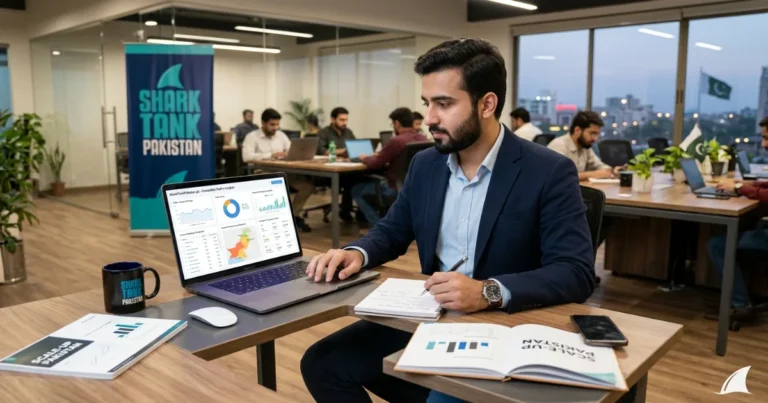
The Ultimate Guide to Opening a Café in Pakistan: Costs, Menu, Licenses
💡 The Short Answer: Opening a café in Pakistan can cost anywhere from PKR 5 lakh to PKR 50 lakh+, depending on your concept. The single most important move is aligning your budget, location, and menu to a clear target audience. With the right licenses and a compelling brand, a café can generate 25–40% net margins — and even catch a Shark’s eye on Shark Tank Pakistan.
~12 minutes
Aspiring café owners, food entrepreneurs, Shark Tank Pakistan hopefuls
Business plan, cost breakdown, license checklist, menu engineering
Moderate to high (requires hands-on operations)
Pakistan’s café culture is exploding. From Karachi’s bustling food streets to Islamabad’s chic coffee spots, young Pakistanis are spending more on café experiences than ever before. If you’ve been researching how to open a cafe in Pakistan, you’ve likely encountered everything from vague “just follow your passion” advice to outdated license lists. This guide is different. It’s built by people who understand Pakistani business realities — and how a rock-solid café concept could even land you a deal on Shark Tank Pakistan.
We’ll walk through the real costs, the menu tricks that drive profitability, and exactly which licenses you need in Lahore, Karachi, or Islamabad. No fluff. Just actionable, street-smart advice.
Why the Pakistani Café Boom Matters Right Now
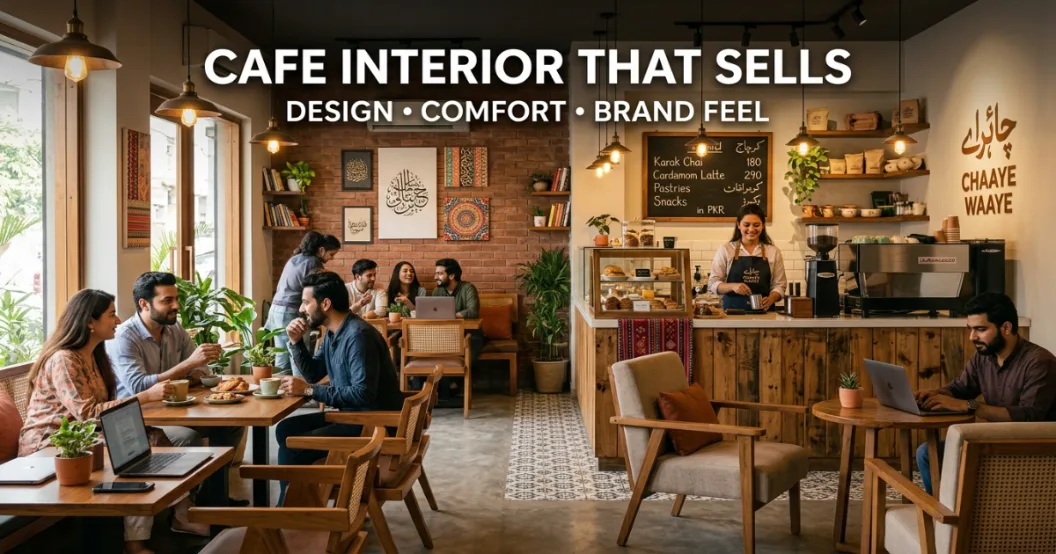
Three forces are colliding to make this the ideal time to open a café in Pakistan. First, over 60% of the population is under 30 — a demographic that craves social spaces beyond home and work. Second, remote work and freelancing have normalized “laptop-friendly” hangouts. Third, platforms like Shark Tank Pakistan are shining a spotlight on food businesses that scale. The market is no longer just about chai; it’s about specialty coffee, fusion menus, and Instagrammable interiors.
But enthusiasm without a plan is dangerous. Many first-time café owners fail within 18 months because they underestimate licensing hurdles or choose a location based on low rent instead of foot traffic analysis. This guide will help you avoid those traps.
What Kind of Café Should You Open? Picking a Scalable Concept
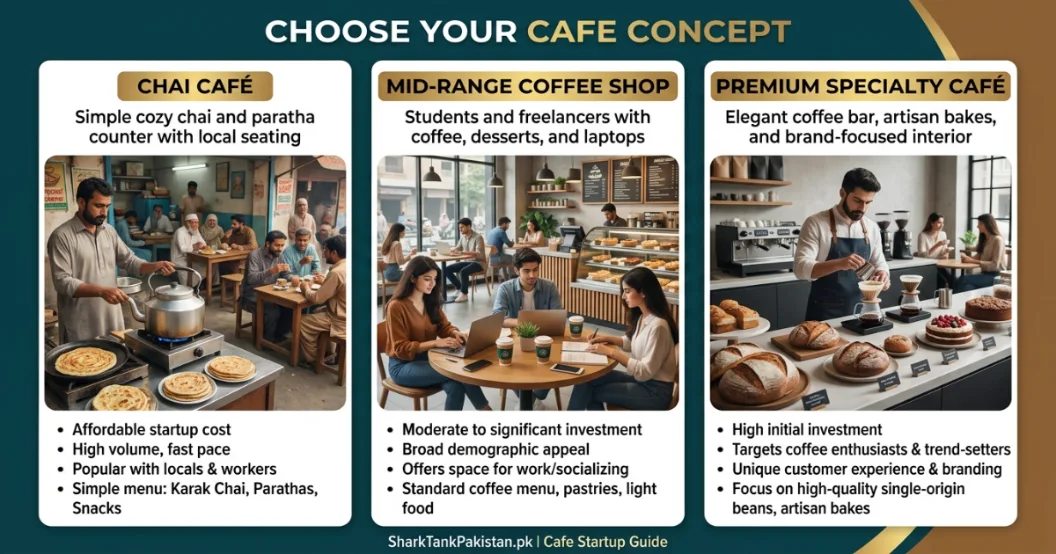
Before you worry about how to open a cafe in Pakistan, define your concept. The three most viable models right now are:
- Chai Khana / Dhaba-Style Café: Low investment (PKR 5–12 lakh), focus on chai, parathas, and quick bites. High volume, thin margins, loyal local crowd.
- Mid-Range Coffee & Hangout Spot: Investment PKR 15–35 lakh. Espresso-based drinks, sandwiches, desserts. Targets students, freelancers, and families.
- Premium Specialty Café: PKR 40 lakh to 1 crore+. Third-wave coffee, imported beans, artisan bakes, strong brand identity. Ideal for high-income areas or aspiring franchise models.
Sharks on Shark Tank Pakistan consistently ask: “Is this a lifestyle business or a scalable brand?” Your concept choice determines the answer — and whether an investor will bite.
Step-by-Step: How to Open a Café in Pakistan from Scratch
Here’s a proven roadmap that cuts through the noise. We’ve seen too many founders skip the registration step and later face fines.
1. Research and Validate Your Idea
Spend at least two weeks observing competitor cafés in your chosen area. Count foot traffic at different times, note average spending per table, and identify menu gaps. Talk to at least 10 potential customers. A business plan without validation is a recipe for disaster.
2. Secure Financing and Set a Real Budget
Whether you’re using savings, family investment, or aiming for a Shark Tank Pakistan deal, you need a line-by-line budget. We’ll break down the real numbers in the cost section below. Keep a 20% buffer for unforeseen costs — rent deposits, equipment repairs, or initial marketing.
3. Register Your Business Entity
Most small cafés start as a sole proprietorship or single-member private limited company. For a private limited company, you’ll register with SECP. A sole proprietorship only needs a bank account and NTN. But remember: a private limited structure is much more attractive to investors if you plan to pitch on Shark Tank Pakistan later.
4. Obtain All Necessary Licenses
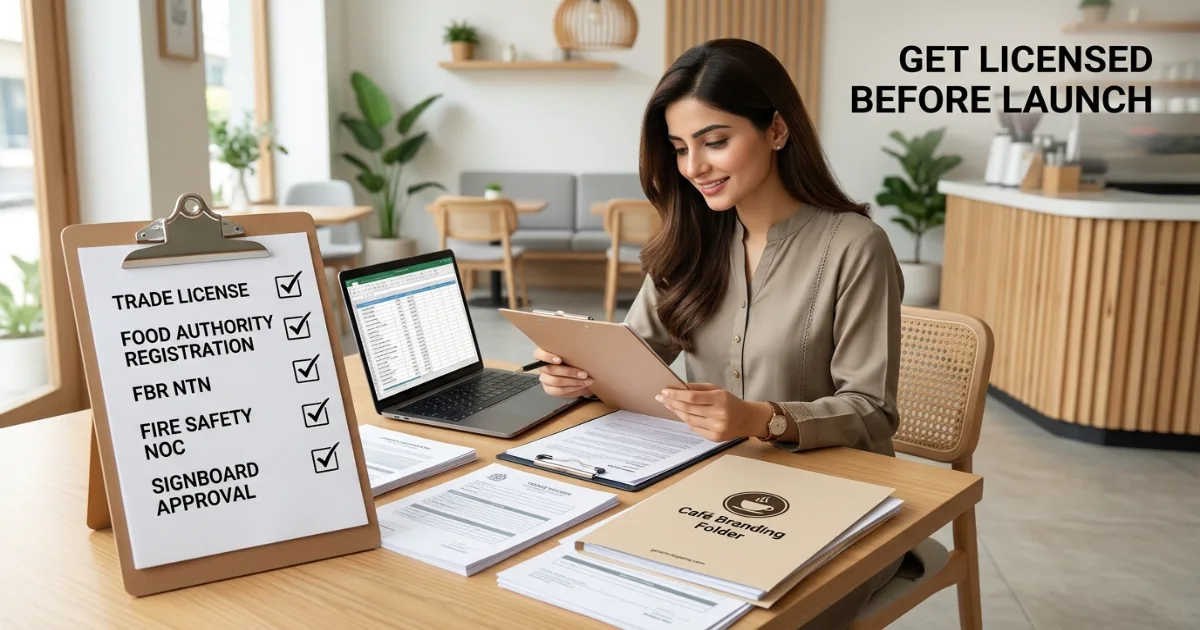
This is where many first-timers stumble. You’ll need a trade license from the local municipal authority, a food business registration from the provincial food authority (e.g., Punjab Food Authority, Sindh Food Authority), signboard approval, and possibly a fire safety certificate. Plan for 3–6 weeks to get everything processed.
5. Find the Right Location and Design the Space
Negotiate a lease with at least a three-year lock-in and a moderate escalation clause. Invest in good lighting, comfortable seating, and reliable Wi-Fi. Even a budget café can feel premium with clever décor choices. Think local art, textured walls, and warm colour palettes.
6. Build a Profit-Driven Menu and Hire Smart
Your menu is your revenue engine. Prioritise items with a food cost of 25–30% and high perceived value. Train staff to be friendly and quick — service quality is the top reason Pakistani customers return.
How Much Does It Really Cost to Open a Café in Pakistan?
Let’s talk numbers. The table below shows realistic ranges for three common café types in a mid-tier Pakistani city. Costs in Defence, Lahore or F-7, Islamabad can be 30–50% higher.
| Item | Small Chai Café (PKR) | Mid-Range Coffee Shop (PKR) | Premium Specialty Café (PKR) |
|---|---|---|---|
| Rent & Security Deposit | 1.5–3 lakh | 4–8 lakh | 10–20 lakh |
| Interior & Furniture | 1.5–3 lakh | 5–10 lakh | 12–25 lakh |
| Kitchen Equipment | 1–2 lakh | 3–6 lakh | 8–18 lakh |
| Licenses & Registration | 30,000–60,000 | 60,000–1 lakh | 1–2 lakh |
| Initial Inventory & Supplies | 50,000–1 lakh | 1.5–3 lakh | 3–6 lakh |
| Marketing & Branding | 20,000–50,000 | 1–2 lakh | 2–5 lakh |
| Total Estimated Setup | 5–12 lakh | 15–35 lakh | 40–76+ lakh |
🧠 Why This Works: These numbers are based on on-ground conversations with café owners in Lahore, Karachi, and Islamabad. Always get three quotes for renovation and equipment. The biggest hidden cost? Delays in license approvals that force you to pay rent without earning — factor in at least two months of pre-launch operating expenses.
Crafting a Menu That Sells: Local Twists and Shark Tank Thinking
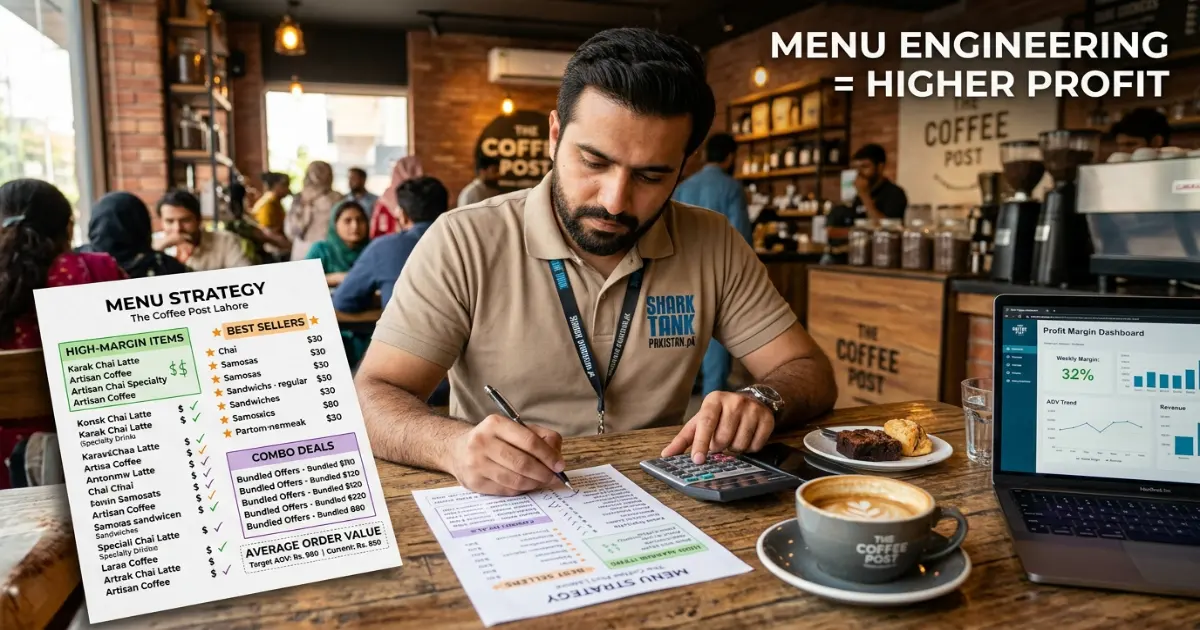
A great menu isn’t just a list of items; it’s a profit strategy. Pakistani palates love familiarity with a twist. Chai remains the anchor, but adding a saffron-infused latte or a Karachi-style bun kebab sliders can elevate your café. Focus on menu engineering: place your highest-margin items in the “golden triangle” (top right on the page). Keep descriptions short and vivid.
Food cost should stay between 25% and 35% for food, 15–20% for tea and coffee. Price your dishes so that the average per-head spend meets your target. For a mid-range café, aim for PKR 500–800 per person; premium can push PKR 1,200+.
💡 Insider Insight: What Sharks Look for in a Food & Beverage Pitch
From watching global Shark Tank formats and conversations with Pakistani judges, we know that F&B businesses must show three things: strong unit economics (profit per cup/plate), scalability (can you open 10 more without the owner being there?), and brand memorability. If your café’s menu can’t be replicated easily, Sharks will hesitate. That’s why building standard recipes and operations manuals early is a massive advantage.
Licensing and Legal Requirements: Don’t Get Shut Down
If you’re serious about learning how to open a cafe in Pakistan legally, memorize this list. Regulators are getting stricter, and operating without proper approvals can result in heavy fines or closure.
- Trade License / Shops & Establishment Registration: From local cantonment board, DHA, or municipal corporation. Renew annually.
- Food Business Registration (FBR) / Food License: Issued by the respective food authority. You’ll need a food handler’s medical certificate for staff.
- Signboard / Advertisement License: Permission for outdoor signage, often from DHA or municipal body.
- Fire Safety NOC: Required in many cities for premises with seating above a certain number.
- FBR NTN and Sales Tax Registration: Mandatory if you want to deal with corporate clients or investors — and essential if you appear on Shark Tank Pakistan.
Start the license process at least 6 weeks before your planned opening. Many cafés get delayed because they wait until the interior is done to apply.
Situation-Based Advice: Your Café Type Changes Everything
If you’re opening a small neighbourhood chai spot, your priority is building a regular clientele and keeping costs lean. Forget fancy branding agencies — use WhatsApp groups and a simple Instagram page. Your break-even might come in 6–9 months.
For a mid-range coffee shop in a commercial area, invest in loyalty programs and partner with delivery apps like Foodpanda. Focus on average order value and table turnover. Break-even usually takes 12–15 months.
If you’re launching a premium specialty café, think like a brand from day one: intellectual property, unique cup design, and a press-worthy launch. This is the model most likely to appear on Shark Tank Pakistan. Your break-even could be 18+ months, but the valuation multiple will be far higher when you pitch.
📊 Data Point: In Karachi and Lahore, a well-run mid-range café can achieve monthly net profit margins of 25–35% once it crosses the 200 daily-customer mark. Under 120 customers, you’re likely just covering costs.
Common Pitfalls & When to Ignore Standard Advice
Most café guides tell you to “always negotiate the lowest rent.” That can backfire. A cheap location with zero walk-in traffic will sink you faster than slightly higher rent in a bustling lane. Similarly, generic advice says “start small.” But if you’re aiming for a scalable premium brand, starting too small can damage your brand perception irreversibly.
Other deadly mistakes:
- Ignoring hidden utility and maintenance costs — they can eat 10% of revenue.
- Copy-pasting a foreign menu without testing local taste preferences. Pakistani customers may reject overly bitter coffee profiles.
- Underestimating the importance of social media. A café without an active Instagram presence is invisible to Gen Z.
- Not separating personal and business finances — a red flag for any investor, including Sharks.
Ignore the advice to “save money by skipping lawyer checks on lease agreements.” A badly worded lease can evict you after your renovation investment. Always consult a local property lawyer.
How SharkTankPakistan.pk Tools Can Help You Launch Your Café
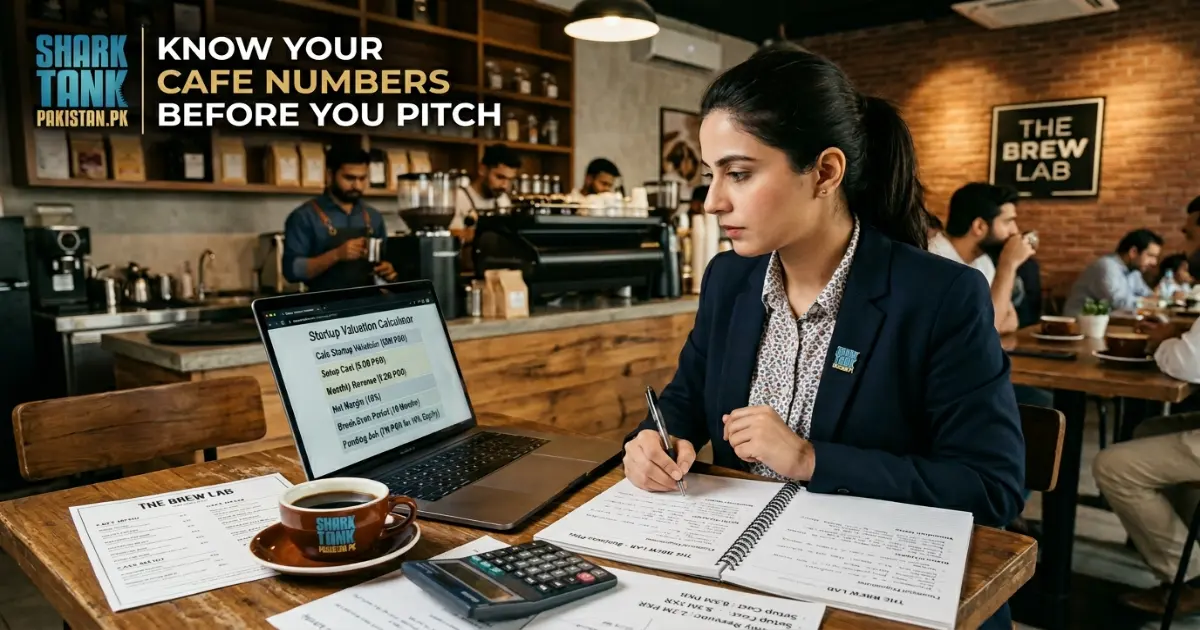
Before you spend a single rupee, run your numbers through the calculators built for Pakistani startups. Use the Startup Valuation Calculator to understand what your café could be worth after year one — this is critical if you plan to pitch on Shark Tank Pakistan. The Equity vs Loan Calculator will show you exactly how much ownership you’d give away for a Shark’s investment. Many food founders walk into the Tank unprepared and lose leverage because they haven’t done this math.
Real-World Spark: The Home Bakery That Turned Into a Café Chain
Consider the trajectory of several Pakistani success stories — like The Pantry by the Bakers or Chai Wala. They started small but had a clear vision. One common thread: they obsessed over customer experience, kept menus tight, and documented their journey online. When they scaled, investors noticed. On Shark Tank Pakistan, food businesses with strong unit economics and an emotional brand story often receive multiple offers. The lesson? Don’t just open a café; build a story people want to be part of.
FAQs
How much money do I need to open a café in Pakistan?
You can start with as little as PKR 5 lakh for a basic chai café, while a premium specialty coffee shop can require PKR 50 lakh to over 1 crore. The biggest cost drivers are location, interior, and kitchen equipment.
What licenses are required to open a cafe in Pakistan?
You typically need a trade license, food business registration from the provincial food authority, signboard approval, a fire safety NOC, and FBR tax registration. Exact requirements vary by city.
How profitable is a café business in Pakistan?
Well-run cafés can achieve net margins of 25–40% after steady state. Profitability depends on footfall, average spending, and food cost control. Most reach break-even within 12–18 months.
Can I pitch my café idea on Shark Tank Pakistan?
Absolutely. Food and beverage is a popular category. You’ll need a registered business, strong unit economics, and a scalable model. A private limited company structure is strongly recommended.
What is the best location for a café in Pakistan?
Areas near universities, corporate hubs, and upscale residential zones perform best. In Karachi, consider DHA or Clifton; in Lahore, Gulberg or DHA; in Islamabad, F-6, F-7, or I-8.
Do I need a food handler’s certificate for staff?
Yes, most provincial food authorities require at least one certified food handler. Staff medical checkups are also mandatory. This is non-negotiable for licensing.
How can I stand out when I open a cafe in Pakistan?
Focus on a unique menu item, exceptional service, and a memorable ambiance. Collaborate with local artists, offer a loyalty card, and maintain an active Instagram presence.
✅ Your Fast-Track Cheat Sheet: Top 3 Actions to Take
1. Pick your concept and validate it hard. Spend a week observing competitor cafés and talking to 15 real customers. Let data, not emotion, decide your menu and location.
2. Start license applications 6 weeks before launch. Delays here kill momentum. Use the checklist in this guide and get a local consultant if needed.
3. Model your numbers with SharkTankPakistan.pk calculators. Know your valuation and the equity you’d be comfortable giving before any investor conversation.