Shark Tank Pakistan Equity: 7 Rules for Founders
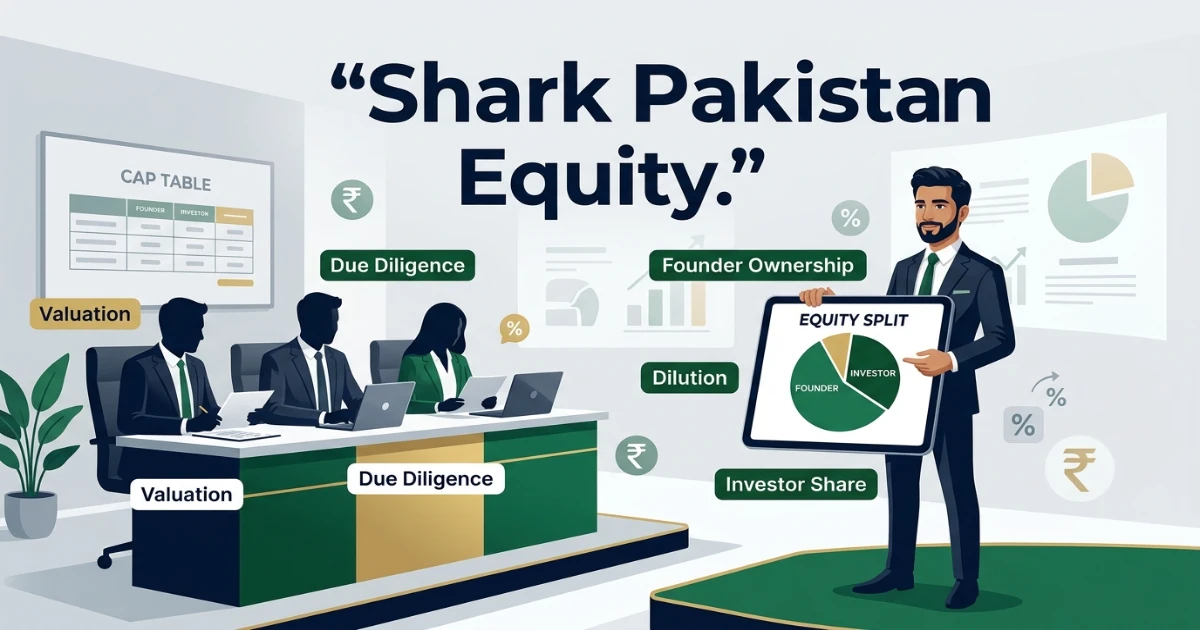
Shark Tank Pakistan equity is not only about giving up a percentage of your company. It is about valuation, investor value, dilution, due diligence and whether the shark can make your remaining ownership more valuable.
Quick Answer: Shark Tank Pakistan equity depends on the founder’s valuation, revenue, margins, stage, sector risk and the strategic value of the shark. A TV offer is not always final funding; most investment offers still go through due diligence before legal closing. Instead of relying on unverifiable “average equity” claims, founders should calculate a fair range from their own numbers and prepare for the shark to challenge inflated valuations.
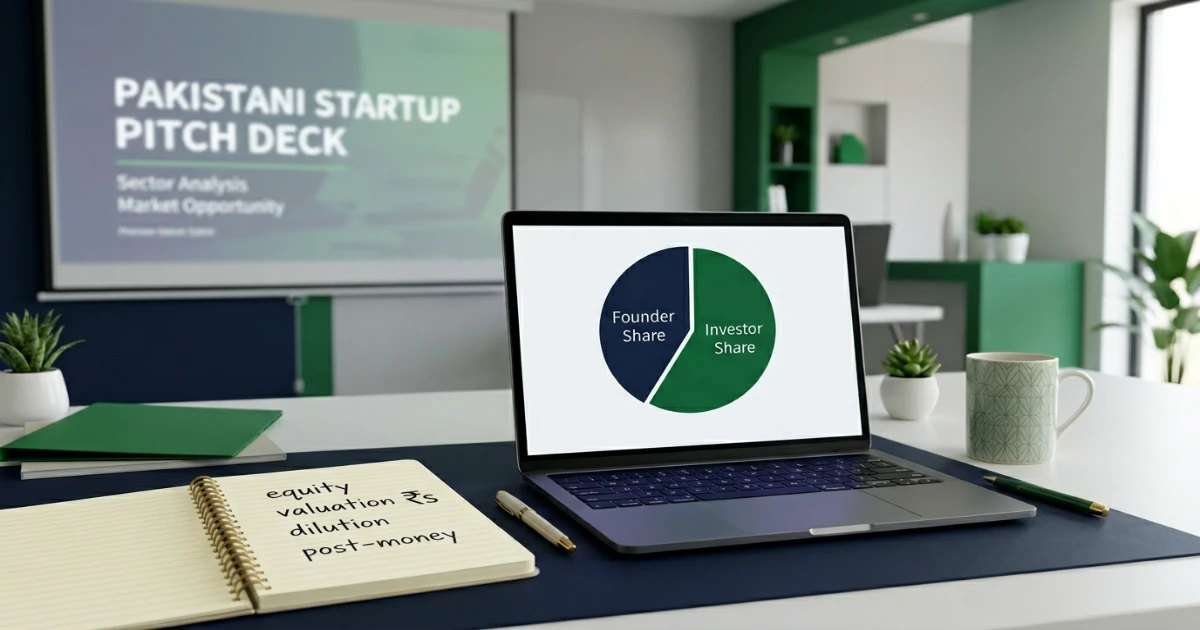
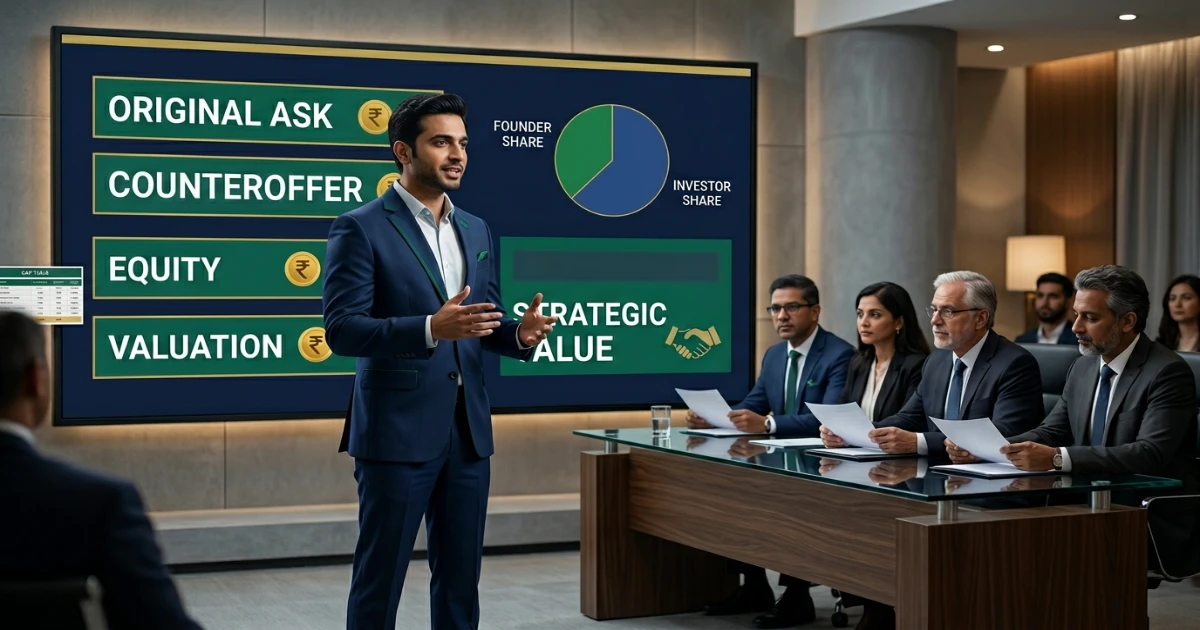
Shark Tank Pakistan equity is the ownership percentage a founder offers to a shark in exchange for funding, mentorship, distribution access or strategic support. For example, if a founder asks for PKR 10 million for 10% equity, they are implying a PKR 100 million post-money valuation. The real negotiation begins when a shark asks whether the company’s sales, margins and growth justify that valuation.
The original version of many equity guides online makes one dangerous mistake: it treats every on-air number as verified final investment data. That is risky. On-screen offers can change, pause or fail after due diligence because the final legal deal depends on documents, ownership records, financial verification and investor-founder agreement after filming. This corrected guide focuses on what founders can safely use: valuation logic, negotiation strategy, risk factors and practical equity calculation.
1. What Equity Means on Shark Tank Pakistan
Equity means ownership. When a founder gives 10% equity to a shark, the shark becomes a partial owner of the company. The founder keeps the remaining ownership, but now the investor may have rights, expectations and influence depending on the final agreement.
The simple math looks easy: investment divided by valuation equals equity. But the real decision is deeper. A shark may bring cash, but they may also bring retail access, distribution relationships, hiring support, financial discipline, export contacts, technology guidance or brand credibility. That is why a founder should not judge shark tank pakistan equity only by the percentage given up.
Founder warning
Never accept a deal because the TV moment feels exciting. First understand post-money valuation, dilution, investor rights, board control, future fundraising impact, due diligence requirements and what exactly the shark is expected to do after the show.
2. The Safer Way to Think About Equity Ranges
Instead of saying “every founder should give 15%” or “the average is exactly 18.4%,” use a range. Exact average claims are risky unless you have a verified public deal tracker and know which offers actually closed after due diligence. A safer founder benchmark is this:
| Business profile | Likely investor concern | Founder equity planning range |
|---|---|---|
| Pre-revenue idea with prototype | High execution risk, no proven demand, uncertain unit economics | Prepare for higher dilution unless IP, demand or founder-market fit is unusually strong |
| Early revenue but inconsistent sales | Can it repeat sales without founder hustle? | Offer a moderate stake and leave room for negotiation |
| Consistent revenue with healthy margins | Can it scale profitably? | Stronger negotiation position; defend valuation with numbers |
| High-growth tech or platform business | Retention, churn, regulatory risk, CAC and scalability | Can often justify a lower stake if metrics are clean |
| Traditional retail, food or manufacturing | Inventory, working capital, supply chain and expansion risk | Expect more pressure on equity unless distribution proof is strong |
This approach protects your credibility. A founder who walks in claiming a perfect valuation without data looks unprepared. A founder who says, “Here is my valuation logic, here is the range I can defend, and here is where I can move if the shark brings distribution” sounds much more investable.
3. Equity by Business Stage
If you are pre-revenue
You have the least leverage because the shark is investing in potential rather than proof. Your strongest evidence will be prototype quality, customer waitlists, pilot orders, letters of intent, founder expertise, unique IP, regulatory clarity and a believable 6–12 month execution plan.
If you have early revenue
Early sales are helpful, but sharks will ask whether the sales are repeatable. One lucky viral month does not prove valuation. Track gross margin, repeat customers, average order value, refund rate, fulfilment cost and how many sales came from paid ads versus organic demand.
If you have consistent revenue
This is where founders can defend a better valuation. Consistent revenue, clean bookkeeping, clear margins and documented demand reduce investor risk. In this case, the negotiation should focus less on “please believe in my idea” and more on “what strategic value will the shark add?”
If you are already scaling
Scaling businesses should be careful not to overpay for capital. If you already have investor interest, bank options, strong cash flow or distributor support, you may not need to give away a large equity stake. The right shark must justify their ownership through specific value, not just TV exposure.
4. Why Sector Changes Equity Pressure
A software product, a food brand and a manufacturing business should not use the same equity logic. Sharks evaluate risk differently by sector. A tech startup may scale without adding heavy inventory, while a food or retail business may need working capital, quality control, cold chain, warehousing, staff and city-by-city distribution.
| Sector type | What sharks usually test | How to defend your equity ask |
|---|---|---|
| Food and FMCG | Gross margin, shelf life, repeat purchase, packaging, distribution | Show repeat orders, retailer interest, unit economics and production capacity |
| Tech, SaaS or fintech | Retention, regulation, CAC, churn, technical defensibility | Show retention cohorts, compliance planning, product roadmap and scalable acquisition |
| Fashion or consumer products | Brand loyalty, inventory risk, margin, social proof | Show sell-through rate, repeat customers, creator traction and sourcing control |
| Manufacturing | Capex, quality consistency, working capital, export readiness | Show purchase orders, cost controls, capacity and certifications where relevant |
| Education or social impact | Unit economics, scalability, customer payment behaviour, impact proof | Show revenue model, measurable outcomes and institutional partnerships |
5. The Simple Formula Behind Equity
The basic formula is:
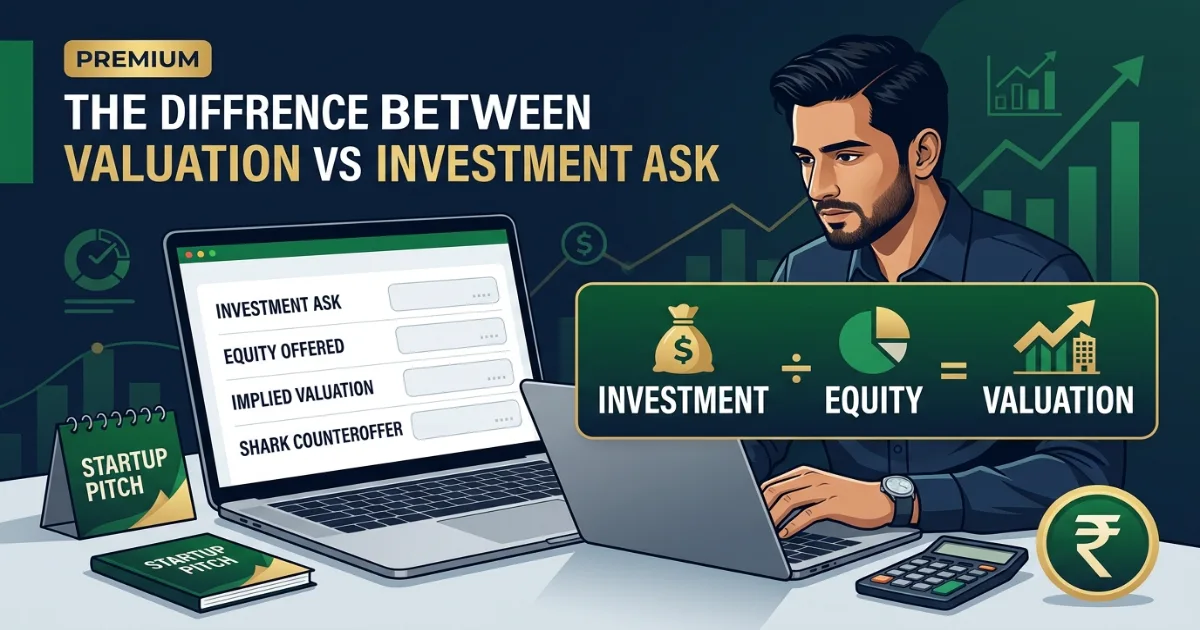
Equity percentage = Investment ask ÷ Post-money valuation × 100
Example: If you ask for PKR 10 million for 10% equity, you are implying a PKR 100 million post-money valuation. If a shark says the company is only worth PKR 50 million after investment, the same PKR 10 million cheque would require 20% equity.
This is why sharks push back on valuation. They are not only debating ego; they are debating whether their money buys enough ownership to justify the risk. Your job is to show why your valuation is not a dream number. Use revenue, margin, growth rate, market size, defensibility, team quality and the shark’s expected role.
6. Common Equity Mistakes Founders Should Avoid
Mistake 1: Opening with an unrealistic valuation
A founder who asks for too little equity against too much funding can look unprepared. It tells the sharks you may not understand valuation, risk or investor return. Open with a number you can defend, not a number you copied from another pitch.
Mistake 2: Thinking lower dilution is always better
Keeping 95% of a business that never scales may be less valuable than keeping 80% of a business that grows with the right investor. The question is not “how little equity can I give?” The question is “will this shark make my remaining stake more valuable?”
Mistake 3: Ignoring deal terms beyond equity
Equity is only one part of a deal. Founders should understand investor rights, reporting expectations, future dilution, decision control, vesting, tranches, royalties, loans, liquidation preferences and what happens if milestones are missed.
Mistake 4: Treating the handshake as guaranteed money
On-air offers may be subject to due diligence. If revenue, legal ownership, customer claims or documents do not match the pitch, terms can change or the deal can collapse. Keep documentation clean before entering any investor room.
Source and accuracy note
This guide intentionally avoids unverified claims such as exact average equity percentages, fake startup names, guaranteed deal closures or undocumented post-show revenue results. Shark Tank Pakistan is treated here as a TV investment format where panels, episode data, applications and deal outcomes can change by season; founders should verify time-sensitive details through official show, broadcaster or production channels before applying.
7. How to Use SharksTankPakistan.pk Tools Before You Pitch
Before you choose your equity ask, run the numbers. Start with the Startup Valuation Calculator guide to estimate a realistic valuation range. Then use the Equity vs Loan Calculator guide to compare dilution against debt or structured repayment.
Gather clean financials
Prepare revenue, gross margin, net margin, inventory cost, customer acquisition cost, repeat purchase rate and ownership documents.
Calculate your valuation range
Use revenue, growth, margin and risk to create a defensible range instead of one fixed dream valuation.
Decide your opening ask
Open with room to negotiate, but do not start so aggressively that the sharks stop taking the pitch seriously.
Define your walk-away point
Know the maximum equity you can give without damaging future fundraising, founder motivation or control.
Attach value to each shark
A higher equity percentage may be acceptable only if the shark brings specific support such as distribution, compliance help, hiring, exports or strategic partnerships.

Related Resources on SharksTankPakistan.pk
Frequently Asked Questions About Shark Tank Pakistan Equity
What is Shark Tank Pakistan equity?
Shark Tank Pakistan equity is the ownership percentage a founder offers to a shark in exchange for investment, mentorship or strategic support. The final percentage depends on valuation, risk, traction and investor value.
How much equity should I offer on Shark Tank Pakistan?
There is no universal number. A fair offer depends on your investment ask, valuation, sales, margins, stage and sector. Founders should calculate a range and leave room for negotiation.
Do Shark Tank Pakistan deals close immediately after the show?
No. On-air offers are usually followed by due diligence, document review and legal negotiation before funds are transferred and equity changes hands.
Is giving up 20% equity too much?
Not always. It can be too much if the investor brings only cash, but it may be reasonable if the shark brings distribution, strategic partnerships, operational support or credibility that significantly grows the company.
Should I choose equity or a loan?
Equity can suit high-growth businesses that need strategic help. Loans or revenue-based financing may be better for stable profitable businesses that can repay without giving up ownership.
What documents should I prepare before negotiating equity?
Prepare revenue records, bank statements, tax documents where available, ownership records, cap table, supplier agreements, customer proof, inventory records and any IP or regulatory documents.
Final Cheat Sheet: 3 Things to Remember
- Do not use fake averages as your strategy. Use verified numbers from your own business and treat public deal data carefully unless it is clearly sourced.
- Equity is only fair when valuation is defensible. Your revenue, margin, growth and risk must support the percentage you offer.
- The right shark can justify more dilution. A larger investor stake may be worth it when the shark directly solves distribution, operations, hiring, fundraising or market access.
Good shark tank pakistan equity planning is not about giving the least possible ownership. It is about building a deal where both founder and investor can win after the cameras stop rolling.