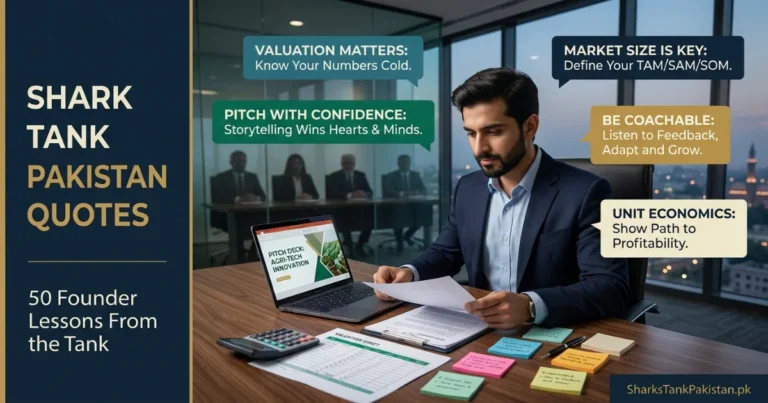
What Is Shark Tank Pakistan? 7 Things First-Time Viewers Should Know
The Short Answer: What is Shark Tank Pakistan? It is the Pakistani version of the global Shark Tank business-reality format, where entrepreneurs pitch their businesses to a panel of investors — the “sharks” — and may receive an on-air investment offer in exchange for equity or other agreed terms. The show turns startup funding, valuation and negotiation into a practical learning experience for viewers and founders.
What is Shark Tank Pakistan? It is Pakistan’s investor-pitch reality show where founders present a business, answer investor questions and may negotiate an on-air offer. You may have heard friends use terms like “equity dilution,” “valuation,” “royalty deal,” or “I’m out” after watching a pitch clip online. That is the appeal of Shark Tank Pakistan: it makes business decisions visible.
For a first-time viewer, the simplest answer to what is shark tank pakistan is this: it is a business classroom disguised as prime-time entertainment. A founder walks in with a product, a story and a funding ask, then the sharks test whether the numbers, margins, team and market opportunity are strong enough to deserve investment.
This guide will walk you through the format, the people, the stakes, and — most importantly — how to watch it as more than just entertainment. By the time you finish, you’ll understand the game and how to play it.

The Core Concept: How Shark Tank Pakistan Actually Works
At its heart, the show is simple. An entrepreneur steps onto a brightly lit set, faces the investors (the sharks), and delivers a pitch. They explain their business, share the key numbers where relevant, and then make a funding ask such as: “I am asking for PKR 50 lakh for 10% equity in my company.” What follows is a high-pressure business discussion. The sharks dig into the numbers, challenge assumptions, and either explore a deal or step away from the opportunity.
Offers are made on camera, but founders should understand an important point: an on-air handshake is usually followed by due diligence before money is finally transferred and legal documents are signed. The show covers businesses such as food brands, consumer products, technology, services, education, health, manufacturing and social-impact ideas — all judged through the realities of the Pakistani market.
Meet the Sharks: The Panel Driving the Deals
Season 1 featured a panel of Pakistani investors and business leaders including Faisal Aftab, Rabeel Warraich, Aleena Nadeem, Romanna Dada, Junaid Iqbal, Karim Teli and Usman Bashir. The strongest value of the panel is not only capital; it is market experience. Each shark brings a different lens across venture capital, consumer brands, finance, education, operations, distribution, technology or entrepreneurship.
For a first-time viewer, it helps to watch each shark’s investing style. Some focus on numbers, margins and customer acquisition. Others look for founder grit, brand potential, distribution advantage or a clear path to scale. The best founders do not only chase the biggest cheque; they try to find the shark whose network can actually solve their next bottleneck.
The Format Step by Step: From Doors to Deal
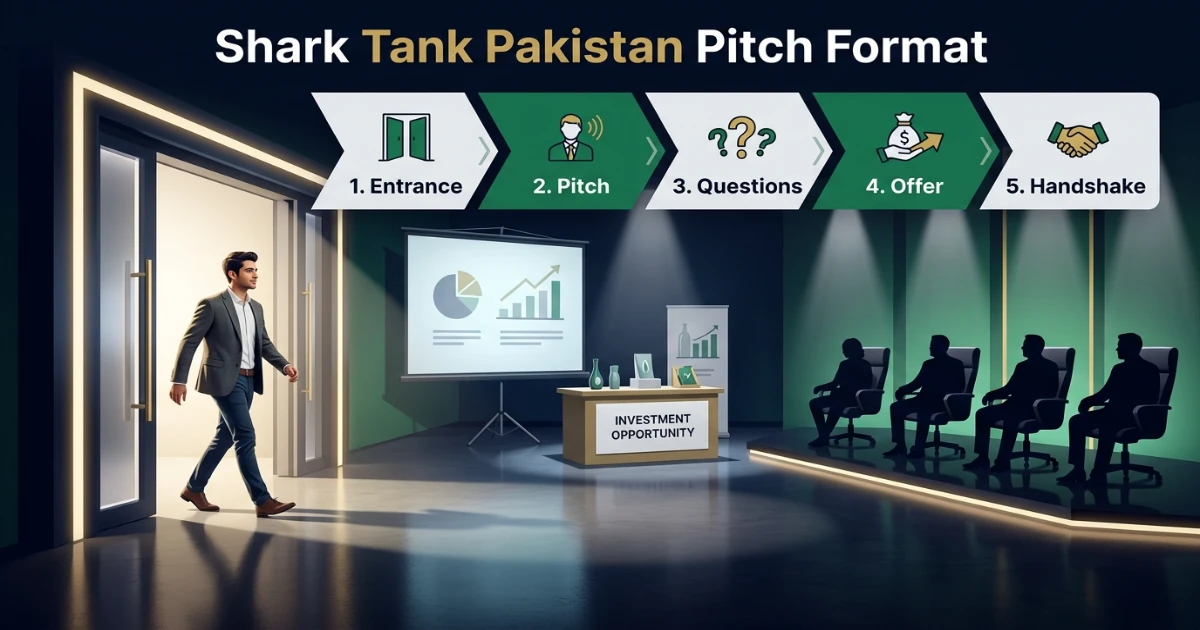
Every pitch follows a predictable but pressure-filled sequence. Understanding it will make your viewing far more strategic.
- The Entrance: The founder walks through sliding doors and delivers a 60-second elevator pitch — the most crucial minute of their business life.
- The Q&A: Sharks take turns firing questions. They’ll ask about sales, margins, manufacturing, patents, team background, and future plans.
- The Counteroffer: Sharks rarely accept the initial ask. They’ll counter with a different amount, a higher equity stake, or a royalty structure.
- The Negotiation: Multiple sharks can team up or compete. The entrepreneur must choose the best strategic partner, not just the highest bid.
- The Handshake: If terms are agreed upon, a handshake seals the on-air deal. Due diligence follows after filming.
Shark Tank Pakistan vs. Shark Tank US: The Key Differences
A common question from first-time viewers is how this stacks up against the American original. The DNA is the same, but the execution is uniquely Pakistani. From the currency and valuation norms to the types of businesses that appear, the local version feels like it was built for the entrepreneurs in Gulberg, Sialkot, and Peshawar — not Silicon Valley.
| Aspect | Shark Tank Pakistan | Shark Tank US |
|---|---|---|
| Investment Currency | Pakistani Rupees (PKR) | US Dollars (USD) |
| Typical ask style | PKR-based funding asks, usually tied to local traction and domestic growth needs | USD-based funding asks, often tied to larger US market assumptions |
| Common Industries | Textiles, food, agri-tech, modest fashion, handicrafts | SaaS, consumer electronics, biotech, D2C |
| Valuation Norms | More conservative; sharks wary of inflated pre-money valuations | Higher multiples, especially in tech |
| Cultural Nuance | Family businesses, women entrepreneurs, import-substitution pride | Individual founders, disruptive innovation |
In the Pakistani version, you’ll hear the word “trust” far more often than “valuation.” The sharks invest in people as much as balance sheets. A founder who comes across as honest but with imperfect numbers often fares better than a polished presenter who’s hiding operational cracks. This cultural emphasis on character is something the US version rarely foregrounds.
Why Shark Tank Pakistan Matters for Pakistan’s Startup Ecosystem
This show is more than business entertainment. It is a national platform for normalizing entrepreneurship at a time when Pakistan’s youth bulge needs more job creators than job seekers. Every episode sends a message: a business doesn’t need to be a tech unicorn to get investment. A pickle brand, a handmade shoe company, a solar-powered irrigation device — all are welcome.
For women entrepreneurs especially, the show has been transformative. Seeing a female founder negotiate aggressively with male sharks on prime-time television rewires deep-seated assumptions about who gets to be in the boardroom. The conversations around the show now spill into classrooms, co-working spaces, WhatsApp groups and family drawing rooms, which makes entrepreneurship feel more visible to a wider audience.
How to Watch Shark Tank Pakistan (and What to Look For)
Viewing options can change by season, so the safest route is to check Shark Tank Pakistan’s official social pages, Green Entertainment listings, broadcaster platforms and official video uploads. But the real skill is not only where you watch — it is how you watch.
Passive viewing is fun. Active viewing — pen in hand, noting the sharks’ objections, the equity percentages, and the counteroffer language — is a business education. When a shark says, “Your valuation is too high because your gross margin is only 22%,” they’re teaching you the economics of a sustainable business in real time.
What Is Shark Tank Pakistan Teaching Viewers?
The strongest value of the show is that it makes hidden business logic easier to see. A viewer can watch a founder ask for money, then immediately see how investors judge the offer. This is why the question what is shark tank pakistan matters beyond entertainment: it is a simple way to learn how investors think about risk, margins, trust, growth and founder clarity.
- Problem clarity: Can the founder explain the pain point in one clean sentence?
- Sales proof: Are there real customers, repeat buyers or signed orders?
- Gross margin: Does the business keep enough profit after production or delivery costs?
- Use of funds: Is the founder asking for money for inventory, marketing, machinery, hiring or expansion?
- Valuation logic: Does the ask make sense compared with revenue and growth stage?
- Founder fit: Does the founder understand the market better than a copycat competitor?
- Strategic shark fit: Which investor can actually open the right doors after the show?
Basic Shark Tank Pakistan Terms Explained
First-time viewers often enjoy the pitches but miss the business meaning behind common terms. Here is a simple glossary to make each episode easier to follow.
How to Apply to Shark Tank Pakistan
If watching inspires you to step into the tank yourself, the application process is open periodically. You’ll submit an online form detailing your business model, revenue, team, and funding ask. A full step-by-step application guide on SharkTankPakistan.pk walks you through each field, including how to frame your valuation so it doesn’t get laughed out of the room.
But even before you apply, spend time with our Startup Valuation Calculator. Plug in your last 12 months of revenue and see what a realistic pre-money valuation looks like. Most first-time viewers drastically overestimate what their business is worth — the calculator grounds you in real numbers that make sense in Pakistan’s market.
Situation-Based Viewing: Fan vs. Future Contestant
Your relationship with the show changes dramatically based on your ambitions.
If you’re a casual viewer
Enjoy the drama, the emotional stories, and the satisfying moment when a founder gets a deal. But even casually, you’ll pick up business vocabulary that will serve you in any career. Terms like “burn rate,” “CAC,” and “inventory turnover” will start sounding familiar.
If you’re an aspiring entrepreneur
Watch each pitch twice. First, just absorb the story. Second, freeze the frame when the financials appear on screen and dissect them. Ask yourself: would you invest at that valuation? Use our Equity Loan Calculator to model what 20% dilution means over five years. This turns entertainment into due diligence rehearsal.
If you’re actively preparing to apply
Rehearse your pitch with the TV as your audience. Stand facing the screen, deliver your opening 60 seconds, then pause the video and answer the objections you anticipate. Record yourself. Watch for filler words. The set is intimidating, and practicing with the actual show playing in the background conditions your nerves.
What Most First-Time Viewers Get Wrong About the Show
Let’s clear up some persistent myths.
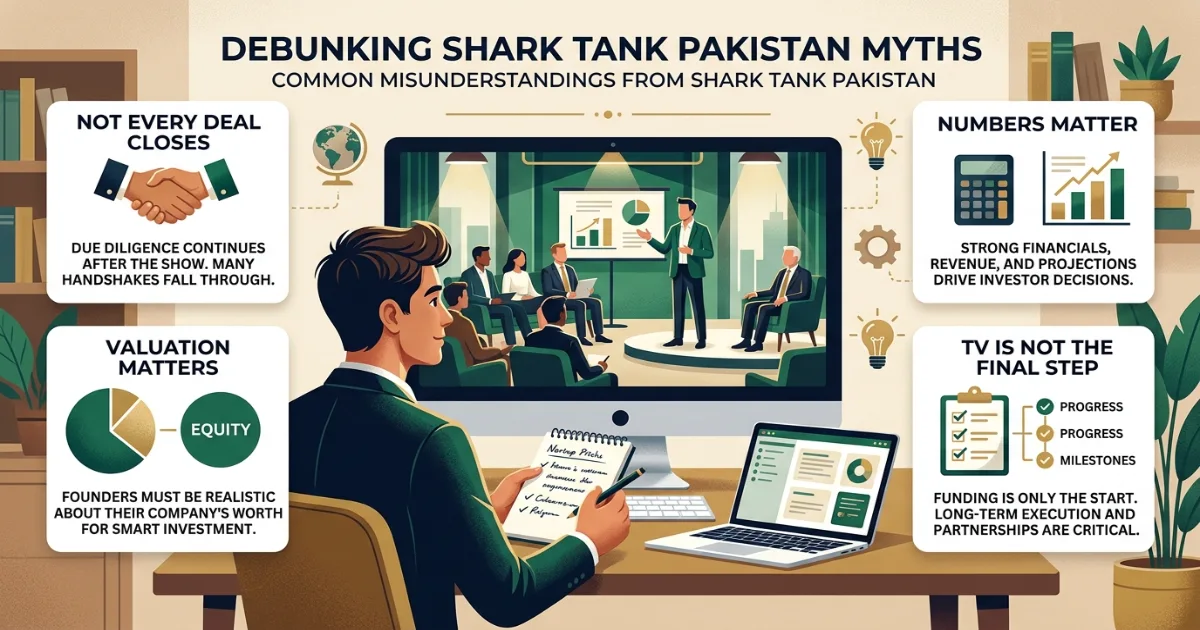
- “The sharks are just actors.” No. They are presented as real investors assessing real businesses. Their questions matter because investment decisions involve risk, diligence and legal review.
- “Every deal on TV closes.” Not always. On-air offers should be treated as conditional until due diligence is completed, documents are signed and funds are transferred.
- “You need a patent to get a deal.” Not true. Many food and consumer brands on Shark Tank Pakistan have no patents whatsoever. A defensible brand and strong distribution matter more.
- “The valuations are made up.” Valuations are negotiated from the information the founder provides, but the logic must still connect to sales, margins, market size, risk, growth potential and investor return.
Common Pitfalls & When to Ignore Standard Advice
Not every takeaway from the show applies to real life. If you try to mimic a TV pitch in a private investor meeting, you might get a very different reaction. Here’s where context matters.
- Don’t over-dramatize your origin story. On TV, emotional narratives work because the sharks are also part entertainers. In a boardroom, too much emotion can signal a lack of business rigor. Balance heart with hard numbers.
- Don’t assume you must give away equity. The show normalizes equity for cash, but in Pakistan’s ecosystem, revenue-based financing, Islamic financing, and bank loans are also viable paths depending on your business stage.
- Don’t fixate on getting a “TV moment” deal. Many fantastic businesses leave without a deal and still succeed. A “no” from a shark isn’t a verdict on your company; it’s a mismatch of expectations at that moment.
How SharkTankPakistan.pk Turns Viewing Into Action
Our site exists precisely because watching the show raises more questions than it answers. How much is my startup worth? Should I offer equity or a royalty? What legal structure do I need? We’ve built calculators, guides, and episode breakdowns that convert passive curiosity into confident moves.
After you finish an episode, try this: open the Valuation Calculator and reconstruct the deal you just saw. Enter the founder’s ask and revenue. You’ll often discover that the shark’s counteroffer was actually generous — or surprisingly tough. That’s the analytical muscle you’re building.
Real-World Example: The Viewer Who Became a Contestant
Imagine a university student in Lahore who watches the show casually at first, then starts writing down every shark objection: “What is your margin?” “How will you scale?” “Why is your valuation this high?” A few months later, that same viewer starts a small handmade jewellery brand, separates business money from personal money and begins tracking unit economics. Even without appearing on television, the show has already done something valuable: it has turned entertainment into founder education.
This article avoids treating TV offers as guaranteed funding. Shark panels, episode availability, application windows and legal requirements can change by season, so viewers and founders should verify current details through official Shark Tank Pakistan, Green Entertainment and production/broadcaster channels before applying or publishing time-sensitive claims.
For current public updates, check the official Shark Tank Pakistan Instagram and available broadcaster/video channels before relying on time-sensitive airing or application details.
Frequently Asked Questions About Shark Tank Pakistan
- What is Shark Tank Pakistan in simple words?
- What is Shark Tank Pakistan? It is a business reality TV show where entrepreneurs pitch their businesses to a panel of investors, called sharks, who may offer funding in exchange for equity or other agreed terms.
- Is Shark Tank Pakistan real or scripted?
- The pitches and negotiations are presented as real business discussions, but like any TV production, episodes are edited for time and storytelling. Founders should still treat the business questions, numbers and investor objections as serious learning material.
- How much equity do sharks usually take?
- Equity varies by business, investment amount, risk, traction and valuation. Some founders ask for small percentages, while sharks may counter with more equity if they believe the valuation is too high.
- Do I need a registered company to apply?
- Application and deal requirements can change, so founders should check current official rules. In practice, any serious investment will require proper legal, financial and ownership documentation before closing.
- Where can I watch Shark Tank Pakistan for free?
- Check the official Shark Tank Pakistan and broadcaster channels for the latest episode availability, because streaming and upload arrangements can change by season.
- Who are the judges on Shark Tank Pakistan Season 1?
- Season 1 included Faisal Aftab, Rabeel Warraich, Aleena Nadeem, Romanna Dada, Junaid Iqbal, Karim Teli and Usman Bashir.
- Can I pitch if my business is pre-revenue?
- Yes, but the valuation expectations will be much lower. Pre-revenue startups often need to show a strong prototype, letters of intent, or a unique intellectual property to attract investment.
Your Fast-Track Cheat Sheet: Top 3 Things to Remember
- It’s a real investment platform, not just a show. The money, the scrutiny, and the post-deal follow-through are genuine. Treat every pitch as a business case study.
- Valuation is negotiable, but honesty is not. Sharks respect founders who know their numbers and admit what they don’t know. Inflated valuations kill deals faster than any other mistake.
- Watching is learning — if you make it so. Use our calculators to reverse-engineer the deals you see. That’s how passive viewers become prepared founders.
Now that you know what is shark tank pakistan, fire up the latest episode, keep a notebook handy, and start analyzing like an investor. When you’re ready to test your own business idea, SharkTankPakistan.pk is here with the tools to turn inspiration into a fundable plan.