What Happens After Shark Tank Pakistan? 9 Post-Deal Realities Founders Must Know
The TV handshake is exciting, but it is not the finish line. Here is the practical, Pakistan-focused guide to due diligence, paperwork, investor expectations, and the founder discipline required after an on-air offer.
Quick answer: What happens after Shark Tank Pakistan is usually a careful post-show process: the on-air offer is reviewed, documents are checked, legal terms are negotiated, company records are cleaned, and only then can investment funds move forward. Founders should treat the handshake as the start of serious due diligence — not as guaranteed money in the bank.
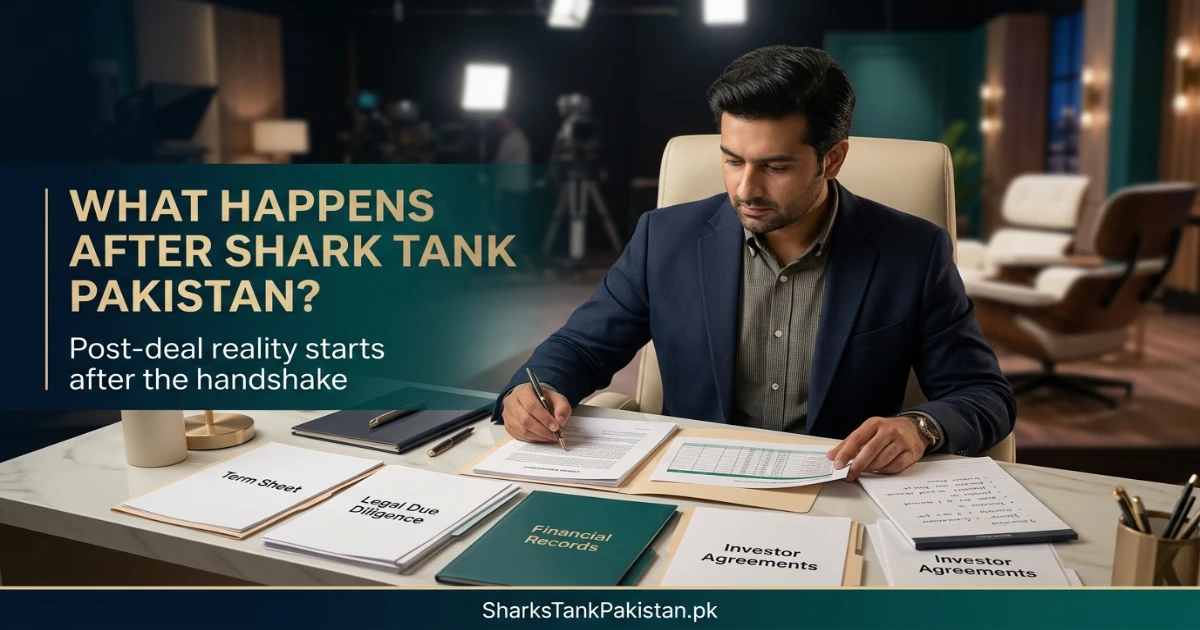
If you have ever watched a founder accept an offer and thought the money arrives the next morning, the real process may surprise you. The phrase what happens after Shark Tank Pakistan matters because the after-show period is where many founders either become more professional — or get exposed.
For contestants, the pitch is only one performance. After the cameras stop rolling, investors want proof. They want clean accounts, real revenue, documented customers, valid company ownership, clear tax status, and founders who can handle pressure without becoming defensive. This guide explains that post-deal reality in a practical way for Pakistani startups.
1. The TV Handshake Is Usually Not the Final Legal Closing
The biggest misunderstanding is simple: an on-air “I’m in” moment is not the same as a completed share transfer or funded bank account. In most investment shows, the televised agreement works like a serious commercial intention. The final outcome depends on due diligence, legal documents, negotiations, and sometimes revised terms.
That does not make the TV offer fake. It means the offer still has to survive normal investor checks. A shark may like the founder, market, and product on camera, but their team still needs to confirm whether the numbers, contracts, ownership, and risks match what was presented.
2. The First 48 Hours Bring Attention — and Pressure
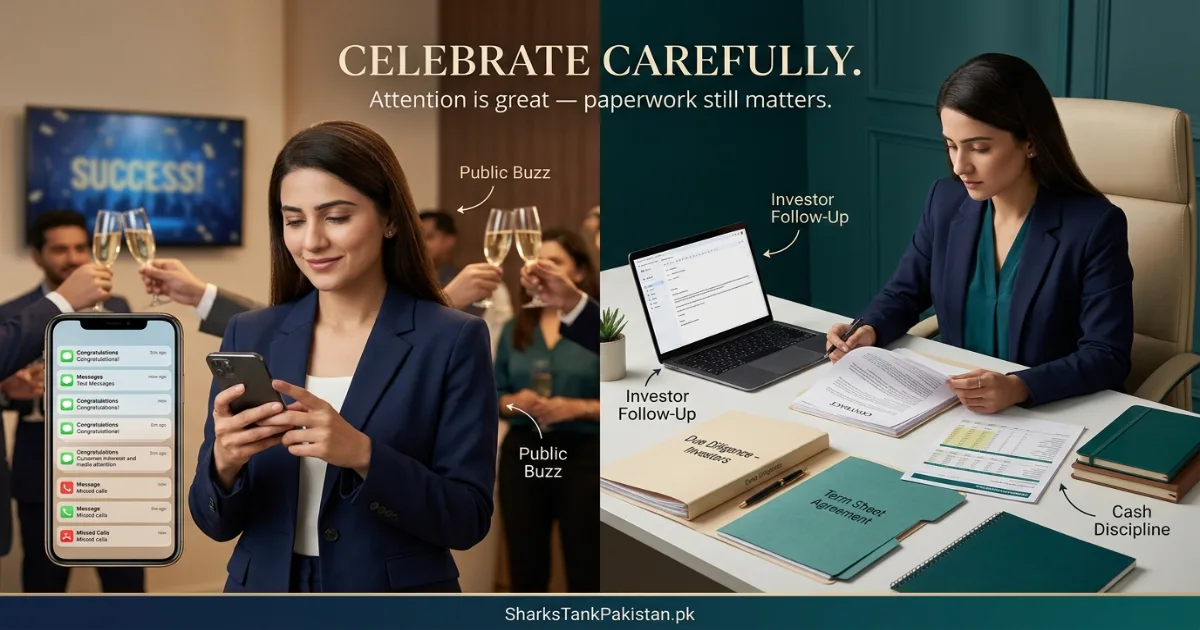
The first two days after broadcast can feel powerful. Social media messages increase. Friends and family congratulate you. Potential customers may suddenly reply. Distributors may show interest. If your product is consumer-facing, you may see a short-term traffic spike.
But that attention can create dangerous confidence. Founders sometimes start acting as if the deal is already complete. A more disciplined founder uses the buzz to collect leads, update customer support, improve the website, and organize documents for the investor review.
What to do immediately after your episode airs
- Prepare a clean folder for investor due diligence documents.
- Separate TV publicity from confirmed sales numbers.
- Track every inquiry, order, distributor message, and press mention.
- Update your website, contact forms, product pages, and social bios.
- Do not publicly claim final investment unless completion is confirmed.
3. Due Diligence Is Where the Deal Gets Tested
If you want the real answer to what happens after Shark Tank Pakistan, follow the due diligence process. This is where the shark’s team checks whether the business matches the story told in the pitch.
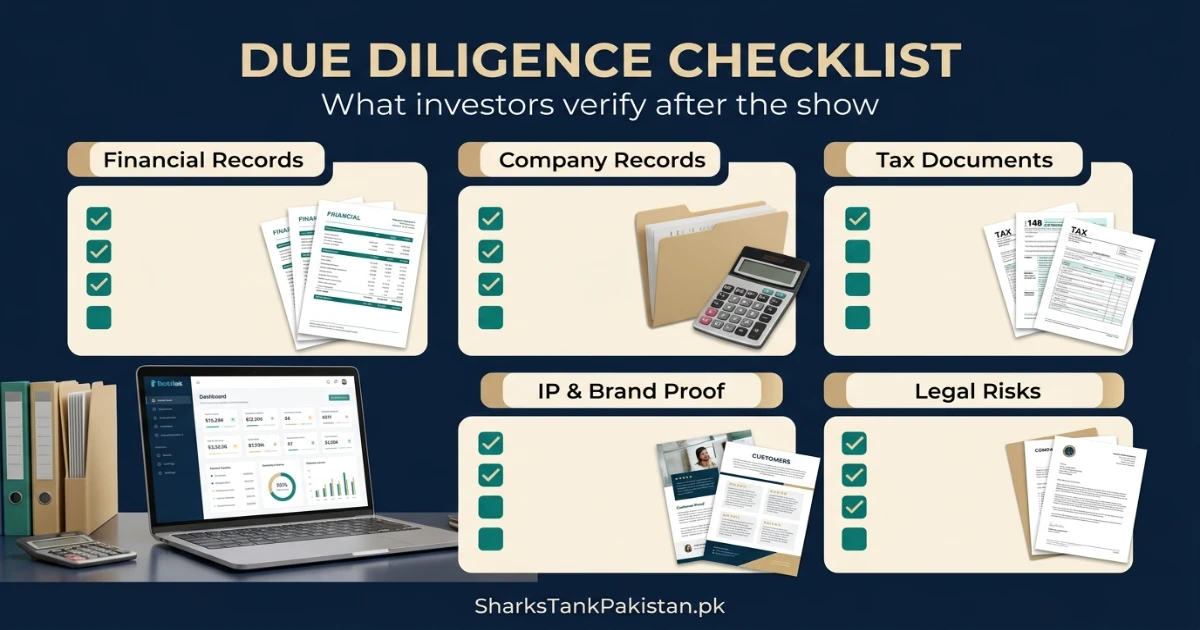
Due diligence is not only about catching dishonesty. Sometimes founders are honest but disorganized. They may mix personal and business expenses, have unsigned supplier agreements, incomplete tax records, unclear co-founder ownership, or weak proof of revenue. Any of these can delay or weaken the final deal.
Documents founders should prepare before applying
4. Revenue Claims Receive the Toughest Scrutiny
Revenue is where many post-show problems begin. A founder may say they did Rs. 50 million in sales, but the investor will want to know how much was repeatable, how much was discounted, how much was wholesale, how much was cash, and how much was actually collected.
Customer concentration is another common issue. If most revenue comes from one buyer, one distributor, one family connection, or one short-term campaign, the shark may treat the business as riskier than it looked on TV.
5. The Legal Process Can Change the Final Shape of the Deal
After diligence, the deal usually moves into legal documentation. In Pakistan, founders may need help from a corporate lawyer and a chartered accountant because the investment may involve company filings, share allotment, amendments, tax treatment, and shareholder rights.
The exact steps depend on whether your business is a sole proprietorship, partnership, private limited company, or already investor-backed startup. A private limited company with clean records is generally easier to process than an informal business with unclear ownership.
Common documents in the closing process
- Term sheet: A summary of the investment amount, valuation, equity, rights, and major conditions.
- Share Subscription Agreement: The contract for issuing new shares to the investor.
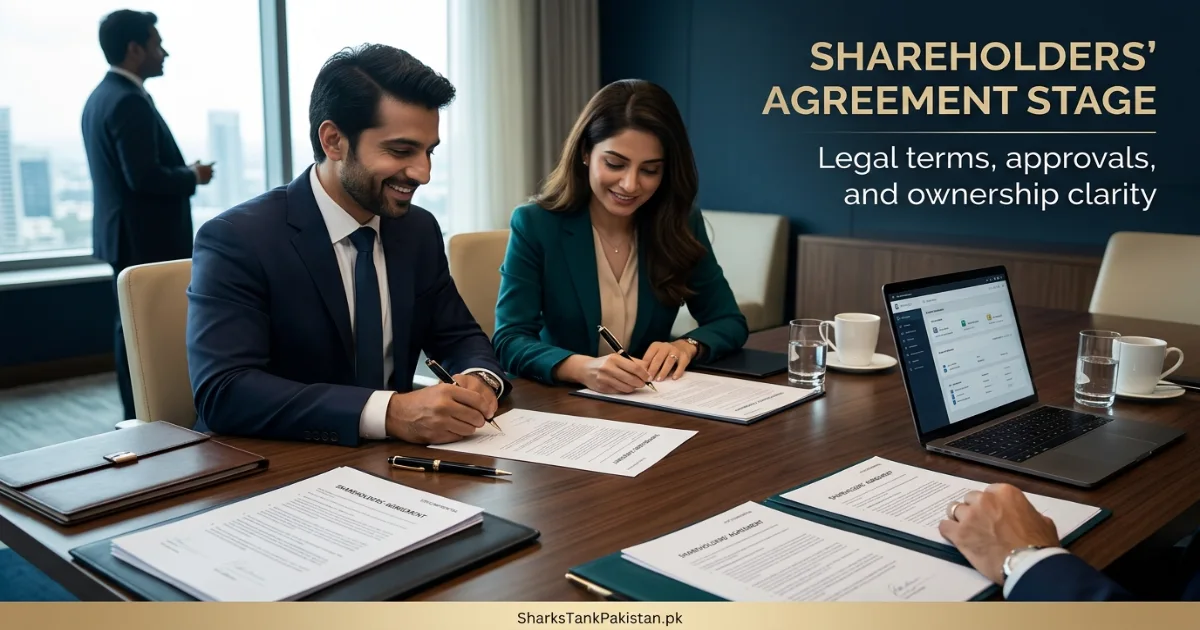
- Shareholders’ Agreement: The document that defines investor rights, board matters, reserved decisions, transfer rights, and founder obligations.
- Board and member approvals: Required approvals based on the company structure and transaction type.
- SECP filings: Required company filings after share allotment or ownership changes, based on current law and regulations.
- Tax review: A review of whether the transaction is primary investment, secondary share sale, loan, convertible instrument, or another structure.
6. The Timeline Is Usually Weeks to Months, Not Days
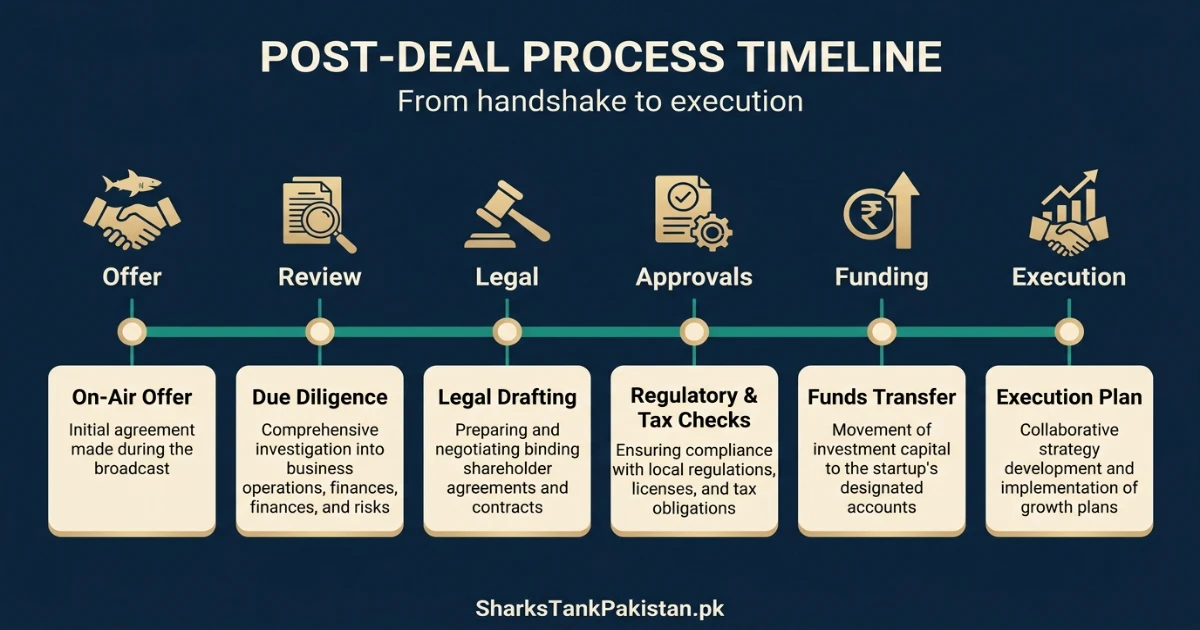
Every startup is different, but founders should prepare for a post-show process that can take weeks or months. If your company structure is messy, your numbers are not verified, or your documents are incomplete, the process can stretch longer.
| Stage | What Usually Happens | Founder Risk | Best Move |
|---|---|---|---|
| After broadcast | Public attention, customer inquiries, investor follow-up, and document requests. | Overpromising before the deal is closed. | Collect leads, stay calm, and prepare documents. |
| Due diligence | Investor team checks revenue, bank statements, contracts, ownership, tax status, and liabilities. | Missing records or claims that do not match evidence. | Create a clean data room before the show. |
| Legal drafting | Term sheet, subscription agreement, shareholders’ agreement, and approvals are prepared. | Signing clauses you do not understand. | Use independent legal counsel. |
| Regulatory and tax checks | Company filings, allotment records, tax treatment, and banking documentation are reviewed. | Delays from old or incomplete company records. | Keep SECP and FBR records updated. |
| Funds and execution | Money is transferred after conditions are met, then growth targets begin. | Spending without operating discipline. | Agree on a 90-day execution plan. |
7. Shark Involvement Can Be Strategic, Hands-On, or Limited
Some founders expect the shark to become a daily mentor. Others fear the shark will control everything. The truth is usually somewhere in the middle. Investor involvement depends on the shark’s expertise, investment size, equity stake, available time, and how much help the founder actually needs.
A shark may help with retail introductions, hiring, distribution, financial discipline, investor readiness, branding, pricing, or operational strategy. But founders should not expect the shark to run the business for them. The best post-deal founders use investor access without losing ownership of execution.
Set expectations before the final closing
- Will the shark get a board seat or observer rights?
- How often will founder updates be sent?
- Which decisions need investor approval?
- Who from the shark’s team will be the daily contact?
- What introductions are expected in the first 90 days?
- What metrics define success after the deal?
8. Your Experience Depends on Your Business Type
The post-deal journey is not the same for every founder. A food brand, SaaS startup, agri-tech company, service business, and manufacturing startup all face different investor questions.
If you are a consumer product brand
The shark will likely focus on gross margin, repeat purchase rate, packaging, shelf life, distribution readiness, refunds, and retail scalability. If you cannot produce at higher volume without quality dropping, the deal may slow down.
If you are a tech startup
Expect questions about customer acquisition cost, retention, active users, technical ownership, code/IP rights, data privacy, churn, and whether the platform can scale. A beautiful demo is not enough if the backend or business model is weak.
If you are a first-time founder
You may receive more guidance, but you also need to show coachability. Investors do not want a founder who says yes to everything; they want someone who listens, decides, and executes quickly.
If you already have investors
The new deal must fit your existing cap table. Rights of first refusal, anti-dilution clauses, investor consents, and previous shareholder agreements can affect whether the shark’s offer can close smoothly.
9. The Psychological Shift Is Real
Public attention can affect founders more than they expect. Employees may expect raises. Family may push for fast expansion. Competitors may copy your product. Customers may complain more loudly. Investors may demand more reporting. Suddenly, the founder is not only building a business — they are managing reputation.
This is why the strongest founders stay boring after the show. They answer customers, organize records, protect cash, update the shark professionally, and avoid emotional decisions. Fame fades quickly, but operational discipline compounds.
Common Mistakes Founders Make After Shark Tank Pakistan
Most post-show mistakes are avoidable. They happen because founders confuse publicity with business stability.
- Spending before funds arrive: A handshake is not cash. Wait for closing.
- Ignoring tax and company records: Messy records can create legal delays and investor doubt.
- Overstating the deal publicly: Say “on-air offer” until final completion is confirmed.
- Not answering the shark’s team: Analysts and associates matter. Treat them professionally.
- Mixing personal and business accounts: This creates confusion during bank statement review.
- Signing without independent advice: The investor’s lawyer protects the investor. You need your own advice.
- Expanding too fast: TV demand spikes can disappear. Scale based on repeatable demand, not hype.
When Should a Founder Walk Away After the Show?
Walking away from a famous investor can feel painful, but sometimes it is the right decision. If the final terms are dramatically different from the on-air offer, if the investor wants control over routine decisions, if founder vesting is unfair, or if the legal terms restrict future fundraising too heavily, pause before signing.
A good deal should give you capital, credibility, and strategic help without killing founder motivation. A bad deal may look exciting on TV but create years of control problems.
Post-Deal Preparation Checklist Before You Apply
The best way to survive what happens after Shark Tank Pakistan is to prepare before you ever pitch. A founder who enters the show with clean documents has a much better chance of closing smoothly.
- Register or clean up your company structure before applying.
- Separate business and personal bank accounts.
- Prepare at least two years of financial records if available.
- Document every major customer, supplier, and distributor relationship.
- Resolve co-founder disputes before going on TV.
- Protect your trademark, packaging, domain, and core IP.
- Write down exactly how much money you need and how it will be used.
- Build a simple monthly reporting dashboard.
- Know your minimum acceptable valuation and maximum acceptable dilution.
- Have a lawyer and accountant ready before the episode airs.
Use SharksTankPakistan.pk Tools Before You Pitch
Before accepting any investment structure, test your numbers with the Startup Valuation Calculator and compare equity, loan, and hybrid funding options with the Equity vs Loan Calculator. These tools help you understand dilution before the pressure of negotiation begins.
Frequently Asked Questions About What Happens After Shark Tank Pakistan
Do all Shark Tank Pakistan deals actually close?
No. An on-air offer should not be treated as a completed investment until post-show due diligence, legal documents, approvals, and funds transfer are completed. Some offers may close, some may change, and some may not proceed.
How long does it take to receive money after Shark Tank Pakistan?
There is no fixed public timeline for every deal. Founders should prepare for a process that can take weeks or months because investors need to verify documents, negotiate legal terms, complete company filings, and finalize payment conditions.
What happens if the shark wants to change the deal terms later?
The founder can negotiate, accept revised terms, or walk away. If new information appears during due diligence, investors may adjust valuation, equity, payment structure, or conditions. Independent legal advice is important before accepting any revised terms.
Do I need to register a new company after getting an offer?
It depends on your current structure. If you operate informally or as a sole proprietor, an investor may require a cleaner company structure before investing. A private limited company with clear ownership and records is generally easier to process.
Will the shark be involved in daily operations?
Not always. Some sharks may be hands-on with strategy, hiring, retail introductions, or financial reporting, while others may only provide periodic guidance. The expected involvement should be clarified in the shareholders’ agreement and communication plan.
What tax do I pay on Shark Tank Pakistan investment?
Tax treatment depends on whether the money is primary equity investment, a secondary share sale, loan, convertible note, revenue-share arrangement, or another structure. Founders should consult a Pakistani tax professional before signing.
Can I back out of a Shark Tank Pakistan deal after the show?
If final legal documents have not been signed, founders may usually choose not to proceed. However, they should review any confidentiality, exclusivity, or preliminary agreement obligations with a lawyer before walking away.
What is the smartest thing to do before applying?
Prepare your records before you pitch. Clean financial statements, updated company documents, tax filings, customer proof, supplier contracts, and clear ownership records can make post-show diligence much smoother.
Your Post-Deal Survival Kit
1. Treat the handshake as the beginning. The TV moment can open doors, but the final deal depends on evidence, documents, and legal closure.
2. Build your data room before you need it. Financial records, tax documents, contracts, company records, and IP proof should be organized before you apply.
3. Protect execution after publicity. Do not let attention push you into reckless spending. Use the offer to create systems, reporting discipline, and a realistic 90-day growth plan.